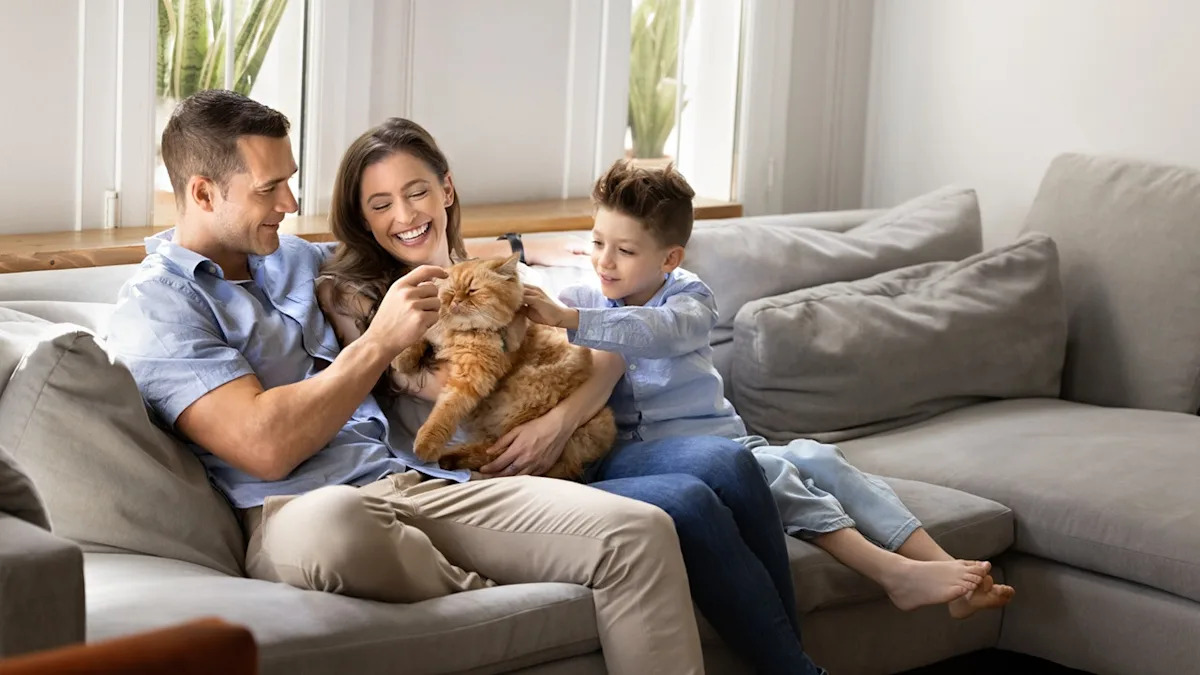
Cats often get a reputation for being independent or aloof, but anyone who lives with one knows that when a cat decides you’re family, they show it in the most loving, heartwarming ways. While felines may not wag their tails or shower you with kisses like dogs, their affection for their human family runs deep and is expressed through intentional behaviors cat experts say are easy to spot once you know what to look for. Though, if you’re a new cat parent and aren’t sure how cats communicate or what certain cat behaviors or cat body language means, you’ll love our roundup of 7 sweet signs your cat feels like part of your family.
These small gestures speak volumes about the bond between cats and their owners. From slow blinks to gentle headbutts, these subtle but powerful cat trust signs show that your feline considers you part of their inner circle and demonstrates how cats show love.
Curious what your cat really thinks about you? We turned to veterinarians and animal behaviorists to highlight the sweetest ways cats bond with their owners and show they feel like a cherished member of your family. Some of these signs that your cat loves you may even surprise you.
Related: 10 Signs Your Cat Is Happy & Feels Safe, According to a Vet
Why Is It Important for a Cat to Feel Like Part of the Family?
Cats are naturally social animals, even if they don’t always show it in obvious ways. Helping your cat feel like part of the family is essential because it’s directly linked to their emotional wellness, trust and overall quality of life.
“When a cat feels safe to let their guard down despite their heightened senses, these magnificent creatures will exhibit their natural behavior,” says veterinarian Dr. Maggie Placer of EveryCat Health Foundation. “Once they are allowed to feel safe, bonding, affection and trust can build, resulting in you being part of their chosen family.”
Cats that feel connected, accepted and secure with their human family also benefit from reduced stress and anxiety, positive behavior and improved immune function, digestion, and overall health. Recognizing these cat attachment and trust signs is key to fostering a happy, confident and loving feline companion.
7 Signs Your Cat Feels Like Part of Your Family

A cat being loved by its family.G
There are several sweet signs that your cat claims you as one of their own, from subtle cat behaviors and body language cues to more obvious displays of affection and trust. Here are a few of them:
Slow Blinking
A slow blink, often with both eyes, is a sure sign of trust and affection. This non-verbal cue is how cats talk with their eyes and can be likened to a “kitty kiss” and can even be reciprocated by slow blinking back to your feline friend to strengthen the bond between cats and their owners.
“This action shows the cat feels safe and relaxed enough to close its eyes slowly around you,” Placer says. In the wild, closing one’s eyes can make an animal vulnerable to predators, so a slow blink signals that your cat feels secure and at ease in your presence.
Headbutting
When your cat rubs its head or face on you, they’re not just trying to reach a tricky spot—they’re displaying a powerful cat trust behavior. By marking you with their scent, they’re creating a “colony” with people and other animals they feel safe with, signaling that you’re part of their inner circle. Some cats also headbutt to feel secure or to seek affection and attention from their favorite humans.
“However brief, this headbutting behavior means your cat trusts you and enjoys your company,” Placer explains. Recognizing this cat bonding behavior is a simple way to see how your feline shows love and feels like part of your family.
Related: If You Like Maine Coons, You’ll Love These 5 Similar Cat Breeds, Vets Say
Purring
One more sign your cat feels like they are part of your family? They purr when you’re around. While there are many reasons why cats purr, including self-soothing from pain or stress, in a calm, loving home environment, purring is typically associated with a pleasant experience and means a cat loves you.
“A happy cat will purr when it feels safe and content in your presence,” Placer says.
According to cat behaviorist Stephen Quandt, cats can exhibit what’s known as an affiliative purr when they want food, greet you or are very content. “It combines a traditional purr with a harmonic sound, almost like a very gentle kazoo-like hum mixed under the purr,” he says. “If you’re lucky enough to experience this, then you are family.”
Kneading
When your cat kneads or makes those adorable “biscuits” on pillows or even your stomach, they’re acting on an instinctive reflex, flexing and relaxing their front paws against a soft surface. This behavior is also a cat trust sign, showing that your feline sees you as a parent figure and feels safe, secure and comfortable in your presence.
“This is a behavior cats learn as kittens to stimulate milk flow from their mothers,” Placer explains. “When an adult cat kneads on you, it’s a sign they feel secure.”
Recognizing kneading as a bonding behavior can help you better understand how your cat expresses love and attachment, strengthening the human-feline connection.
Grooming You
Some cats will lick or groom you as a sign of affection, while others will bring you “trophies.” This can be anything from cat toys dropped outside your bedroom door to gifts from hunting. Both are powerful cat bonding behaviors that signal trust and acceptance.
“This cat grooming behavior mirrors how cats in the wild establish social groups and bond,” Placer says. “When your cat brings you gifts from hunting, they are sharing this prize possession as a sign of friendship.”
Cats who also see other felines as family will often groom one another. “This behavior is not only practical, but comforting and signals deep trust,” Quandt says. “A cat would never groom another cat that they didn’t see as ‘family’ and would be unlikely to groom a strange human. But cats will groom their human family, and will often lick our skin and sometimes even our hair.”
Showing Vulnerability
Cats show vulnerability in several ways, and each one is a powerful cat trust sign. Whether they expose their belly, eat comfortably in your presence, use the litterbox without hesitation, or simply relax beside you during an evening movie or reading session, these behaviors reveal that your cat feels safe and secure around you.
These vulnerable gestures indicate that your feline doesn’t feel threatened, stressed, or on high alert. Instead, they signal a deep sense of emotional safety—all key signs that your cat sees you as family.
“These are displays of trust,” Placer describes. When a cat willingly lets its guard down near you, it’s one of the clearest signs of cat affection and bonding.
Tail Carriage
Cats “talk” with their tails—and sometimes even their ears. Because of that, it’s important to know what they are trying to say. For instance, a high or vertical tail carriage is one of the clearest cat trust signs, signaling friendliness, confidence and a happy mood. When a cat holds its tail upright around you, it’s a strong indication that your feline feels safe and secure in your presence.
“If your cat comes up to you with its tail hoisted lazily in the air, with the tip twitching back and forth, she’s showing affection and may be interested in play behaviors,” Placer explains.
How to Help Your Cat Feel More Like Part of the Family
Helping your cat feel like part of the family is all about building trust, comfort and connection. To do so, spend quality time engaging in play, offering cozy spots for your cat to relax at your side and speak in soft, reassuring tones. It’s also important to respect their boundaries and independence while encouraging interaction through petting, brushing or simply sharing a quiet moment together.
Small routines, like feeding your cat at consistent times or including them in family activities like movie nights, can also go a long way in helping your cat feel safe, valued and fully included in your household.
Sources:
This story was originally published by Parade Pets on Dec 7, 2025, where it first appeared in the Cats section. Add Parade Pets as a Preferred Source by clicking here.