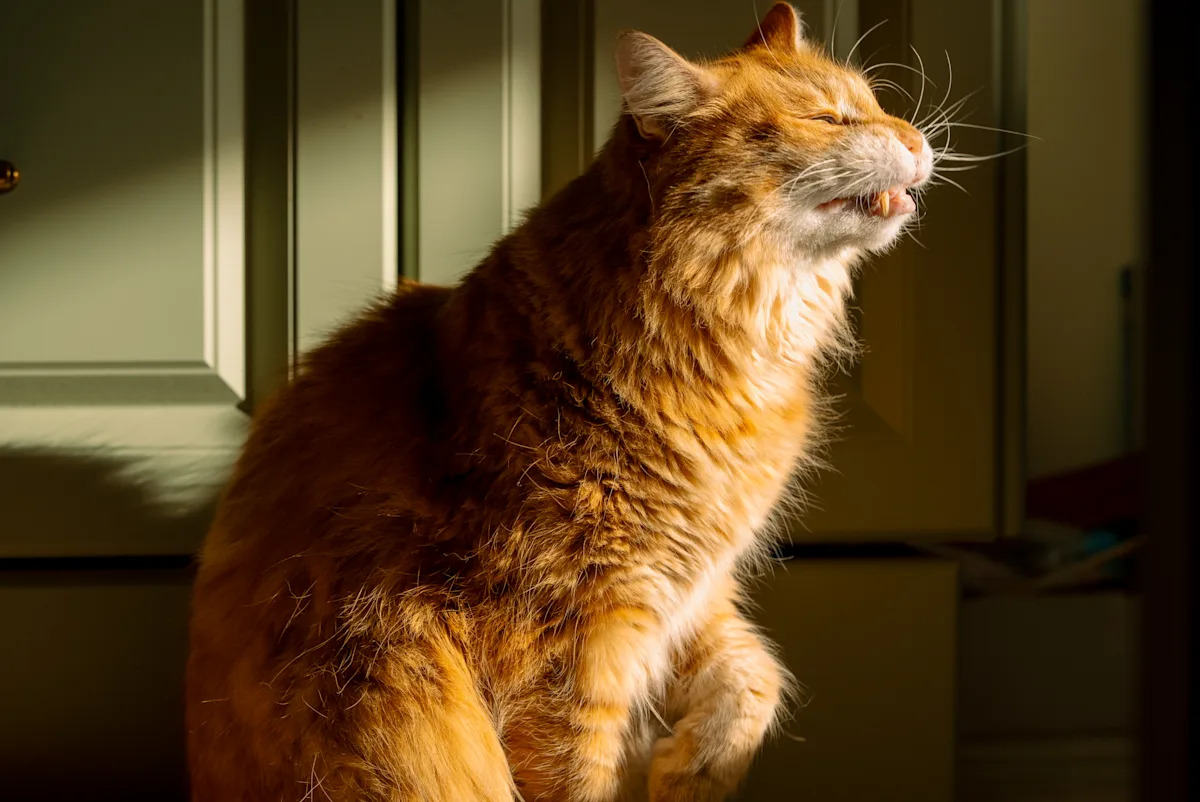
Ever felt how amusing it is to see your cat sneeze? No doubt, they look very cute. But if it’s happening a lot, it can be of concern. For cat owners, one important thing to know is that there are two types of sneezing when it comes to cats: occasional sneezing and frequent sneezing.
While occasional sneezing can primarily happen due to dust or wind, frequent sneezing can be a sign of something more, probably an allergy too. With proper care, the sneezing can be treated. Let’s learn about some of the reasons for your cat’s sneezing!
Dust, allergies, or irritants
Your cat might be sneezing if it has come in contact with dust, perfume, smoke, cleaning products, or any irritants. Several household solvents, detergents, citrus deodorants, scents, and other chemicals can irritate your cat’s nose.

It later triggers sneezing. This type of sneezing happens once or twice and then stops. In most cases, it’s temporary and nothing serious, just your cat reacting to its environment. By any chance, if the sneezing continues for a prolonged period of time, it can require medical care.
Upper respiratory infections
Your cat might be sneezing a lot due to a wide range of fungi, bacteria, or viral infections in the respiratory system. This is very similar to the symptoms of a cold in humans. If your cat has a runny nose and watery eyes and is low on energy, probably not even eating much, then it is suffering from respiratory infections.

Usually, this is more than just simple sneezing. It is important to consult a vet if you feel your cat is sneezing frequently and could be infected.
Dental problems
If your cat has had any tooth infection before, it can lead to severe sinus problems. Your cat’s dental health can be the hidden reason behind your cat’s sneezing. Any infection in the gums or teeth leads to irritation and sneezing. There might be several signs of dental problems, such as sneezing, coming with bad breath, difficulty eating, or reduced appetite.

A cat’s dental health is often overlooked by pet parents, but if the sneezing becomes prominent, it has to be looked after. Talking to a vet can prevent any dental infections from spreading further.
Foreign objects in the nose
There might be many foreign objects obstructing the nasal passage. Small particles like dust particles, grass, or small debris can be the possible reason why your cat sneezes a lot. These things get stuck and might irritate the cat. Pet owners can see repeated sneezing for a short span of time for this reason.

You will also see a cat put its paw near its nose in discomfort when it is about to sneeze. Such a type of sneezing is short-term, but its reaction is quite noticeable. You can also notice other symptoms like watery eyes, bloody noses, and breathing difficulty.
Chronic conditions or infections
There could be chronic conditions or infections if your cat is sneezing for a long time. Sneezing for a prolonged time period may indicate that there might be some severe infections or long-term health conditions that are ignored by the pet parent.

Sometimes, cats develop respiratory infections, and this requires medical attention if you ignore the primary symptoms like loss of appetite, dehydration, or sneezing.
When should you be concerned?
If your cat is sneezing frequently, it needs to be taken to a vet for further diagnosis. Majorly, a cat’s sneezing pattern decides when you should be concerned about it or not.

Other signs, like bloody nose, nose discharge, or loss of appetite, might require medical attention. Lethargic behavior and low energy can be a red flag for your cat, too.
Conclusion
Thus, if your cat sneezes because of dust and allergies, it is okay. But if the frequency of sneezing increases for a long period of time, then it can be a major concern. For almost all cat breeds, sneezing is always occasional, and that too, primarily because of allergies.
If there are other underlying issues like dental problems, infections, or the flu, your cat may need attention from the vet. To prevent allergies from turning into infections, proper attention and observation of your cat is a must.