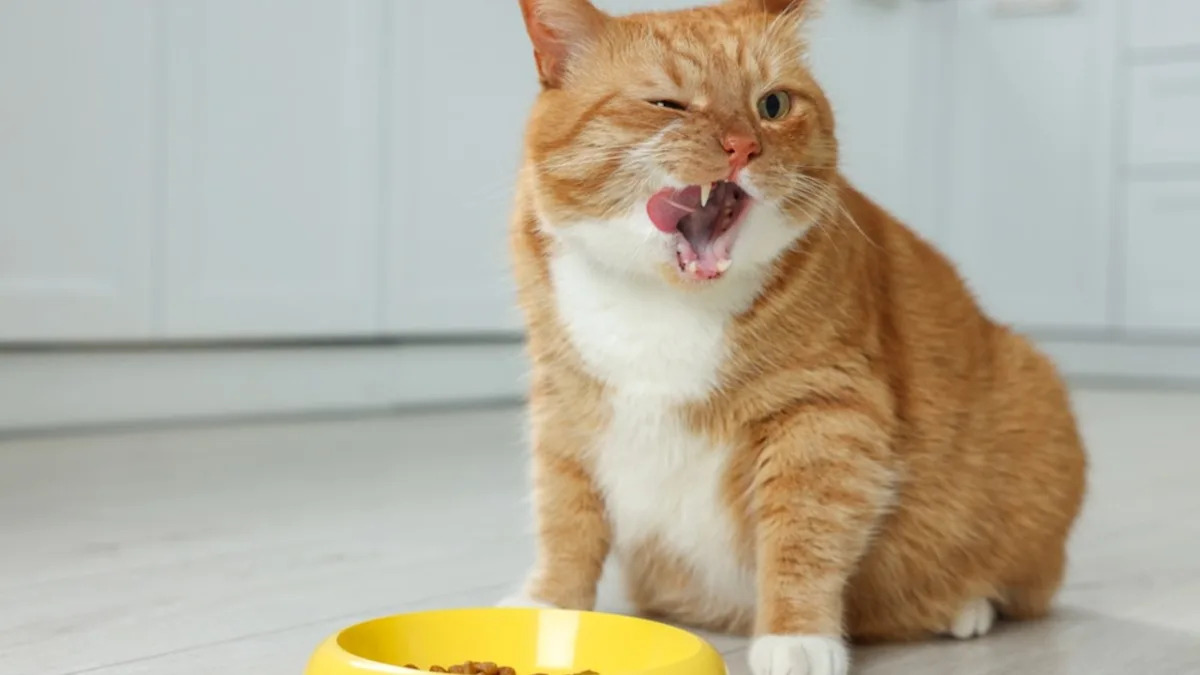
If there’s one thing that all of our pets love, it’s mealtime. They wait for it, know when it should be delivered, and quickly scarf it down, hoping for more. Emilio the orange cat is no different, as you’ll see in this cute video.
Watch as Emilio realizes that it’s time to eat and quickly runs to his food bowl to see what’s on the menu…it’s the cutest thing you’ll see today! As one commenter said, “Omg his little bouncy walk is everything!”
We can’t even tell you how many times we watched Emilio’s video! Commenter @Brenna agreed, “The growl snort when you showed him the food!” @EmmaC1984 swooned, “Oh my goodness his little waddle!”
@First Drawer joked, “How often do you have to wind him up to keep him moving?” @bfrave made us smile with, “He kinda sounds like an old lil diesel engine warming up!”
Related: Orange Cat Has Dramatic Reaction to Mom Telling Him He Can’t Have More Dinner
🐶SIGN UP to get “pawsitivity” delivered right to your inbox with inspiring & entertaining stories about our furry & feathered friends🐾🐾
Dwarfism in Cats
Many commenters noticed how small Emilio was, which, of course, makes him look like a kitten, though he’s not. His pawrents explain in their bio that he has dwarfism. We headed to Google to learn more and found some interesting facts about dwarfism in cats on Purina UK’s website. “Dwarfism in cats is the result of a genetic disorder, and there are a few cat breeds in which this genetic disorder is selectively bred, such as the Munchkin.”
They go on to explain that there are three types of dwarfism: osteochondrodysplasia, pituitary dwarfism, and selective dwarfism.
“Osteochondrodysplasia is a developmental abnormality of the bone and cartilage, which results in a lack of normal bone growth. Affected cats may have a full-size body, but disproportionately short and thick legs and a large head.
Pituitary dwarfism is caused by a deficiency of growth hormones produced by the pituitary gland. Affected cats will be slow to develop and have stunted growth.
Some breeders selectively breed for genetic abnormalities that result in dwarfism, with the Munchkin breed being the result of this selective breeding.” They go on to say that these cats are predisposed to several health issues.
They advise keeping these cats indoors and making regular vet visits a priority to monitor their health.
This story was originally reported by PetHelpful on Nov 25, 2025, where it first appeared in the Pet News section. Add PetHelpful as a Preferred Source by clicking here.