One of the coolest things about Southwest Florida is its diversity of birds – a decided change from “up North.”
Finding them in their homes is a great sense-of-place builder, so here’s a three-bird checklist to earn you a local birder badge.

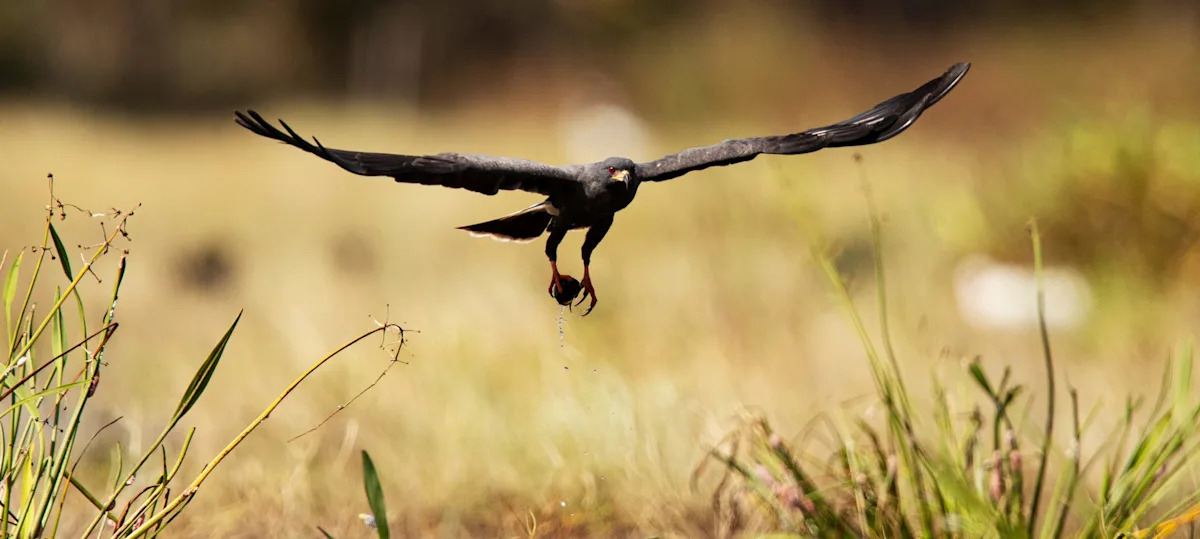
An endangered male snail kite grabs an apple snail for a meal at Imperial Marsh Preserve on Wednesday, Oct. 30, 2024.
Everglades snail kite, Rostrhamus sociabilis
We almost lost these graceful little red-eyed raptors. In the 1990s, there were fewer than 400 on the planet. The count has risen since then, though it’s by no means out of the woods – or marsh – wildlife managers say. The birds’ traditional food is the Florida apple snail, but in an evolutionary twist, the spread of an exotic apple snail seems to have allowed the kites to expand their range. Their sharply hooked beak allows them to break quickly into the shell once it’s snatched up. See them soaring over grassy expanses in Everglades National Park in Collier County or at Harns Marsh in Lee.

A wood stork feeds in a waterway at Hibiscus Golf Club in Naples on Monday, Oct. 6, 2025.
Wood stork, Mycteria americanaThe U.S.’s only native stork, these stately waders once were one of Corkscrew Swamp Sanctuary’s claims to fame, along with the preserve’s ancient virgin bald cypress trees, once home to North America’s largest colony of wood storks. They still frequent Corkscrew, but thanks to drainage and development, their numbers have plummeted. With their naked heads, long slender legs and graceful flight, they’re well worth seeking out in the swamp.

Black skimmers fish for a meal on the south end of Fort Myers Beach on Tuesday, June 3, 2025. The south end of the beach is a nesting area for the birds. This includes, leat terns, snowy and Wilson’s plovers.
Black skimmer, Rynchops niger
Need an excuse to hit the beach? How about checking the black skimmer off your list? These handsome, low-flying birds have a secret fish-hunting weapon: A serious underbite. With beaks held open, they zoom over the surface, long lower jaws slicing the water, until they hit a fish and snap it shut. Marco Island is a prime spot to see them, as is Lee County’s Bunche Beach.
– Amy Bennett Williams is a senior reporter focused on the environment. Reach her by emailing awilliams@news-press.com
Please support local community journalism and stay informed about Southwest Florida news by subscribing to The News-Press and Naples Daily News; download the free News-Press or Naples Daily News app, and sign up for daily briefing email newsletter, food & dining and growth & development newsletters here and here.
This article originally appeared on Naples Daily News: Big 3 birds: See them in the wild to flex your SW FL sense of place