Q: One of my cats recently developed thyroid problems. I’m treating him, but I wondered, I also have his brother (they were littermates). Should I be concerned that his brother could have the same issues?
A: Oh this is an interesting one. You’re essentially asking if certain diseases (in this case hyperthyroidism) are hereditary in feline families.
Actually thyroid problems in cats are incredibly common. From what I’ve been able to find, it looks like it’s difficult to tell whether or not the condition is actually genetic or a product of the environment. Allow me to explain.
There was a case of a mother cat and her two offspring all developing thyroid problems. All of the cats lived in the same house. Because of that, there could have been some factor in the house that pre-disposed them to the disease. On the other hand, it could have been hereditary.
In order to really study this, we’d have to track the lifespan of littermates in different households. Unfortunately, I don’t think there’s any definitive proof that thyroid problems run in families, but that doesn’t mean you shouldn’t be on the lookout with your boy’s brother. Now that you know what to look for and how to treat it, you’re two steps ahead if any problems arise in the sibling.

Lola arrived at the shelter after being saved by the Fire Police when she was stuck in the Conococheague Creek. She is a sweet girl that loves to get belly rubs! Lola is a 1-year-old terrier mix who enjoys walks and playing with Kong toys. She did test well with the cats here at the shelter and does not seem to mind the company of other dogs. Do you have a place in your heart and home for Lola?
Q: I have a Lab who’s getting older and I’ve noticed recently that she seems to be having some trouble walking and standing up once she’s lying down. I haven’t really seen any definite signs of pain, like yelping or crying. Do you think I should I be concerned?
A: Typically stiffening of the joints in older dogs is a symptom of arthritis. People get it and so can animals. There’s also a condition called hip dysplasia, which affects the joints.

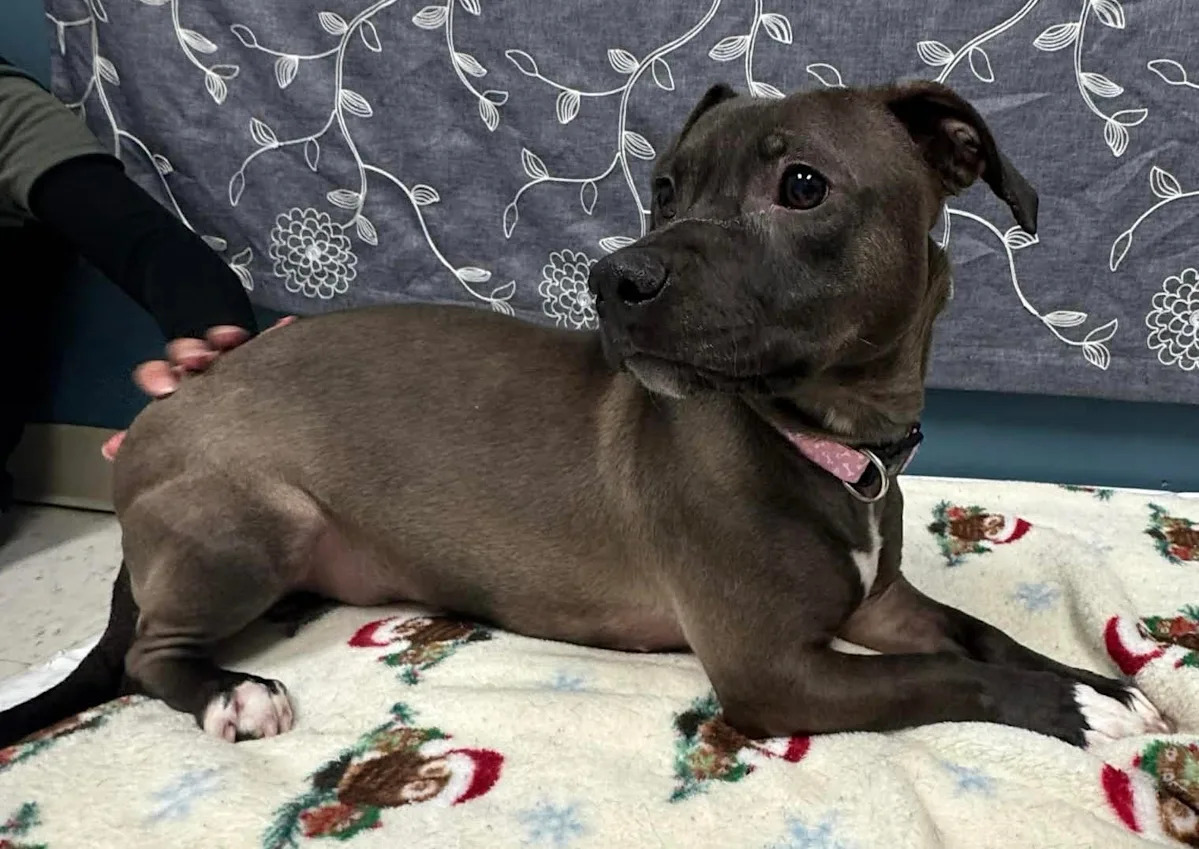
Sprite came into the shelter as a stray in April 2025 and is still with us. She’s a shy girl, but really can be sweet when people give her time. Sprite is a 4-year-old gray girl who would do best in a calm home. She would love to find out what a forever home is all about.
Hip dysplasia actually has degrees of severity and some dogs can go virtually their whole lives without any outward symptoms. It’s mostly the bigger breed dogs who are susceptible to hip dysplasia, so it’s a possibility with your girl.
My mom had a medium-sized dog who has problems getting up and down and an x-ray showed that she had issues with her spine.
When she got bad, mom would give her some pain medication and that seemed to help. I would definitely recommend you visit your vet and discuss your situation and let your vet know what you’ve been witnessing. And do it now when you’re first noticing the symptoms, that way you can track the progress of the joint problems and get your pup the right treatment to assure her “golden years” are good ones.
Ask the Shelter: My cat runs funny. Could it be because of his docked tail?
Ask the Shelter: My cat is losing his fur. Is he going bald?
Ask the Shelter is a weekly feature aimed at pet education. If you have a question, contact Jennifer Vanderau, public relations coordinator for the Cumberland Valley Animal Shelter, at cvascomm@cvas-pets.org or 263-5791.
This article originally appeared on Chambersburg Public Opinion: Sprite came into the shelter as a stray in April 2025 and is still with us. She’s a shy girl, but really can be sweet when people give her t