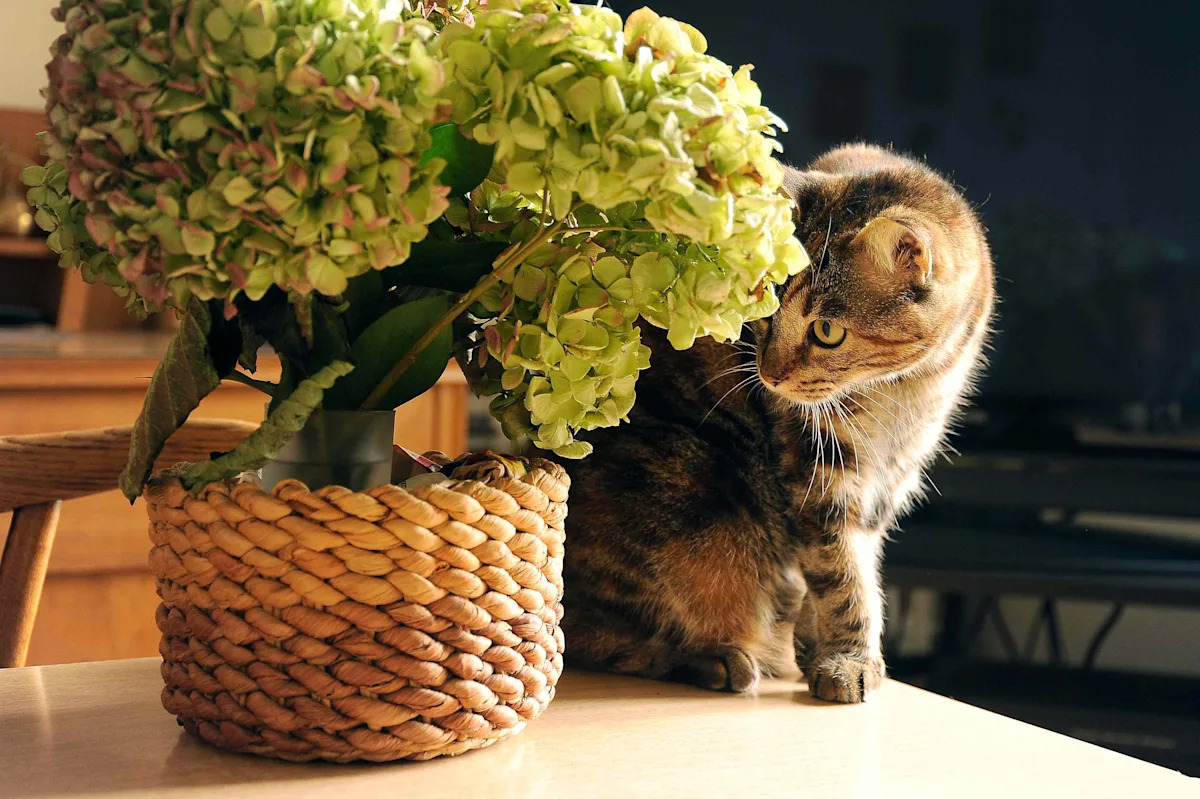
Some pets cannot resist chewing on houseplants. As frustrating as this may be, it’s only natural. Dogs and cats nibble on grass and other greenery for a nutritional boost and to aid in digestion. This can cause a lot of damage to houseplants, but that’s not the worst-case scenario. Extremely toxic houseplants can land your pet in an emergency vet clinic.
If you’re out of ideas to protect your plants and your pets, we’re here to help. Here are six ways to keep pets from eating your houseplants.
Put Them Up High
Often, you can move a plant out of the reach of your dogs by putting it on a shelf, table, or windowsill. Make sure the plant isn’t sitting on a tablecloth that could be yanked or near a piece of furniture that your pets can climb onto.
With cats, hang plants high enough to be out of reach. A floating shelf can also work. Don’t let those enticing vines dangle too low, since many cats can jump 6 feet off the ground.
Set Up A Barrier
Choose a designated spot for your house plants, then set up a pet gate or keep the door to the room closed. Smaller plants can be placed inside a terrarium or a frame covered in strong netting or chicken wire.
You can also create a “moat” around your plants to keep curious cats from getting too close. Most felines don’t like the feeling of sticky tape, aluminum foil, or spiky plastic mats on their paws.
Take It Outside
Both dogs and cats develop a strong interest in chewing plants when they have an upset stomach or fur ball. Give your pet plenty of opportunity to nibble on grass in the yard when this happens. If you have a catio or screened porch, provide a small patch of grass for your cats.
Give Pets Their Own Plants
If your pets absolutely must chew on your plants, why not give them their own houseplant to enjoy? Pick something easy to grow from seed, like wheat grass or cat grass, and replant it in a tray or pot every few weeks. Place the pot where your furry friend can easily reach it, and they may be less likely to bother your other plants.
Play It Safe
Play it safe by keeping the most dangerous plants out of your house. Lilies are extremely toxic to cats. Sago palm (which is actually a cycad) can cause liver damage or death in cats and dogs. Check the ASPCA list of toxic and non-toxic plants before bringing a plant home. These popular houseplants are considered pet-safe:
Use Natural Sprays
With pet-safe plants, you can try spraying the foliage with a scent that naturally repels pets. Fill a spray bottle with a diluted mix of lemon juice or with 3 parts water to 1 part white vinegar. Spray thoroughly and reapply every few days as needed.
Because there’s no guarantee repellents will keep your pets from eating plants, avoid using sprays that contain toxic ingredients like essential oils. And don’t sprinkle your plants or the soil with red pepper, which can cause irritation and distress.
Read the original article on Southern Living