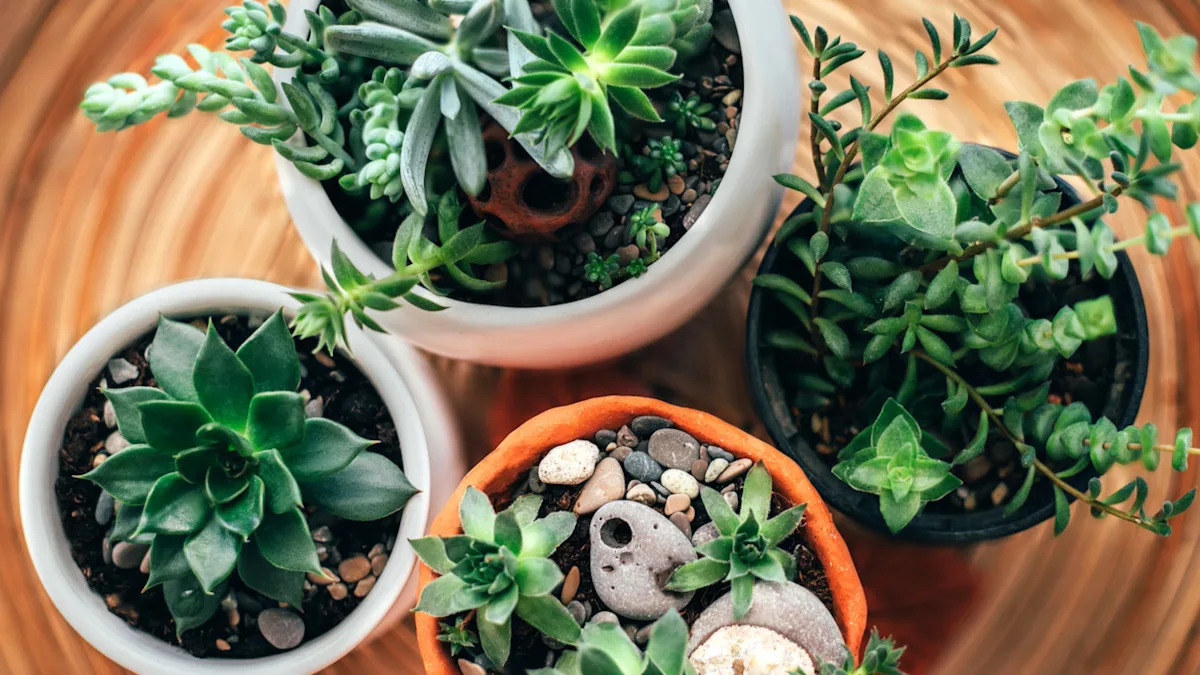
If only cats and dogs didn’t explore the world mouth-first, pet parents could keep practically any house plant imaginable without fear. However, unfortunately, some of the most popular and colorful house plants are notoriously toxic to cats and dogs, and since curious pets often like to sneak a taste of new and unfamiliar plants, it’s simply not worth the risk for pet owners to keep these dangerous plants in their homes. That list of “pet-unsafe” houseplants includes, among many other things, some cacti and succulents. Though, luckily there are some pet-friendly options you can choose from. To find out what 10 are, keep reading.
When plant shopping, it’s important to know exactly which succulents are not toxic to cats and dogs, because some pet-safe succulents are similar in appearance or name to varieties that aren’t so safe. Because of that, unless you’re already a plant pro, you might not know what to look for and accidently buy the wrong one.
Fortunately, we spoke with both pet and plant experts to find out which succulents you can get for pet-friendly households—and the best part is that they’re all fairly easy varieties to find at your local nursery. Though there are lots of species to choose from, below are our picks for the top 10 vet-approved ones! Trust us, your four-legged family member will thank you for considering them and in their eyes, you’re a great pet owner for keeping them safe.
A Warning About Pet-Friendly Succulents

Closeup of a Burro’s Tail pet-safe succulent.
Just like there’s a difference between “non-toxic” and “edible,” there’s a difference between ”pet-safe” and “pet-food.” Basically, just because a succulent is pet-friendly, that doesn’t mean that your dog or cat should be eating it.
“Even safe succulents can cause mild stomach upset if a pet eats a large amount,” warns veterinarian Dr. Kathryn Dench, chief scientific advisor for Paw Origins. “In practice, most issues I see are gastrointestinal rather than true poisoning, and prevention is usually about smart plant placement rather than panic.”
A little nibble usually won’t cause any serious symptoms, but if your pet really chows down on one of these succulents, they may experience enough gastrointestinal distress to cause nausea and vomiting. However, since these succulents on our list don’t contain many serious toxins, it’s unlikely to escalate into a medical emergency. As long as you minimize your pet’s ability to take a bite, there should be no issue.
“My rule of thumb for owners is simple,” says Dr. Dench. “Choose verified pet-safe plants, place them out of direct chewing range, and avoid assuming that ‘natural’ automatically means ‘safe’.”
10 Popular Pet-Safe Succulents
Zebra Haworthia

A pet-friendly Zebra Haworthia in a terracotta pot.
Aloe Vera plants are some of the most popular succulents to keep as houseplants, but since aloe contains cytotoxic saponins, they’re a no-go for pet households. Fortunately, if you still long for a spiky succulent on your windowsill, there’s always the radical-looking Zebra Haworthia.
“Haworthia is often recommended as a commonly chosen alternative to Aloe Vera,” says Adrian Aviles, owner of LA’s Athletic Club Flower Shop. “It offers a similar architectural look, but is widely considered pet-friendly and lacks irritating sap.” Plus, the Zebra Haworthia has an impressive visual element that Aloe Vera lacks: a sweet set of bright-white zebra stripes.
Dr. Dench also vouches for the Haworthia, describing it as “compact, slow-growing, and non-toxic, making it ideal for small spaces.” Zebra Haworthia typically don’t grow much larger than half a foot tall, and they’re very easy to care for: they prefer bright indirect light or partial sun, and only need to be watered when the soil has dried out (once every 2-4 weeks, depending on the season).
Gasteria

Gasteria succulents, Dr. Dench tells us, are “closely related to Haworthia and Aloe, but without the toxicity risk associated with Aloe.” Gasteria are diverse in appearance as well: there’s variegated ones, wart-speckled ones, striped ones, and, in the case of the large Gasteria Acinacifolia, ones that grow bright, tubular orange and pink flowers (you’ll need to give it plenty of space to grow to see that, though).
There are dozens upon dozens of cultivars of Gasteria succulents, and all true Gasterias are succulents not toxic to cats or to dogs. However, Gasteraloes, which are hybrid Gasteria/Aloe plants, can contain some of the same saponins as normal Aloe plants, so stay away from those.
Hens and Chicks (Sempervivum)

A Hen and Chicks succulent non-toxic to cats and dogs.
Another cat safe succulent and dog-safe succulent? Both Dr. Dench and Adrian Aviles vouched for the adorably-named Hen and Chicks succulent as a particularly hardy non-toxic variety. They thrive in full sunlight and are tough enough to handle the occasional knocking over (a particular plus for cat parents). If you lack a green thumb, or you want a hardy plant you can keep on your windowsill, the Hen and Chicks succulent is ideal.
The succulent owes its name to its adorable growing strategy: the larger “mother” plant (the “hen”) sprouts a number of smaller baby plants (the “chicks”) via underground runners. You can plant a Hen and Chicks in a spacious pot, or transplant the chicks into a new plant to propagate new plants.
Echeveria

A collection of Echeveria succulents that are pet-friendly.
If you are a cat parent, consider getting this cat safe succulent. Chances are, the plant you envision when you hear the word “succulent” is probably an Echeveria, as they’re the ones that typically dominate the “succulent” section of plant nurseries and the garden sections of home improvement stores. Echeveria grows in big, colorful rosettes made of thick leaves, and even by pet-safe succulent standards, they’re particularly mild. “Even if a leaf is nibbled, it’s unlikely to cause harm,” Dr. Dench tells us.
Like Hen and Chicks, these succulents are pretty hardy, and if you live in a warm climate, you can even grow them outside in sandy soil. However, a hard frost will kill them, so if there’s any risk of the weather dipping below freezing during the winter, it’s best to keep them in pots that you can bring inside during cold weather.
Burro’s Tail (Sedum morganianum)

A beautiful Burro’s Tail succulent in a hanging basket.
If you want to include some hanging greenery in your houseplant collection, look no further than the uniquely elegant Burro’s Tail succulent. The Burro’s Tail (aka Donkey’s Tail or Sedum morganianum) grows long, trailing stems covered in thick blue-green leaves, stems which grow over the edge of the pot and hang down the sides like a burro’s tail. Adrian Aviles says that this variety is a “popular choice for hanging planters,” which naturally helps keep them out of reach of nosy pests, further enhancing their pet-safetiness. So if you have a furry companion, this is a great choice.
Originally hailing from sunny southern Mexico, the Burro’s Tail prefers bright full sun, well-draining soil, and deep watering about once every two weeks or whenever the top of the soil becomes dry. Take good care of your Burro’s Tail, and you may see yours sprout reddish pink flowers at the end of its stems in late summer!
Christmas Cactus (Schlumbergera)

A pretty pet-friendly Christmas cactus.
Cacti can be particularly tricky to keep when you have pets. In addition to some varieties of cacti being toxic, many types of cacti are, quite famously, covered in problematic prickly spines that can easily poke a passing pet. However, that isn’t an issue with the Christmas Cactus. That’s why if you have a furbaby, you can make them feel safe by getting this if you want a plant in your home.
“Unlike desert cacti, [Christmas Cacti] have soft segments rather than sharp spines, making them a lower-risk choice for active households,” says Aviles. True Christmas Cacti (Schlumbergera bridgesii) are also entirely non-toxic for dogs and cats—both their green, scalloped leaves and the bright pink flowers it produces. Unlike many of the plants on this list though, the Christmas Cactus is not a desert plant, but a tropical one. Though they can tolerate a bit of direct sun, this can discolor their leaves, so partial sun is ideal. They should be watered only after the first top inch of their soil (a well-draining potting variety) has dried.
Spine-Free Prickly Pear Cacti (Opuntia)

A pet-friendly Opuntia Ficus Indica cactus plant.
Don’t let the “prickly pear” in the name fool you—there are varieties of the Opuntia cactus that have few to no spines. Dr. Dench recommends these low-to-no spine varieties for pet parents to reduce the likelihood of physical injury (all Opuntias, regardless of spinyness, are non-toxic). One such popular variety is the Opuntia Cacanapa Ellisiana, or the aptly-named “Spinless Prickly Pear Cactus.” This cactus needs full sun and can grow up to two meters tall, though, so it may be tricky to grow inside. It’s moderately cold tolerant, so as long as you live in USDA Hardiness Zone 6 or higher, you can also grow it outside in sandy soil.
Fishbone Cactus (Epiphyllum anguliger)

A Fishbone or Zig-Zag Cactus, which are pet-friendly to have.
Keeping on the prickle-free cactus train, we have the Fishbone Cactus, aka Epiphyllum anguliger. This zany plant that is non-toxic to cats and dogs grows long, trailing zig-zag leaves that look as if they were cut out by pinking shears (hence the alternative name “Zig Zag Cactus”). Dr. Dench describes the this plant as “non-toxic to pets” and visually striking, with a growth habit that’s less spiny and more pet-compatible.” Of course, those long hanging leaves may tempt your cat to yank your cactus off its perch, so try to keep it out of reach!
Blue Chalksticks (Senecio serpens)

A collection of Blue Chalksticks, which are non-toxic to pets.
Want your windowsill to look like a coral reef? If so, then you might enjoy growing Blue Chalksticks, aka Senecio Serpens. This succulent grows fleshy, fingerlike blue-green leaves that stick up a few inches from the soil like the tentacles of a sea anemone. In the summer and fall, the finger-leaves will sometimes blossom into beautiful white flowers—Senecio plants belong to family Asteraceae, aka the daisy family.
However, before you head out to the nursery and start shopping for Blue Chalksticks, be absolutely sure you’re grabbing the right thing. According to Dr. Dench, Blue Chalksticks are “often confused with toxic Senecio species, but this specific variety is considered pet-safe when identified correctly.” If it isn’t specifically Senecio Serpens, don’t buy it—and when it doubt, skip it.
Living Stones (Lithops)

A colorful assortment of pet-friendly Lithops succulents.
We’re closing out our list with an unusual one, recommended to us by Embrace Pet Insurance veterinary consultant Dr. Chyrle Bonk. Succulents from the genus Lithops, aka pebble plants or living stones, aren’t like other succulents—in part because they don’t even look like other succulents. Instead, these unusual plants resemble small, mottled, bisected stones—or, if you don’t mind a bit of morbidity, tiny brains. Much like hand-painted rocks, lithops exhibit practically all colors of the rainbow, so if you want to add a serious pop of color to your indoor garden, get a collection of Lithops cultivars.
Originally from the desert landscapes of southern Africa, living stones love full sun and fairly limited watering, though some varieties can be sensitive to extreme heat. In the fall and winter, the bisected plants part to allow a bright yellow blossom to bloom forth!
Perks of Dog and Cat-Safe Succulents

A potted Zebra Haworthia plant that’s safe for dogs and cats.
Beyond the abundance of pet safe varieties, there are lots of other reasons why succulents are excellent house plants. So, if you are on the fence about getting one, here a little more about them:
They’re Low-Maintenance
When it comes to houseplants, most pet-safe succulents originate in desert or arid environments and have adapted to thrive in full sun, high heat, and long periods of drought. While you can’t skip watering entirely—and you’ll need well-draining soil for healthy roots—these non-toxic, pet-friendly plants require very little upkeep. With minimal care, you can keep your succulents in great shape while maintaining a home that’s safe for cats and dogs.
They’re Hardy
Because they’re adapted to harsh environments, succulents can take a lot of punishment. They’re not indestructible, but they can usually bounce back from over-or-under-watering so long as you amend your watering habits. That also means that if your cat knocks it down to the floor or takes an exploratory nibble, it’s more likely to recover quickly.
They’re Incredibly Easy to Propogate
Pet-safe succulents are incredibly easy to propagate and almost effortless. You can grow new, non-toxic succulent plants from a single leaf using simple propagation methods. With just a few pet-friendly plants, it’s easy to propagate succulents from leaves and grow an entire succulent garden that’s safe for cats and dogs.
They’re Colorful
Succulents, including pet-safe succulents, come in nearly every shade of the rainbow. From soft greens and blues to vibrant pinks, purples, and reds, these non-toxic, pet-friendly plants add eye-catching color to any space. Even if succulents are the only houseplants you own, they’ll still provide plenty of visual interest while remaining safe for cats and dogs.
Sources:
This story was originally published by PetHelpful on Jan 22, 2026, where it first appeared in the Pet Ownership section. Add PetHelpful as a Preferred Source by clicking here.