The post Stripers Are on the Move: Why March Signals the Start of Striped Bass Migration appeared first on A-Z Animals.
Quick Take
-
Striped bass are restricted to a one-bag limit in many states on the East Coast due to conservation laws.
-
Stripers are skilled predators, but are also opportunistic hunters that head north to follow prey.
-
Migration begins in March, as striped bass seek out warmer waters following spawning season.
March is an exciting time for fishermen on the Atlantic Coast. As temperatures rise in the Northeast, it’s not just birds that begin to migrate—fish do as well. Among these migrating fish is the famed striped bass, a challenging yet prized catch for sport fishers that becomes especially sought after in the spring.
Beyond their popularity as a seasonal delicacy, striped bass are powerful aquatic predators. They have a few natural enemies aside from humans and sharks, and are considered highly intelligent among fish. March encourages them to follow their instincts, a key part of their survival.
How Striped Bass Migration Begins
Striped bass (Morone saxatilis) are anadromous, meaning they head upstream to mate, similar to salmon. This occurs in late winter, after the fish have already migrated south for the season. After spawning in major waterways such as the Hudson River and Chesapeake Bay, they change direction. Seeking food and cooler waters, they migrate northward along the Atlantic Coast.

Striped bass are prized among fishermen, known for the heavyweight fights they put up when being reeled in.
©Steve Brigman/Shutterstock.com
(Steve Brigman/Shutterstock.com)
This intrinsic signaling is deeply rooted in the DNA of many animals. For stripers, rising temperatures in already warm waters mean it’s time to seek more viable grounds. If they remained in southern waters, the competition for food would be too intense. Their risk of predation also increases as larger fish and marine carnivores awaken for the season.
The preferred water temperature for striped bass is between 60 and 70 degrees Fahrenheit, which also influences their seasonal migration. Water that’s too hot disrupts homeostasis, making it harder to hunt and spawn. Waters off the coast of New England and even Canada offer prime conditions for striped bass, where they remain through the summer and early fall.
Stripers Are the Fish Predators of the Northeast
Striped bass are opportunistic predators. This adds to the thrill of the catch when it’s time to pick a lure, but also says a lot about their role in the ecosystem. They’ll feed on anything, including squid, crustaceans, smaller fish, carrion, and eels. In Cape Cod, stripers are known for their affinity for squid and sand eels, which they often pursue in deeper water. Many schools of striped bass stay far offshore to improve their chances of finding food, and they often become bottom feeders during migration.

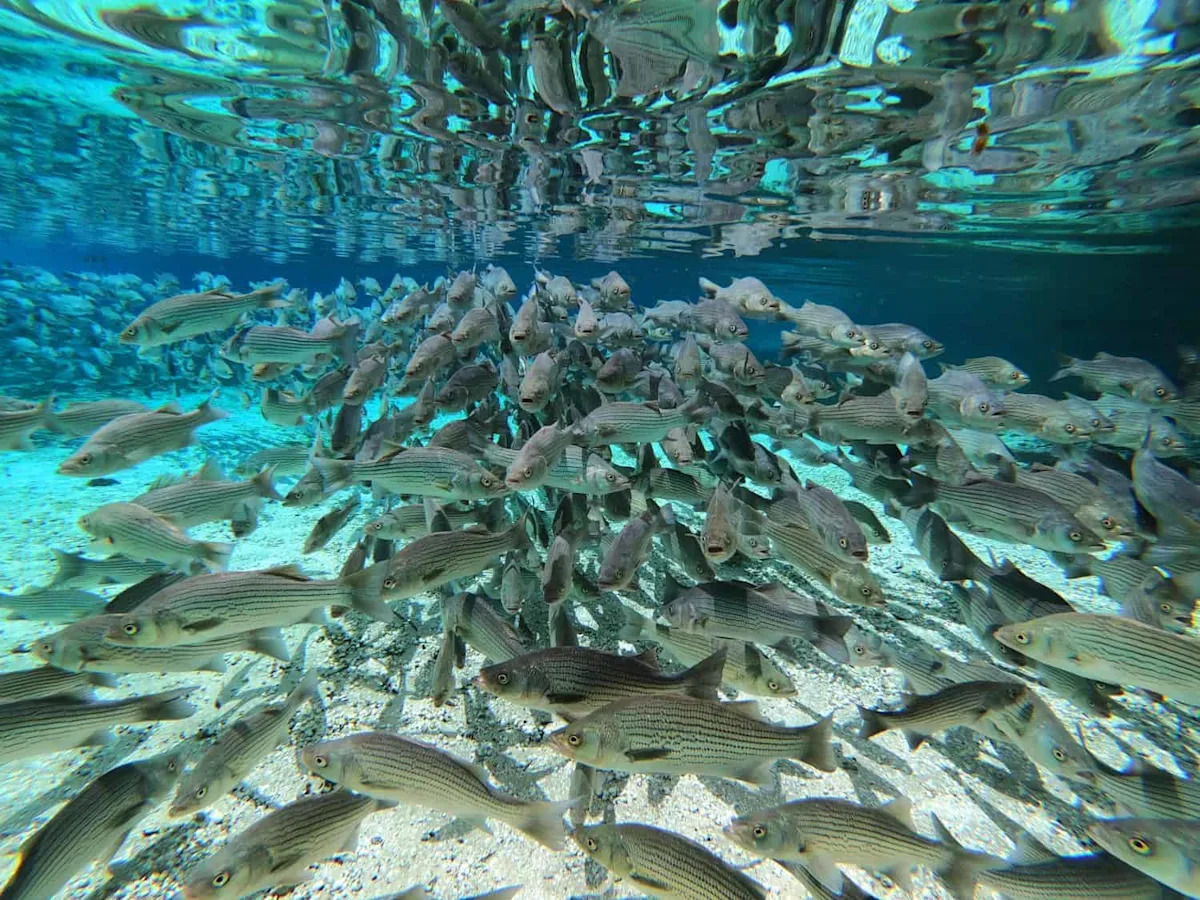
Don’t let their docile appearance fool you; striped bass are quick, nimble, and efficient hunters in deep water.
©slowmotiongli/Shutterstock.com
(slowmotiongli/Shutterstock.com)
Because of their diet variety, they are a crucial part of the Atlantic food chain. The diversity among their prey helps maintain the balance among several species. Because they are not picky eaters, striped bass also help clean up carrion, playing a significant role in maintaining the health of Atlantic waters. This is why restrictions are set during migration season, and each state has its own regulations regarding acceptable catches.
Striped Bass Conservation on the East Coast
Those fishing for stripers are all too familiar with the one-fish limit in most East Coast states. As of the 2026 fishing season, each of these fish must fall within the size range of 28 to 31 inches long. This protects the species as a whole, especially before and after spawning. Fishermen are required to measure each fish they reel in; juvenile fish and larger females must be released back into the water.

If a striped bass is over 31 inches, fishermen are legally required to release it back into the water due to conservation laws in New Jersey, Massachusetts, and New York.
©Tfreeman_Films/Shutterstock.com
(Tfreeman_Films/Shutterstock.com)
New Jersey, Massachusetts, and New York continue to reinforce these size and catch limits throughout the year. Some waterways also have seasonal closures to protect species such as striped bass. This prevents overfishing and ensures juveniles have a chance to survive, while larger, egg-bearing females can go on to spawn in winter. Anyone caught violating these guidelines is subject to hefty fines for keeping or killing the fish.
This is why the one-fish bag limit has turned individual striped bass fishing into a sport. Many fishermen practice catch-and-release, recording their catch before releasing it back into the wild. This practice also provides valuable information about the overall health of the striped bass population each year, as well as their hunting habits and preferred prey. Stripers are particularly fond of crevices and deep channels, which makes them a challenging deep-sea predator to catch.
The post Stripers Are on the Move: Why March Signals the Start of Striped Bass Migration appeared first on A-Z Animals.