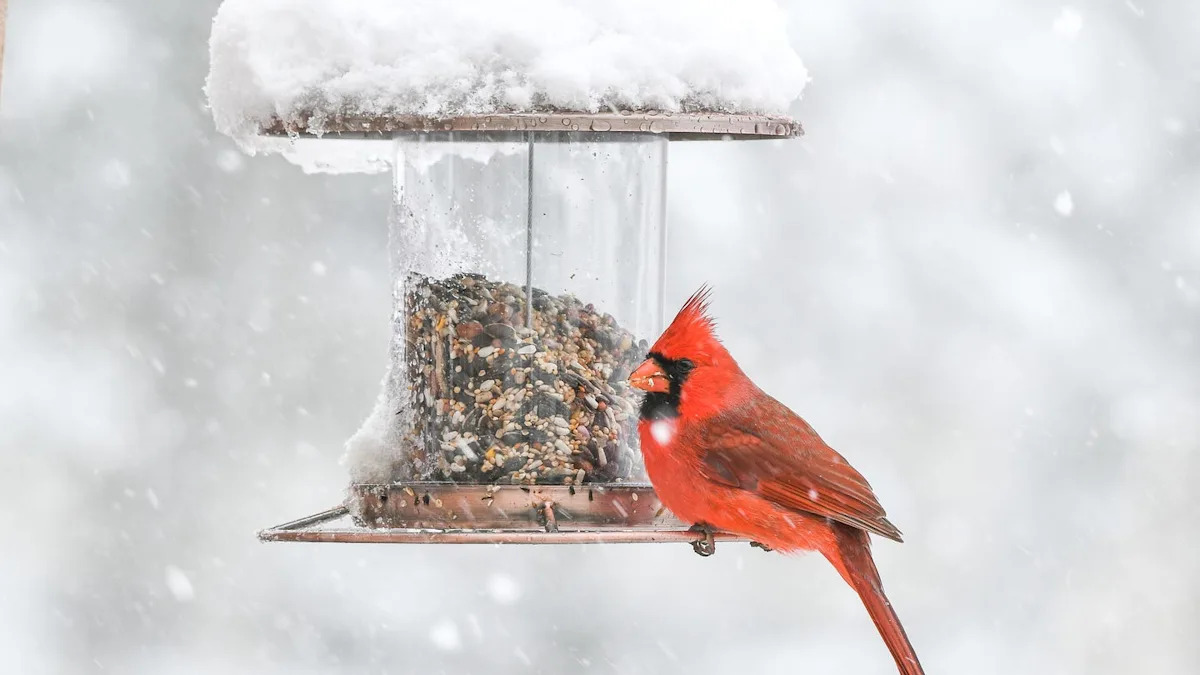
Feeding the birds is always a fun way to help support local wildlife populations. Plus, winter is a time when birds have slightly different nutrient requirements, and you can help. “Birds shift their diets based on their needs when the weather turns cold. They are no longer thriving on high-protein insects which they feed on themselves and to their young during the ‘season of plenty’ in spring,” says Rebekah Rylander, Science Coordinator for the Rio Grande Joint Venture at American Bird Conservancy. “Instead, they are trying to maintain fat reserves to get them through longer spells of cold weather and fewer resources.”
While many birds can slow down their metabolism at night and enter into various degrees of torpor, they are still constantly burning fat to survive and keep their body temperatures warm. “Thus, seeds and nuts become some of the favorite foods of many birds further north during the colder months of the year,” says Rylander.
Setting up various feeding stations throughout your yard is an easy way to help all birds get through winter. Hopper feeders, tube feeders and platform feeders accommodate a variety of species. “The more different types of feeders and seeds you provide, the greater diversity of birds you’ll attract,” says Robert Pierce, PhD, state extension fisheries and wildlife specialist at the University of Missouri. “It allows you to observe and enjoy both the resident birds that don’t migrate and many other species that have traveled a long distance.”
To keep your birds healthy, make sure to clean the feeders regularly to prevent the growth of mold or bacteria, says Pierce. Use hot soapy water and a brush to scrub the corners, rinse well, let the feeder air dry, and refill with fresh seed.
You’ll also want to make sure to protect birds from window collisions because more than one billion birds in the U.S. die each year when they accidentally fly into windows, says Rylander. Birds can’t see glass, and fatal collisions occur due to reflections and because the surface looks like a clear passageway. Use deterrents such as hanging cords or adhesive dots to break up the reflection so birds don’t inadvertently fly into your windows.
Ahead, here are the best foods for feeding your birds in winter:
Black-oil Sunflower Seed

Photo credit: Robert Winkler – Getty Images
If you want to attract the biggest array of visitors, opt for this seed. “This may be the most versatile type of bird food because it packs a punch of fat and protein,” says Rylander. “Many different species readily eat black-oil sunflower seeds: chickadees, titmice, cardinals, nuthatches, and sparrows, just to name a few groups. The seeds are easy enough for most birds to crack open, but they are also hard enough to be stored or cached for later.”
Suet

Photo credit: marcophotos – Getty Images
Suet is an excellent choice in cold climates because it provides birds with an extremely fat-rich option, which is essential when they are burning off reserves to stay warm. Like black-oil sunflower seed, it also attracts the highest variety of birds. Even species that are insectivores such as warblers, kinglets and wrens, eat suet in winter, says Rylander. Woodpeckers especially love suet.
Read the label to ensure you’re buying suet with suet/rendered beef fat and nutritious additions such as sunflower seeds, unsalted nuts, and dried fruits—and not low-quality fillers such as bacon grease, palm/vegetable oils, or corn syrup.
Broken Peanuts

Photo credit: photo by Pam Susemiehl – Getty Images
Woodpeckers, chickadees, titmice, and nuthatches love shelled and broken peanuts, says Pierce. Make sure they’re unsalted, and be aware that squirrels also adore peanuts!
Safflower Seeds

Photo credit: Dion Smith – Getty Images
Safflower seeds typically are pricier than black-oil sunflower seeds but provide high-fat, high-protein content that birds need in winter, says Rylander. Safflower also is less popular with squirrels, so this may be a good option if you’re always chasing them away. Cardinals especially love safflower.
Nyjer Thistle

Photo credit: Ed Reschke – Getty Images
Thistle is a favorite of finches of all types, siskins and redpolls, says Pierce. A special feeder that these smaller birds cling to when feeding is required for holding these fine seeds.
White Proso Millet

Photo credit: Ali Majdfar – Getty Images
Ground-feeding birds such as juncos, sparrows, and doves enjoy millet. This seed also is often found in many good-quality mixes.
Hummingbird Nectar

Photo credit: Dmitry Akhmetov / 500px – Getty Images
If you live somewhere where hummingbirds overwinter (such as in the southern US and in coastal regions), leave a feeder out with sugar water (Find the best recipe for homemade nectar here). “During cold spells, these hummingbird feeders become important for their survival, as these birds also burn an impressive amount of fat to stay alive,” says Rylander. “It is also not true that leaving hummingbird feeders up in the winter triggers birds not to migrate. If the hummingbird wants to travel further south, it will when it’s ready.”
You Might Also Like