The post Frozen Beaver Rescue: Police Officers Save Wildlife in Winter Chill appeared first on A-Z Animals.
Quick Take
-
A beaver found at 2 degrees below zero required immediate wildlife rehab transport to ensure survival.
-
Visible ice crystals frozen into fur created a critical mobility failure for the disoriented beaver.
-
A polar vortex forces semi-aquatic mammals into urban landscapes far from any waterway.
-
Lincoln Animal Control initiated monitoring of bloodwork to determine when the wildlife release is safe.
It’s hard for certain animals to survive in the heart of winter, especially when they are forced to navigate urban landscapes. Sometimes those creatures are found just in the nick of time, near-freezing and far away from home. For example, consider this recent story from Lincoln, Nebraska. Police were called to the scene at Mum’s Liquor store, where a beaver sat motionless on the sidewalk, close to freezing.
Luckily, emergency personnel were able to save the beaver before it succumbed to the elements. Let’s learn more about the beaver’s rescue, how freezing weather affects semi-aquatic animals like beavers, and what experts suggest you do if you ever come across a beaver in the snow in need of saving.
Mum’s the Word

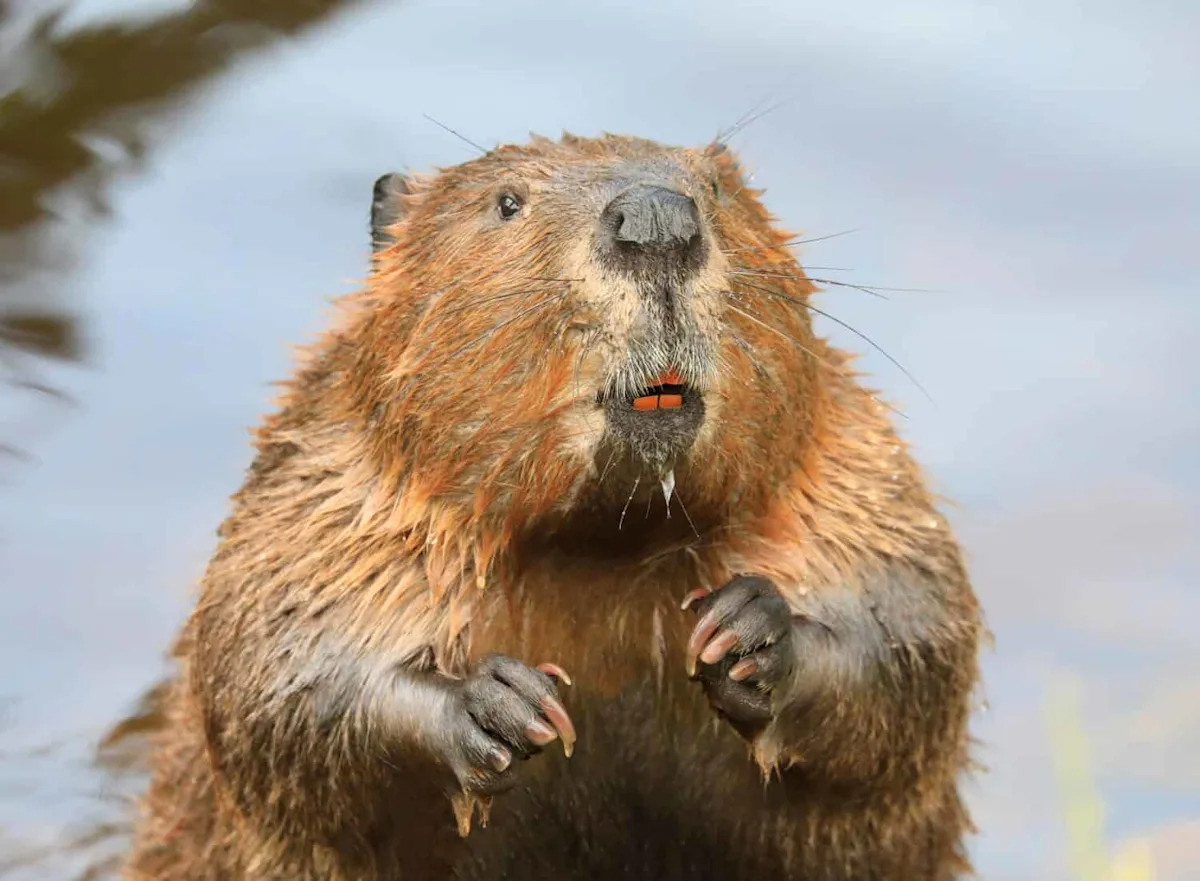
A group of beavers is called a colony.
©P Harstela/Shutterstock.com
(P Harstela/Shutterstock.com)
According to several media outlets, including KLIN News Talk, residents were greeted by a surprising sight on the night of Saturday, January 24th. People spotted a large beaver outside of Mum’s Liquor store near the corner of 20th and “O” Street. It sat outside the store motionless amid temperatures that had dropped to two degrees below zero.
Managers at the liquor store noticed that the beaver was in poor condition and seemingly unable to move, so they contacted authorities. Lincoln police alerted the city’s animal control, which arrived on the scene. According to the article, Officer Denise Bollwitt found the beaver with “visible ice crystals frozen into its fur.” What’s more, the beaver was miles from any significant waterway and was rendered disoriented by the freezing temperatures.
In response, animal control carefully secured the nearly frozen beaver and transported it to the Nebraska Wildlife Rehab in nearby Omaha. According to initial reports, the animal was not injured by a predator or vehicle, but was simply suffering from extreme exposure. Luckily, rescuers were able to get the beaver to a stable condition. As of the last report, rescuers planned to continue warming the animal and monitoring its bloodwork until the weather permits. Once temperatures rise, they plan to release the beaver back into the wild, preferably near a suitable waterway.
Weekend Bobcat
As Officer Bollwitt explained, beavers aren’t that rare in the area. She said, “They do live around here. We’ve picked up a few over the years. Antelope Creek is near the store. Sometimes they’ll come up from the creek, especially if they are sick or injured. We have a lot of raccoons that use the sewer system. So it doesn’t surprise us that there was a beaver in town at all.”

During the same weekend, wildlife rescue transported a juvenile bobcat from someone’s garage to a safe facility.
©iStock.com/brentawp
(iStock.com/brentawp)
Remarkably, finding the beaver wasn’t the only rescue mission Lincoln Animal Control undertook that weekend. According to the same news article, and as detailed further in a Facebook group post dedicated to lost pets in Lincoln, someone found a young bobcat on the front porch of a home near Northwest 48th Street and “O” Street. The good Samaritan managed to secure the bobcat and keep it warm and fed in their garage until emergency personnel could pick it up the next morning. The person who saved the bobcat told members of the Facebook group that the cat was safe and eating well at the shelter.
Interestingly, Lincoln Animal Control was not involved in this second rescue. According to Officer Bollwitt, it was handled by a separate agency: “That was strictly Game and Parks and Wildlife Rehab. While they were here getting the bobcat, they also picked up the beaver.”
Semi-Aquatic Survival Science
Semi-aquatic mammals like beavers and muskrats may be adapted to the cold, but a polar vortex can threaten even the most winter-ready creature. When waterways freeze solid, beavers can be forced onto land to find more food. Although their heavy fur is protected by natural oils, it can still freeze easily. This reduces a beaver’s mobility and makes it vulnerable to hypothermia.
While beavers spend most of the winter in the confines of their mud-and-stick lodges, these structures can only protect them so much. Once a pond or waterway freezes over, beavers are effectively sealed beneath the ice. They must then rely on food caches accessed through underwater tunnels. If a beaver becomes trapped outside its lodge in the dead of winter without access to a nearby waterway, it may become disoriented and wander into urban areas.
Listen to the Experts

When you come across a wild animal, you should leave it alone and call professionals, even if it appears injured.
©Jim Parkin/Shutterstock.com
(Jim Parkin/Shutterstock.com)
The most important thing to remember when dealing with wildlife in freezing conditions is to avoid disturbing them. Wild animals, after all, often fare worse when humans intervene. It’s best to observe them from a distance, provide passive help (such as leaving insulation materials in your yard), and call professionals for assistance.
As Officer Bollwitt told reporters, you should not intervene directly if you see a half-frozen beaver outside of a liquor store. She said, “Do not approach it. Leave them alone.” Even if the wild animal appears to be injured, you should contact animal control or wildlife rescue.
The post Frozen Beaver Rescue: Police Officers Save Wildlife in Winter Chill appeared first on A-Z Animals.