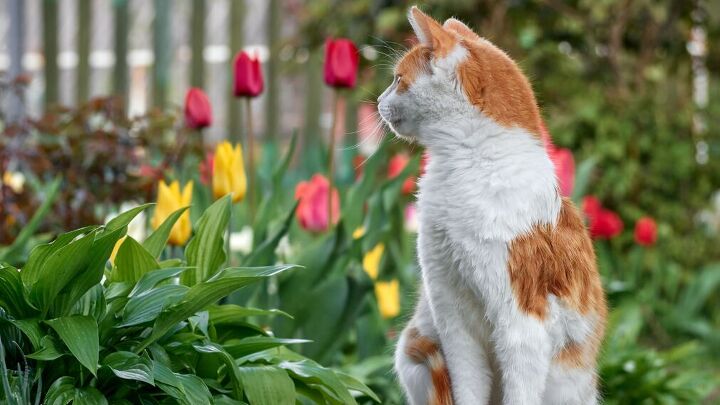
Spring brings warmer weather, blooming flowers, and plenty of chances for your cat to explore the outdoors.
While flowers can brighten your home and garden, some of the most popular spring blooms can be dangerous for our feline friends.
Knowing which flowers to keep out of reach can help you protect your cat and still enjoy a beautiful spring.

Cat in garden – image via Canva
Cat in garden – image via Canva
1. Lilies
Lilies are stunning, but they are extremely toxic to cats. Even a small amount of pollen or a few leaves can cause kidney failure. Lilies include Easter lilies, tiger lilies, and Asiatic lilies. If your cat chews on any part of the plant, contact your vet immediately.
2. Tulips
Tulips are a classic spring flower, but the bulbs are especially toxic. Eating them can cause vomiting, diarrhea, and other problems. While the petals are less dangerous, it’s best to keep tulips out of your cat’s reach altogether.

Tulips – image via Canva
Tulips – image via Canva
3. Daffodils
Daffodils are bright and cheerful, but their bulbs contain lycorine, which can make cats vomit, drool, and become lethargic. In larger amounts, they can cause more serious symptoms like convulsions or low blood pressure.
4. Hyacinths
Hyacinths are fragrant and popular in gardens and floral arrangements. Unfortunately, their bulbs are toxic to cats and can cause vomiting, diarrhea, and irritation of the mouth and throat.

Hyacinths – image via Canva
Hyacinths – image via Canva
5. Crocuses
Spring crocuses are different from their autumn relatives, but some varieties can still be harmful to cats. Ingesting crocuses can cause vomiting, diarrhea, and even tremors or seizures in severe cases.

Azaleas – image via Canva
Azaleas – image via Canva
6. Azaleas
Azaleas bloom in vibrant colors, but even small amounts can be toxic to cats. Symptoms include vomiting, drooling, diarrhea, and in severe cases, heart problems.
Final Thoughts: Keeping Your Cat Safe
If you love having flowers around, consider cat-safe options like roses, sunflowers, or snapdragons. You can also display toxic flowers in rooms your cat doesn’t access or use hanging planters.
If you suspect your cat has eaten a toxic plant, call your vet immediately. Quick action can make a huge difference.
Join the PetGuide community. Get the latest pet news and product recommendations by subscribing to our newsletter here.
Next up, learn…
How to Create a Cat-Safe Garden Without Giving Up Beautiful Plants

How to Create a Cat-Safe Garden Without Giving Up Beautiful Plants
Bright blooms, leafy greenery, and fresh herbs can turn any outdoor space into a peaceful retreat. But if you share your home with a curious cat, your garden might hide a few risks. Many common plants are toxic to cats, and since cats love exploring-and nibbling on things they shouldn’t-it’s worth making sure your garden is as safe as it is beautiful.The good news? You don’t have to give up your dream garden to protect your feline friend. With a little planning and the right plant choices, you can create a space that works for both of you.Disclosure: PetGuide may receive a small affiliate commission from purchases made via links in this article but at no cost to you.

Rachel M.
Rachel M.
JamesGal
пояснения
krab2 cc