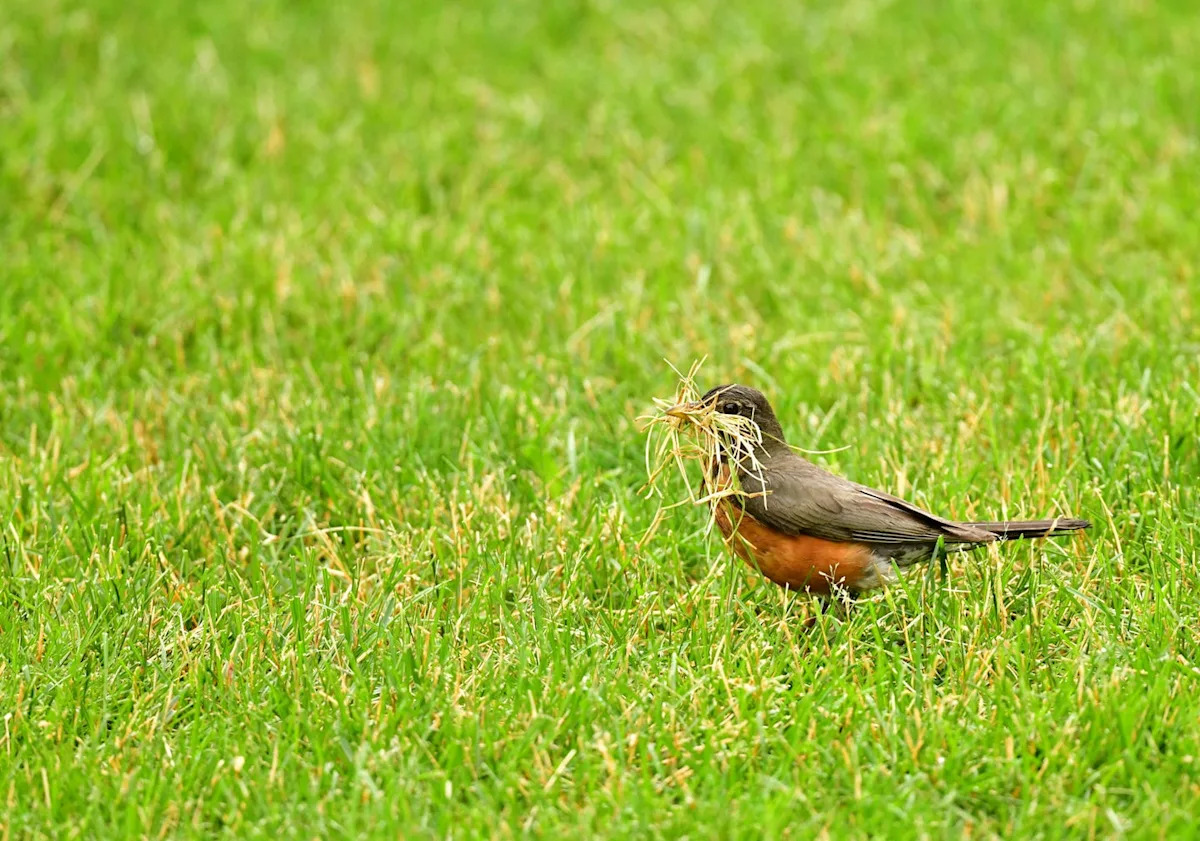
When birds start nesting in the spring, you may find them in places you don’t expect—and not always where you’d like them to raise their young.
“The most common places to find bird nests around your home are on light soffits, on door wreaths, under the eaves of your porch, or posts beneath a deck,” says Holly Grant, project assistant for NestWatch, Cornell Lab of Ornithology. “Birds are pretty creative, so if they are desperate for a nesting spot and find a place that’s close to what they’ll need, they’ll try it.”
They’ll even nest in spots such as grills, mailboxes, on clothes left outside on the clotheslines, or even in a pair of boots kept outside! Most nests are constructed where the birds hope to be hidden from predators, with different species valuing different features when looking for nesting space, says Grant.
For example, some birds such as bluebirds, wrens, tree swallows, and chickadees, look for existing tree cavities. Cardinals prefer thick shrubbery. Hummingbirds and goldfinches build their nests on tree branches.
Unfortunately, sometimes a nest is built in areas that present a sanitation or safety issue.
“It’s fun to watch the process and get to observe wildlife up close, but sometimes birds build in places such as chimney vents, gutters, and dryer vents,” says Robert Pierce, PhD, state extension fisheries and wildlife specialist at the University of Missouri. “No matter what the location, if it’s a spot where you prefer not to have them, you need remove the nest as soon as you see them starting to build, before the birds become habituated to a location.”
Ahead, here’s what to know about bird nesting near your home—including how to discourage birds from building nests where you don’t want them:
When Do Birds Start Building Nests?

Nathan Bilow – Getty Images
It depends on where you live, but birds are at work earlier in the season than you might suspect—and not just in the spring. “The nesting season for most songbirds across the U.S. and Canada is April through August, but can start as early as March in the most southern or warmest states,” says Grant. “Some other species, like owls and some raptors, may start nesting as early as late January through February.”
The construction process may take from just a few days to a week or more, depending on the species. For example, some birds such as barn swallows, use soil to build their nests, so they must make many trips to construct their cup-shaped nests, says Pierce.
How to Deter Birds from Nesting
There’s no foolproof method to keep birds out of places where you don’t want them, but there are a few ways that may make a specific site less appealing:
1. Remove nest materials as soon as you see them.

Boy_Anupong – Getty Images
If you see nesting materials, it’s essential you remove them before the bird lays its eggs. Remove them by hand or with a garden hose, being careful not to harm nearby wildlife. “This should be done daily, or even multiple times a day, because this action is only appropriate in the beginning stages of nest building,” says Grant. By law, once eggs are present, you cannot remove the nest.
2. Pay attention to areas where birds have nested in previous seasons.
They often come back to the same site, says Pierce.
3. Be persistent about removing a nest under construction.
Oftentimes, birds keep coming back and rebuilding after you remove a nest. Don’t give up; keep taking away the nesting materials until the bird moves on, says Grant. As long as a nest has no eggs in it, you can remove it.
4. Cover openings, such as dryer vents, with ½- to ¾-inch hardwire cloth.
Excluding birds from an area prevents them from building there in the first place, says Pierce. This is especially important if it’s a spot where they’ve nested before. Bird netting, pulled taut, also may work in areas such as under a deck.
5. Bird spikes sometimes work.

Peeradon Warithkorasuth – Getty Images
“Birds spikes can deter some nests for some birds, but if there’s a flat area, perhaps the end of a ledge that the spikes don’t quite cover, that has just enough flat space for their nest, they’ll go for it,” says Grant.
6. Try reflective bird tape.
This flutters in the breeze and sometimes discourages birds from building in an area, says Pierce.
7. Forget about deterrents such as owl figures.

Fabrizio Putano – Getty Images
“Decoys like owl figures or rubber snakes might work at first, but once the birds realize they aren’t a threat, they will get used to and ignore them,” says Grant. “Nature is fraught with predators and breeding is the number one priority for birds in spring, so if the decoy isn’t actually depredating them, they get used to it pretty quickly.”
What to Do If You Find a Nest with Eggs

camera111 / Imazins – Getty Images
If you find a nest with eggs already in it, you’ll have to wait it out. If you are in North America and eggs are present, the nest is protected by federal law, which prohibits injury or disturbance to wild birds, their eggs, and young, says Grant.
In this case, try to give the nest plenty of space, and keep kids and pets away from the site. If the nest is near your main entry, use a different door to enter and exit your house, if possible. You also can post a note for guests or delivery persons not to get too close, says Grant.
If there’s no alternative entry to your home, be slow, quiet, and mindful of making sudden movements near the nest. Also, avoid looking directly at the nest when you pass by; sometimes “ignoring” the nest helps prevent startling the adult off the nest, says Grant.
You won’t have to wait too long; most birds are ready to leave the nest in two to three weeks. In the meantime, you’ll have the opportunity to witness nature in action, says Pierce. Once the babies have fledged, it’s fine to go ahead and remove the nest.
How to Tell If a Nest Has Been Abandoned

John-Paul Stanisic / 500px – Getty Images
If a bird is continuously scared off of its nest, it may decide to abandon the nest. That’s why the less you can disturb a nest, the better. “If eggs are present, but you haven’t seen the adult in a few days—hang tight,” says Grant. “We typically recommend waiting four weeks from the last time you saw the adult before determining a nest has been abandoned. This leaves two weeks for the approximate incubation time (for most songbirds) and another two weeks because sometimes songbirds may delay their incubation.”
If this time passes and the eggs haven’t hatched, they are likely abandoned. However, be aware that the adults may be around and you just haven’t seen them! “Adults aren’t always constantly on the nest, especially if the weather is a little warmer than normal, or if they get scared off the nest by someone getting too close,” says Grant. If you wait it out long enough, your efforts usually help support a new generation of wildlife in your own backyard.
You Might Also Like