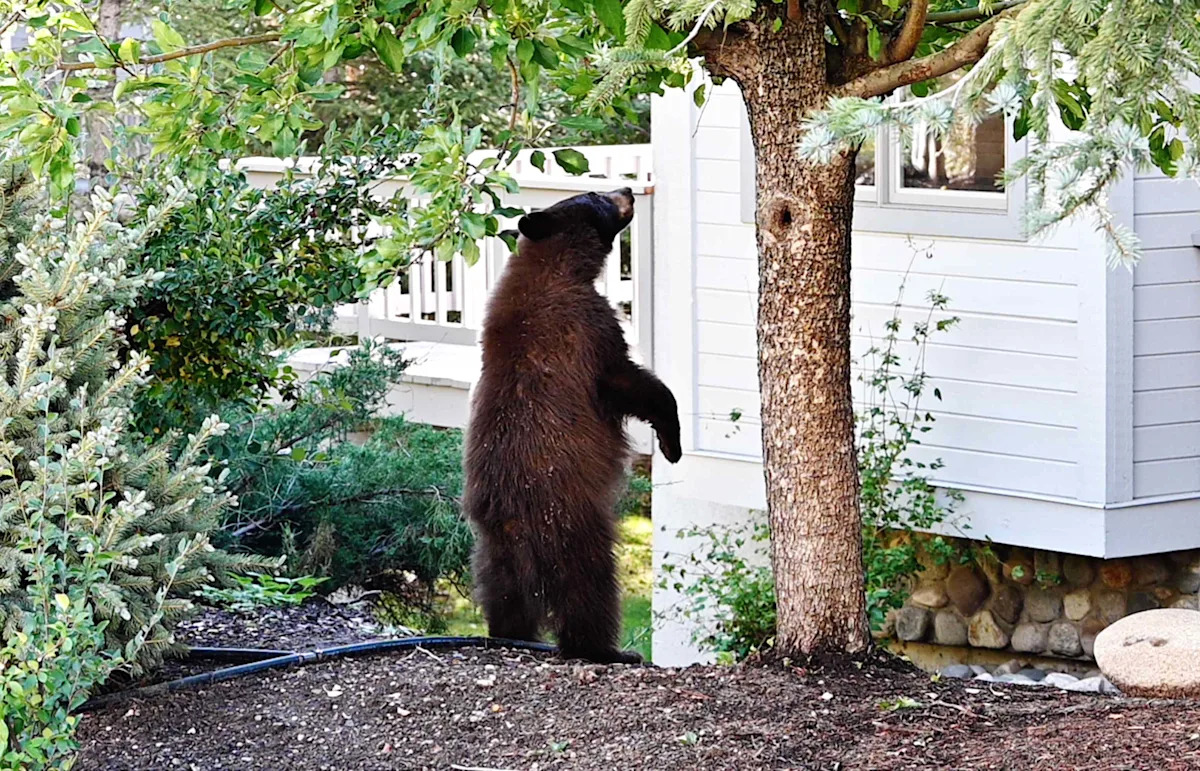
While the American black bear once faced near-elimination by the early 20th century due to habitat loss from agricultural practices and overhunting, populations have been steadily increasing in number and range over the past quarter-century, including in the South, partly thanks to conservation efforts.
“Bear populations have been increasing due to strong harvest regulations and conservation actions that have been implemented since the early 1900s to protect and conserve populations that had been drastically reduced,” said Michel Kohl, PhD, Certified Wildlife Biologist, wildlife extension specialist and associate professor of wildlife management at the University of Georgia. “ With these efforts, bear populations have been able to increase in abundance and expand into a greater proportion of their historical range.”
Kohl also explained that bears are also great at co-existing with humans, often able to utilize our resources for their survival.
The American black bear (Ursus americanus) inhabits various areas in the United States, including the Appalachian Mountains, Louisiana’s forested wetlands, and parts of Alabama, Florida, and Georgia.
Identifying Black Bears

Credit: Jack Nevitt Photography / Getty Images
In the South, you will only find black bears. The American black bear is a large-bodied mammal with a heavy build. Black bears have a broad skull, small eyes, erect ears, thick fur, and a short tail. When it comes to the color of its fur, or pelage, this will differ depending on its geographical location. However, in general, black bears vary in hue from black to cinnamon, chocolate brown, bluish-gray, and cream-colored.
Black bears range in height from 2.5 feet to 9 feet, and weigh between 120 and 200 pounds for adult females and 150 to 500 pounds for adult males.
Understanding Bears
“Bears are opportunistic, omnivore feeders, which means they have a very diverse diet. That means they tend to get themselves into trouble easily when we provide easy food sources,” explained Kohl. “Our best way to help bears and people coexist is to limit these attractants on the landscape. Also, do not intentionally feed bears, as this will often lead to that bear having to be euthanized if it continually gets into trouble.”
More specifically, black bears are very shy and will typically avoid humans, being mostly active during the nighttime.
What To Do If You See A Bear In Your Yard
Negative interactions with bears can be avoided with these tips from Kohl:
-
Do not approach the animal: “From a safe distance, attempt to haze the bear using loud noises (banging pots, shouting, air horn),” explained Kohl.
-
Keep your pets inside, particularly dogs: “Keep your pets inside when this happens, particularly dogs, as they may attempt to chase the bear,” said Kohl.
-
Remove any food attractants: Once the bear leaves the area, get rid of any food that is attracting them. “This includes picking up bird feeders, pet food, garbage, ripe fruit from fruit trees, and other food attractants such as uncleaned BBQ grills,” stressed Kohl.
-
Install electric fencing if necessary: “If you have things that might be of high food value to bears, such as honey bee hives, you can protect those with electric fencing,” said Kohl.
Are Bears Dangerous?
“Just because a bear shows up in your yard, it doesn’t necessarily mean there is any risk,” said Kohl. “A bear could simply be passing through the area and pose no risk. When there is a risk, it is usually because the bear has become food conditioned. If that occurs, the biggest risk is damage to property, people, and pets.”
Additionally, if a bear feels threatened, it will display some typical signs of aggression that you can look out for.
“A bear that feels threatened will not roar or growl. Instead, they might slap the ground, or blow air through their mouth to make a flapping sound with their lips, or snap/clack their teeth together. If this doesn’t scare the threat away, they may bluff charge. If they are actually posing a risk to people, they will stare, protrude their lower lips, and flatten their ears,” said Kohl.
Read the original article on Southern Living