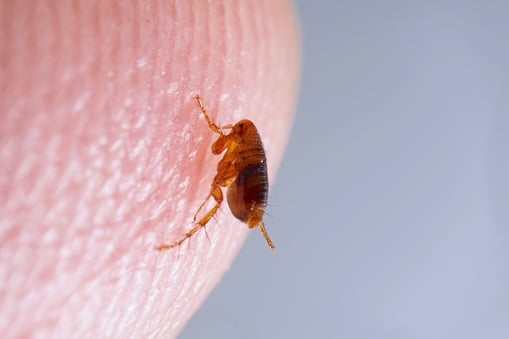

Super macro close up of brown, amber colored flea, Siphonaptera on human skin. It survives as external bloodsucking parasite of mammals and birds.© S.Rohrlach/iStock via Getty Images
The post How Fleas Sneak Into Your Home—and How to Stop Them Before It Starts appeared first on A-Z Animals.
Quick Take
-
Fleas and ticks hitchhike on pets, people, and wildlife.
-
Infestations explode fast because of the flea life cycle.
-
Safe cleaning plus vet care stops problems early.
-
Prevention plans must fit each pet and home.
If you share your home with a dog or cat, you also share it with invisible commuters: parasites looking for a warm meal. Fleas and ticks do not need a dirty house to move in. All it takes is a single ride on a pet, a visiting animal, or even your pant leg. Once inside, they can multiply from a handful of adults to thousands of hungry biters in just a few weeks, turning your carpets and couch into a hidden breeding ground. Understanding how these pests get indoors, how they spread, and how to shut down their life cycle early is the key to keeping both pets and people comfortable and healthy.
A Serious Health Concern
Fleas can cause a range of health problems for animals, especially dogs and cats. Their bites trigger intense itching. Pets often scratch or chew their skin so much that it creates sores that can become infected. Some animals develop flea allergy dermatitis, a reaction that causes severe itching and hair loss from just a few bites. Heavy infestations can even lead to anemia in small or young pets because fleas feed on blood. Fleas can also spread parasites such as tapeworms when pets swallow infected fleas while grooming.

This is an American dog tick (
Dermacentor variabilis
), also known as wood tick.
©Jukka Palm/Shutterstock.com
(Jukka Palm/Shutterstock.com)
For people, the health risk is usually much lower than it is for animals, but flea bites can still cause clusters of small red, itchy bumps that are irritating and uncomfortable. Conversely, ticks can be a serious health risk for people. A single tick can transmit diseases like Lyme, anaplasmosis, or ehrlichiosis, which may cause fever, joint pain, and organ damage if not treated.
Expert: It Doesn’t Mean Your House Is Dirty

We contacted Jordan Gonzales, Technician and Service Manager at Epling’s Pest Control in Hayes, Virginia, near Newport News, for an insider perspective on flea and tick control. He told us these parasites are a very common problem, especially for pet owners, and it doesn’t mean you are a bad housekeeper: “They don’t care about cleanliness. You can be the cleanest person in the world, and they will still get in just because you’ve been outside.”
That having been said, reducing clutter, vacuuming frequently, and washing pet bedding at a temperature of 140°F or more can help prevent the occasional intruder from becoming a full infestation. To prevent any parasites from crawling back out of the vacuum cleaner, remove the vacuum cleaner bag and seal it up in a plastic bag before disposal.
They don’t care about cleanliness. You can be the cleanest person in the world, and they will still get in just because you’ve been outside.
Jordan Gonzales, Technician and Service Manager at Epling’s Pest Control
How Do Fleas and Ticks Get In?
Gonzales explains: “Typically, they will get in by a host: a cat, dog, or directly on humans themselves who have been out in the yard. From there, they jump off the host to lay eggs in the carpet, in cracks along the baseboard, and other secluded, dark areas.” And it doesn’t matter whether you have carpet, laminate, or hardwood floors; you can still get an infestation: “Carpet gives them more hiding places, but regardless of the flooring type, they can still get into furniture and cracks and crevices.” Fleas and ticks may also jump from one animal to another once they get into the house. This means that even if your cat never goes outside, it can still pick up parasites from you or your dog that you bring in from a walk.
Knowing how they get in helps with prevention. “After going on a hike or walking your dog, you’ll usually see them on your legs first,” says Gonzales. “Before going into your house, brush off your pants legs and socks at least between your ankles and knees. You can also just use a towel to brush yourself and your dog off to swipe away parasites that may just be sitting on the surface.”

Domestic animals can pick up fleas even from brief forays outdoors.
©fantom_rd/Shutterstock.com
(fantom_rd/Shutterstock.com)
How an Infestation Multiplies Rapidly
Fleas reproduce so quickly that a full infestation can develop within weeks. After its first blood meal, a female flea can begin laying eggs within a day or two. She may produce 20 to 50 eggs per day. Eggs then fall off pets onto carpets, bedding, and floor cracks. There, they hatch into larvae that hide from light and feed on debris. The larvae then spin cocoons and develop into pupae that can remain dormant for weeks or months. Vibrations and warmth signal that a host is nearby, and they jump on board. This allows the entire cycle from egg to biting adult to be completed in as little as 3-8 weeks.
Ticks reproduce differently and usually do not multiply inside homes the way fleas do. Female ticks typically drop off their host outdoors to lay eggs in soil, leaf litter, or vegetation. However, a tick that drops off a pet indoors can still create problems by seeking another host or hiding in small cracks and crevices. While ticks rarely cause large indoor infestations, even a single unnoticed tick can pose a serious health risk because of the diseases it may transmit.
Early Warning Signs You Should Never Ignore

Incessant scratching is a noticeable indicator of possible flea infestation.
©iStock.com/adogslifephoto
(iStock.com/adogslifephoto)
At first, fleas can be easy to miss. Your dog might just scratch a little more often, or your cat might seem restless at night and groom specific patches of fur. Look closely for tiny dark specks (flea dirt) on the skin. Look especially around the base of the tail, belly, and inner thighs; when wet, these specks turn reddish-brown because they are digested blood. You might also spot small, fast-moving insects on your pet’s face or neck when you part the fur with a flea comb.
Ticks are easier to see, but can still go unnoticed if pets have thick fur. Run your fingers slowly over your pet’s body and check common attachment sites such as the ears, neck, under the collar, between the toes, and around the tail. A tick may feel like a small bump or skin tag at first. Around the house, early clues include itchy ankles, unexplained bites on people, or tiny jumping dots on light-colored socks in the case of fleas, or discovering a crawling tick on furniture, bedding, or walls.
Why You Need to Call Your Vet
Gonzales says that calling a vet is imperative if your pet starts scratching a lot. Preventing and controlling an infestation requires treating both the animal and the house. “It’s not magic,” he says. “We can’t just spray your house and make them disappear, if they are continuing to multiply and fall off of untreated animals.”
Vets can confirm that the itching is from parasites rather than allergies or skin infections and recommend safe, species‑appropriate treatments. For dogs, this might include oral medications that kill adult fleas and prevent future eggs from hatching, combined with products that protect against tick-borne diseases. Cats are more sensitive to certain chemicals. This means they need cat‑specific spot‑on treatments or tablets. Never apply a dog flea or tick product to a cat, as some ingredients used for dogs can be toxic or even fatal to cats.

Bring a vet in early to deal with fleas, not as a last resort.
©FamVeld/Shutterstock.com
(FamVeld/Shutterstock.com)
How Prevention Differs for Dogs vs. Cats
Dogs and cats live different lifestyles, so their flea and tick prevention often looks different, too. Many dogs spend time on walks, in yards, or at dog parks. Thus, year-round parasite control is usually recommended, even in cooler climates, to cover surprise warm spells. Veterinarians may suggest monthly oral tablets such as Simparica, Credelio, or Bravecto, or long‑acting collars like Seresto that target both fleas and ticks. This is especially the practice in regions where tick-borne diseases are common.

Because cats groom themselves so thoroughly, topical flea medications must be specially formulated to prevent them from getting sick.
©Bogdan Kurylo/iStock via Getty Images
(Bogdan Kurylo/iStock via Getty Images)
Cats, on the other hand, may be strictly indoors, indoor–outdoor explorers, or barn guardians, and each situation carries its own risk. Even indoor cats can benefit from regular flea prevention because parasites can ride in on other pets or people. Some cats develop severe skin reactions from just a few bites. Because cats groom themselves so thoroughly and react differently to chemicals, vets typically rely on species‑specific spot‑ons or pills and avoid certain ingredients that are safe for dogs but dangerous for felines. Whatever you choose, sticking to the schedule—rather than waiting until you see bugs—is what actually keeps infestations from starting.
When to Bring in a Pest Control Professional

Professionals can treat your home with pet-safe chemicals to prevent and end infestations.
©Andrey_Popov/Shutterstock.com
(Andrey_Popov/Shutterstock.com)
Sometimes, despite your best efforts, fleas keep coming back. This can happen in multi‑unit buildings, older homes with many floor cracks, or yards visited by wildlife. Pest control companies that specialize in flea management can treat both indoors and outdoors with targeted products and help seal entry points that wild animals use to get into crawl spaces or attics.
Why not just buy flea bombs or other DIY products rather than calling a professional? According to Gonzales, “Professionals have a knowledge of the best products to use, how to use them properly, the kinds of places parasites hide that many people might miss, and the biology of the parasites so that the life cycle can be interrupted. We use different products that kill living parasites and cause the eggs to hatch into sterile adults, which then need to be treated again in 7-10 days to eradicate the infestation completely. We can also do preventative spraying in the yard that will reduce the chances of infestation by 95%. It’s best to do this annually in the spring.”
Are Insecticides Safe?
Epling’s Pest Control typically uses Zenprox EC and Precor to treat fleas, followed up with Striker in particularly heavy infestations. The chemicals are sprayed along the baseboard, over carpets, and on upholstered furniture. EPA regulations mean these products are safe to use in homes with pets and children as long as the guidelines are followed. In practical terms, this means you need to leave the house for two hours after treatment, not returning too soon to allow your dogs and children to roll around on the floor. Unlike pesticides for other insects, flea treatments do have an odor that dissipates quickly, but can be unpleasant if you’re in the house when the work is going on.
Natural products are also available that use essential oils from plants like Rosemary. These are classified as 25 B pesticides, which means the risk to people or pets from them is minimal. EcoVia EC is a product Gonzales uses for one of his customers who operates a dog rescue and is particularly concerned about the health of some of her more fragile pets.
An Ounce of Prevention…
Fleas and ticks are persistent hitchhikers, but they are far easier to manage when caught early. By checking pets regularly, keeping bedding and living spaces clean, and using veterinarian-recommended prevention products year-round, most infestations can be prevented before they ever start. Paying attention to the first signs of scratching or bites and acting quickly protects both pets and people from discomfort and potential disease. With a little awareness and consistent prevention, your home can stay a place for pets to relax—not parasites to settle in.
The post How Fleas Sneak Into Your Home—and How to Stop Them Before It Starts appeared first on A-Z Animals.