The post Thinking About a Pet for Your Child? These Are the Best First Pets for Kids Ages 5 to 8 appeared first on A-Z Animals.
Quick Take
-
Studies show that kids ages 5 to 8 bond better with some pets than with others.
-
Aquatic animals can provide just as many benefits as other, more high-maintenance pets.
-
Hamsters and guinea pigs teach children additional skills they won’t learn with other pets.
-
Depending on the breed, many dogs form strong bonds with the children in the family.
One of the earliest memories for many of us is getting our first pet. Whether it was our family dog or a tropical fish we grew to love, these animals made an impact. Around age 5, a child’s development shifts into high gear. They develop better communication skills, become curious about the world around them, and start to navigate complex emotions. This brain, body, and emotional development continues through their tween years. And not surprisingly, having a pet can help boost all of these functions.
Wondering which pet is perfect for your little one? Here’s what experts recommend and why.
Why Are Pets So Beneficial for Kids of This Age?
“Caring for a first pet can teach children many valuable life lessons. Through the responsibility of feeding, watering, and tending to their pet’s needs, children learn that their actions have real consequences,” says Brooke Sundin, a Licensed Marriage and Family Therapist and the founder of Light Minds Child and Family Therapy. “I have also observed in the families I work with that pets can help children develop empathy and compassion, as they practice noticing and responding to their animal, which can also support social skills and understanding of others’ cues.”

Dogs are among the most common household pets, and studies show they’re highly beneficial, especially for neurodivergent families.
©maxim ibragimov/Shutterstock.com
(maxim ibragimov/Shutterstock.com)
These types of interactions form the foundation of a child’s neural pathways. The more they interact and learn about their pets, the more information they receive and process. Even though animals don’t speak, their reactions teach kids valuable lessons about interacting with others. This, Sundin says, is also extremely helpful for neurodivergent and disabled children.
Pets can be very beneficial for neurodivergent children and children with disabilities. Since pets require gentle care and attention, children learn the importance of feeding, watering, and checking in on the animal,” she shares. “This routine gives them something predictable and consistent to return to when the rest of the world may feel overwhelming. Interacting with a pet can also support social skills and communication, as it encourages patience, turn-taking, and the ability to read social cues in a low-pressure environment.”
Sundin also explains that sensory-seeking kids tend to do well with animals they can hold or pet. “This interaction can help a child ‘change the channel’ and manage stress. In contrast, children who are easily overstimulated or sensitive to sensory input may connect better with animals that require less direct physical interaction, like fish or reptiles. These animals can provide a quiet, calm, and predictable presence which can be soothing,” she says.
Fish and Other Low-Maintenance Pets
Not all fish are low maintenance, but for the most part, they require less work than many others. A pet goldfish or betta can offer more comfort than parents realize. For kids, learning to love a pet doesn’t mean it needs to be fluffy and cuddly. “Something as simple as watching a fish can be genuinely calming for young children. This interaction supports emotional regulation by giving children a quiet way to relax and practice mindfulness, noticing small details in a manageable way,” Sundin explains. An aquarium also offers plenty of personalization that other pets don’t. Not only can kids decide which fish they want, but they can customize the tank to suit their own aesthetic.

Goldfish are arguably one of the easiest fish to care for, but that doesn’t mean children can’t form close bonds with their aquarium friends.
©satit_srihin/iStock via Getty Images
(satit_srihin/iStock via Getty Images)
She adds that low-maintenance pets also provide a predictable, soothing presence that helps children feel grounded and reinforces a sense of routine. “Even simple daily care like feeding or cleaning helps children feel capable and trusted, which can boost their self-confidence,” Sundin says. One aspect of a pet fish that many don’t think about is also the anti-boredom factor. Watching an aquarium can easily replace TV, phones, or tablets and offer more opportunities to learn about marine life without leaving home. Some even believe it helps manage ADHD and autism, providing an overall calming effect.
Hamsters, Guinea Pigs, and Rabbits
Small mammals are typically the perfect middle ground between high- and low-maintenance pets. While some require more attention and care than others, Sundin says the benefits are many. “Smaller mammals like rabbits or guinea pigs can provide a comforting companionship to children as well. Since these animals are typically quieter and less physically interactive than dogs, it can take more time and patience for kids to build a strong bond,” she shares. “However, the slower pace of this bond can teach the importance of patience and gentle care to children. All animals present children with growth opportunities for connection building and practicing responsibility.”

Smaller animals teach kids about gentle handling, cleanliness, and feeding.
©iStock.com/hxyume
(iStock.com/hxyume)
Studies show that not only are these pets good for kids, but they’re beneficial for the entire family. A pet such as a rabbit, which requires more care and attention than a hamster or guinea pig, quickly becomes a whole-family activity. After familiarizing themselves with humans, they give as much love back as they require. A rabbit can also live up to 8-12 years, becoming a part of the family rather than a fleeting presence. For kids, this reassurance and comfort are a wonderful thing to have during such formative years.
Guinea pigs are a close second and can typically live 5 to 7 years, with some reaching 8 years or slightly longer with excellent care. Although rare, some breeds can live up to 11 years. Both these and hamsters provide the lessons in patience to which Sundin refers. Kids will also learn about nutrients, feeding, and how to keep something other than their bedrooms clean. The reward will be a pet that thrives under their nurturing care, and can even play and cuddle.
Caring for a first pet can teach children many valuable life lessons. Through the responsibility of feeding, watering, and tending to their pet’s needs, children learn that their actions have real consequences.
Brooke Sundin, a Licensed Marriage and Family Therapist and founder of Light Minds Child and Family Therapy
Dogs Provide the Ultimate Comfort and Protection
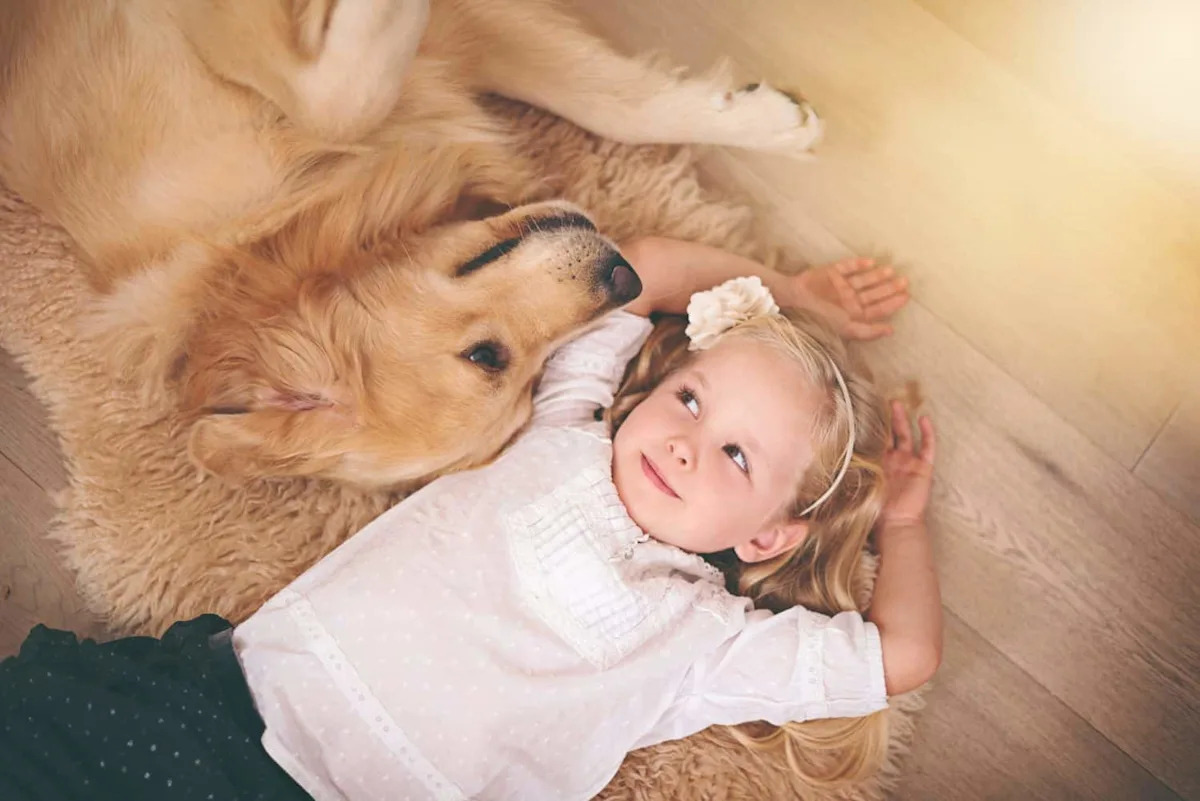
A study published in 2021 by researchers at Oregon State University revealed that dogs often synchronize their behavior with the children in the family and their adult owners. This is a good sign for parents considering a dog for their child, and, according to Sundin, the benefits are second to none.

Dogs might be the best family pet, but they form especially strong bonds with children.
©Gorodenkoff/Shutterstock.com
(Gorodenkoff/Shutterstock.com)
“For kids 5-8, dogs can be incredibly comforting due to their responsiveness to feelings and actions. Dogs are very skilled at picking up on the emotions of others,” Sundin says. “Thus, a dog can notice when a child is upset and respond in ways that make that child feel seen and understood in a way they cannot articulate.” She adds that a good example is a dog that comforts a child when the child is sad.
This instinctive knowing is what earned dogs the nickname “man’s best friend.” But according to science, they’re also children’s best friend. The bond a child of this age forms with their dog can also increase their confidence and social skills. Dogs provide feelings of safety, affection, and comfort, all of which mimic what a child might receive from a friend. Owning a dog also encourages more outdoor time, less screen time, and physical activity, depending on the breed. For neurodivergent children, dogs form lasting bonds that can be the greatest comfort to a nonverbal or overwhelmed child.
The post Thinking About a Pet for Your Child? These Are the Best First Pets for Kids Ages 5 to 8 appeared first on A-Z Animals.