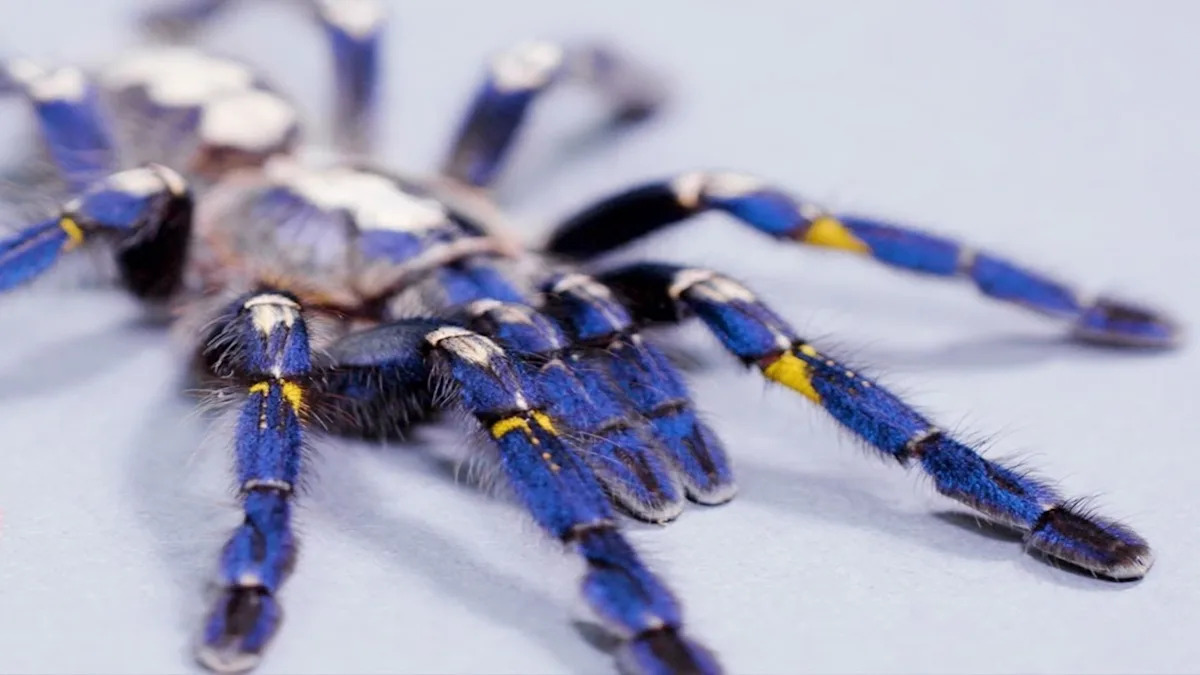
Deep within the forests of India lives one of the most striking spiders in the world, the Gooty sapphire tarantula. Known scientifically as Poecilotheria metallica, this species is instantly recognisable for its vivid blue colouration that sets it apart from nearly every other tarantula. The brilliant colour is not produced by pigment alone but by microscopic structures on the spider’s hairs that reflect light in a unique way. This creates a shimmering effect that gives the tarantula its almost metallic appearance. Native to a very small region in East Gooty in India, this species has captured the attention of scientists, wildlife enthusiasts, and collectors alike. Despite its beauty, it is not a creature to be underestimated. The Gooty sapphire tarantula is fast moving, highly alert, and capable of defending itself when threatened. Its combination of speed, striking colour, and potent venom makes it both fascinating and formidable. The rarity of its habitat adds to its mystique, as it exists in only one limited geographic area, making every sighting significant.
While its appearance draws admiration, the reality of its survival is far more concerning. The Gooty sapphire tarantula is classified as critically endangered due to severe habitat loss. The forests where it lives are being cleared for firewood and human use, reducing the already small area where the species can survive. This limited distribution makes it especially vulnerable to environmental changes and human activity. In addition to habitat destruction, illegal collection for the exotic pet trade has also contributed to its decline. The spider’s venom, while not typically fatal to humans, can cause intense pain and discomfort that may last for days, reinforcing its reputation as a species that commands respect. Conservation efforts have emphasised the importance of protecting its natural environment and limiting human interference. The story of this tarantula highlights a broader issue faced by many species that exist in isolated ecosystems. Without proper awareness and protection, even the most unique and beautiful creatures can disappear. Preserving this species is not only about saving a spider but also about maintaining the delicate balance of biodiversity in its native habitat.