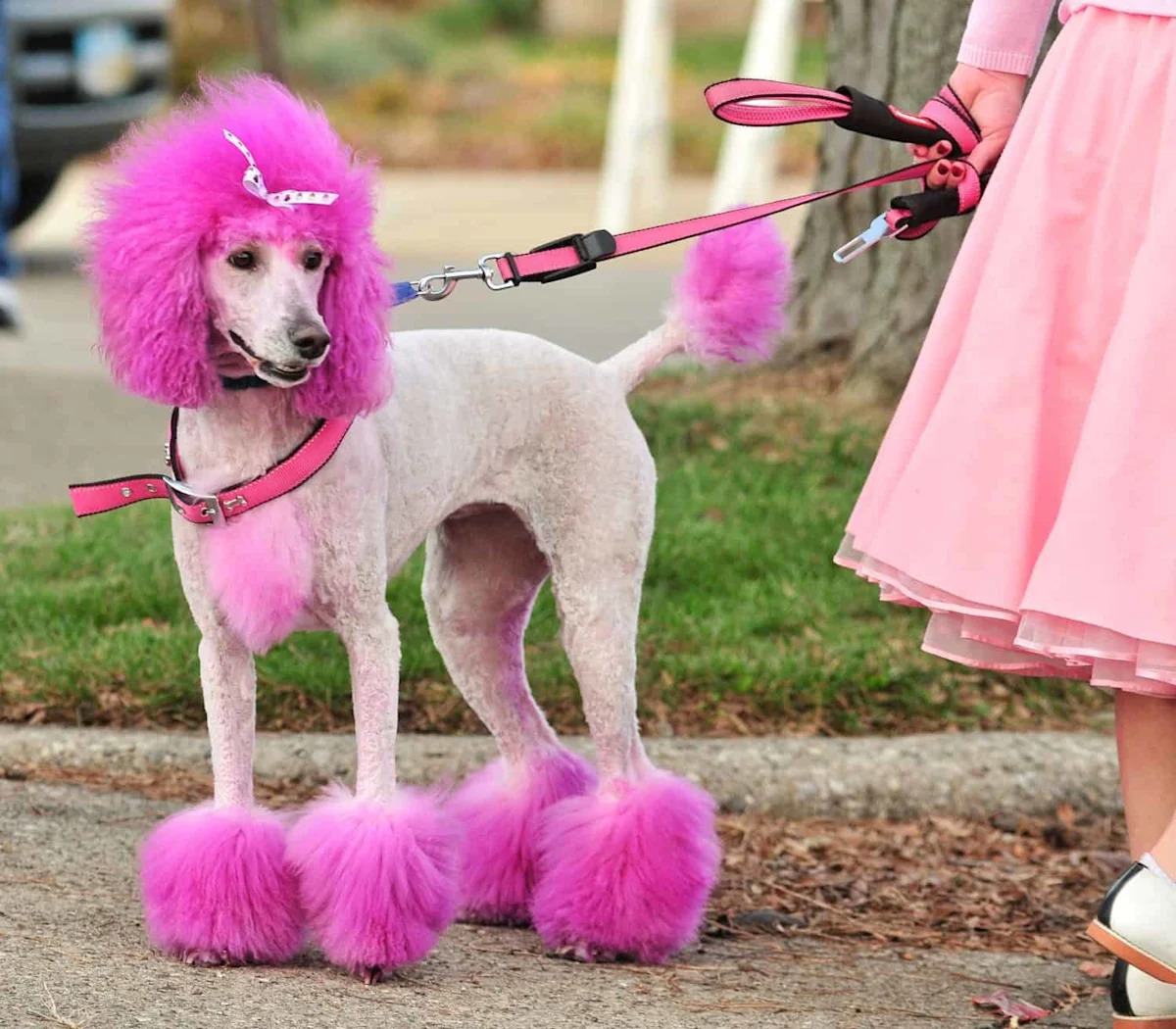
The post Dogs That Look Like Pokémon? Are Novelty Haircut and Dye Jobs Cute or Cruel? appeared first on A-Z Animals.
Quick Take
-
Creative grooming turns dogs into artistic designs, from lions to Pokémon.
-
Safe styles use pet-specific dyes, trained groomers, and short sessions.
-
Critics warn of stress, skin damage, and treating pets as fashion props.
-
Owners should weigh fun photos against their dog’s long-term comfort and health.
You might not be able to own a miniature lion or zebra or a living Tigger or Pokémon… but if you have the right dog and the right groomer, you can make it look like you do. Specialty groomer Gabriel Feitosa is the undisputed king of this field, transforming dogs into completely different creatures through creative grooming. The videos he posts of his work make some people’s hearts melt with delight, and others sink with disgust. Supporters see it as playful self-expression, while critics question whether it hurts animals and treats them as props. With some expert insight, let’s dive into this controversy.
Historical Roots of Grooming Styles
Early grooming practices focused on function. Water dogs such as poodles were clipped to improve swimming ability while protecting specific vital areas, like joints and internal organs, from cold water. These patterns later became associated with status and fashion, especially in European courts. As dog shows grew in popularity during the nineteenth and twentieth centuries, breed standards shaped grooming expectations. Each breed developed a recognizable look that groomers learned to maintain.

The very specific grooming styles that evolved for poodles originated in a desire to protect the dog’s joints and vital organs while reducing weight so it could swim more effectively in cold water.
©Dulova Olga/Shutterstock.com
(Dulova Olga/Shutterstock.com)
Today’s creative grooming grew out of this structured environment. Competitive grooming events began rewarding originality alongside technical skill. Stylists experimented with sculpted shapes that went beyond standard trims. Over time, these designs became more elaborate, drawing inspiration from animals, objects, and pop culture. The rise of social media accelerated this shift by giving groomers a global platform. What once stayed within competitions now reaches millions of viewers, fueling demand for increasingly detailed transformations.
Defining Creative Grooming Today
Creative grooming goes far beyond routine maintenance. It involves shaping the coat into patterns or forms that alter how the dog appears. Stylists may carve designs into the fur or use color to create visual effects such as stripes, scales, or gradients. The result can resemble anything from a tiger to a cartoon figure.

A dog dyed in a “tiger” stripe pattern.
©SIM ONE/Shutterstock.com
(SIM ONE/Shutterstock.com)
These designs are usually temporary and require significant time and skill. Most are created for competitions, photography, or special events rather than daily life. The process depends on the dog’s coat type, temperament, and tolerance for handling. Not all dogs are suitable candidates. Groomers must balance artistic goals with the animal’s comfort. When done responsibly, the work reflects careful planning and technical precision. When done poorly, it can cause stress or harm, which is why the practice remains debated.
A Dog Expert Weighs in on the Trend
Alexandra Bassett is a professional dog trainer and the creator of the Canine Separation Anxiety Cure program. She is also the founder of Dog Savvy Positive Dog Training in Salt Lake City, Utah.

Managing the Discomfort of Grooming
One of the big objections to these kinds of dye jobs and haircuts is that they take many hours, much longer than the simple and efficient grooming that most dogs get. This prolongs a process that many dogs find stressful and sometimes painful, as even the best groomers can’t help sometimes pulling on hair or accidentally nicking a dog while using clippers. Alexandra explains to us the discomfort dogs experience during grooming:
“Grooming can range from mildly uncomfortable to highly stressful for dogs, depending on their temperament, past experiences, and how the process is handled. Many dogs are sensitive to being restrained or touched in vulnerable areas like the paws or face, exposed to loud noises such as clippers and dryers, and required to stand still for extended periods.”
She goes on to describe how dogs react to this discomfort: “Signs of stress vary from dog to dog but often include lip licking, yawning, turning away, stiffening, “whale eye” (when a dog’s bulge from the socket so you can see the whites of the eyes), a tucked tail, and pinned-back ears. In more extreme cases, dogs may become reactive: attempting to escape or even bite in an effort to stop the interaction.”
How Do Groomers Minimize Discomfort?

Grooming can be a stressful, uncomfortable process for many dogs.
©AYO Production/Shutterstock.com
(AYO Production/Shutterstock.com)
“Skilled groomers,” according to Alexandra, “minimize discomfort by using low-stress handling techniques, such as working at the dog’s pace, incorporating breaks, using high-value rewards, and introducing tools gradually. Many also offer ‘puppy grooms,’ which are shorter, low-pressure sessions designed to build positive associations with the grooming environment rather than complete a full groom.”
“Some groomers allow pet parents to stay during the session, which can help certain puppies feel more secure. Ultimately, the ‘gold standard’ is cooperative care, where the dog is trained to willingly participate in grooming rather than being physically restrained or forced through it. Some groomers are more patient than others, so finding the right groomer is part of the process.”
The Dogs Look Like They Like It, Though…
In videos like those of Gabriel Feitosa, it looks like the dogs enjoy these specialty haircuts. They seem to react exuberantly to the attention they get. It’s worth noting, though, that the same dogs (including his own), often feature repeatedly in his videos. So, they have been trained to endure the process for rewards. One might argue that their happiness is in great part because the grooming is over and treats are forthcoming, not that they are proud of their new look. As a dog behaviorist, here’s Alexandra’s read on these dogs’ joyful reactions online:
“It’s easy to misinterpret a dog’s behavior in viral videos. A wagging tail or calm posture doesn’t always mean the dog is enjoying the experience—it may simply be tolerating it. Some highly social, confident dogs may enjoy attention from people and can appear to “show off,” but that’s often a projection on our part, a form of anthropomorphism. Many dogs, however, find the extra handling, unfamiliar people approaching them, and increased attention overwhelming rather than enjoyable, so dyeing their fur is actually a disservice to the dog.”
“Dogs are individuals, and what looks like enjoyment online can sometimes mask subtle stress signals that aren’t obvious to the average viewer. It’s important for pet parents to become familiar with canine body language and err on the side of caution, especially with dogs who are shy, fearful, or prone to reactivity, by avoiding processes like dyeing that may add unnecessary stress to their daily life.”
Risks of Hair Dyes
Another objection to creative grooming is the safety of the products used on the dog’s coat. Hair dyes for pets can be temporary, washing out after one or two baths, or semi-permanent, usually lasting 2-6 weeks. Permanent dyes can last over 20 washes or up to 6 months. These fade over time but do not completely disappear until the dog’s hair grows out and they’re groomed again.
Are dyes ok for dogs? Alexandra indicates dog parents need to proceed with caution in this area: “Even when dyes are marketed as ‘pet-safe,’ that doesn’t mean they’re completely risk-free. A dog’s skin is more sensitive than human skin, and they groom themselves, so there’s always the potential for ingestion, which can lead to gastrointestinal upset or exposure to chemicals that weren’t meant to be consumed.”
Alexandra mentions other concerns as well:
-
Drying out the coat, becoming brittle over time
-
Possible chemical burns with some products

Even when marketed as pet-safe, hair dyes can irritate dog’s skin and damage their coats.
©wedmoments.stock/Shutterstock.com
(wedmoments.stock/Shutterstock.com)
Breeds at Particular Risk
Some dogs are more susceptible to problems from hair dyes than others, according to our expert:
“Breeds with more delicate fur include those with silky or continuously growing hair, such as Yorkshire Terriers, Maltese, Shih Tzus, and Afghan Hounds. Dogs with single coats or finer hair strands may be more susceptible to dryness and breakage compared to double-coated breeds, whose outer guard hairs tend to be more resilient. That said, coat type isn’t the only factor because any dog with sensitive skin, allergies, or existing coat damage may be at increased risk, regardless of breed.”
Is this necessary for the dog, or is it purely for human aesthetics? If it’s the latter, we have to consider whether the added handling, chemical exposure, and potential stress are truly justified…
Alexandra Bassett, professional dog trainer
Reactions of Other Dogs
An issue that isn’t talked about in the videos is that an unusual grooming job attracts attention not just from other people, but from other dogs, and this can be dangerous for your pet.
“Dogs rely heavily on visual cues and body language to communicate,” explains Alexandra, “and altering a dog’s natural appearance can interfere with that communication. Unusual silhouettes, bright colors, or obscured facial features can make it harder for other dogs to read signals accurately. This can lead to confusion, hesitation, or even defensive reactions. While not every dog will react negatively, there is a real possibility that a dog with a highly altered appearance could be approached differently, or even targeted, by other dogs who perceive them as unfamiliar or somehow ‘off.’”

Other dogs may not know what to make of a creatively groomed dog. In some cases, this can go beyond curiosity to defensive behavior.
©Iryna Kalamurza/Shutterstock.com
(Iryna Kalamurza/Shutterstock.com)
Bottom Line From Our Expert:
So, what’s the bottom line? Our expert says, “From a welfare perspective, the bigger question is: Is this necessary for the dog, or is it purely for human aesthetics? If it’s the latter, we have to consider whether the added handling, chemical exposure, and potential stress are truly justified for something that is ultimately a cosmetic and whimsical choice. In most cases, it doesn’t add any meaningful value to the dog’s quality of life – it primarily serves to satisfy a human preference.”
“This isn’t just about personal taste,” she continues. “While some dogs tolerate or even enjoy grooming and attention, novelty cuts and dye jobs can introduce potential physical and emotional stress into a dog’s life. If an owner chooses to do this, the dog must be genuinely comfortable with grooming and the products used must be truly non-toxic. The dog’s welfare, and not their appearance, should be the top priority. The question shouldn’t be ‘Is it cute?’ but ‘Is my dog okay with this?’”
Pros and Cons
To clarify the issue, Alexandra lays out these pros and cons of creative pet grooming:
Pros:
-
Can be a form of creative expression for owners.
-
May increase human attention and social interaction (which some dogs enjoy).
-
When done properly, grooming itself supports coat and skin health.
Cons:
-
The added grooming time and handling can cause a dog a lot of stress.
-
The potential for skin irritation or coat damage from dyes is high, depending on the dog.
-
There is a risk of potential miscommunication with other dogs or bullying/aggression from other dogs because the dyed dog looks so different from normal.
-
This sort of behavior prioritizes human entertainment over the dog’s comfort.
If You Do Decide to Do It
Many of these creative grooming jobs are super cute and for many people, it’s fun to see a dog sporting these looks. If you’re wanting to get a reaction from people, this will do it… but be prepared those reactions will not always be positive. You might find yourself feeling like you need to defend your choice to critics. Here are a few boxes to tick to make sure you do this as ethically as possible:
-
Ask why you’re doing it, and how badly you want to do it. If it’s just a passing whim, let it pass.
-
Consider your animal’s personality. Does it do well with conventional grooming or is it an anxious dog that suffers through it?
-
Consider your animal’s coat type. Is it appropriate for the kind of grooming and dye work you’re wanting to do?
-
Seek out a reputable groomer. Do your homework online, read customer reviews. Make sure sessions are planned with plenty of breaks for your dog.
-
Ask if you can be present during the grooming. Some groomers allow this and it can help calm your dog. Other dogs may do better without the owner present, though.
-
Keep your dog on a leash and be alert when walking near other dogs.
-
Monitor the condition of the dog’s skin and coat in the weeks after the grooming before deciding whether to do it again.
The Foundational Ethical Issue
Why is this process so controversial? It’s likely because it touches on a foundational ethical issue that people are deeply divided over: are animals here for us, or are we here for them?
On the one hand, the entire reason we keep dogs is really, ultimately, for our own needs: companionship, protection, exercise, as service animals, or to feel like we are good people who benevolently “rescue” and care for dependent creatures. From this standpoint, if a creative grooming helps us enjoy our animal more and connects us with other people, then many people’s attitude would be “go for it.” It’s not so much a question then of right and wrong, but of taste: in my opinion, is a particular dog design cute or tacky?
On the other hand, if we see ourselves as caretakers with a responsibility to protect animals’ well-being, the issue becomes more complicated. Dogs cannot choose how they are presented, so the burden falls on humans to ensure that any grooming prioritizes comfort, safety, and dignity over aesthetics. People from this perspective can feel “grossed out” by a dog being used like a canvas for its owner’s whimsical self-expression, as if they were a designer purse or a funny tie. It seems to detract from the dignity of another living creature that is beautiful in its natural state.
For many, the answer lies somewhere in between, recognizing that while humans and animals share close bonds, those relationships carry an obligation to treat animals not as canvases, but as living beings with needs of their own.
Appearance vs. Well-Being
At its best, creative grooming highlights skill and care. At its worst, it risks placing appearance above well-being. The difference lies in how the process is handled. Owners and groomers who remain attentive to the dog’s needs can navigate this space more responsibly. In the end, the animal’s comfort should always come first, no matter how creative the design may be.
The post Dogs That Look Like Pokémon? Are Novelty Haircut and Dye Jobs Cute or Cruel? appeared first on A-Z Animals.