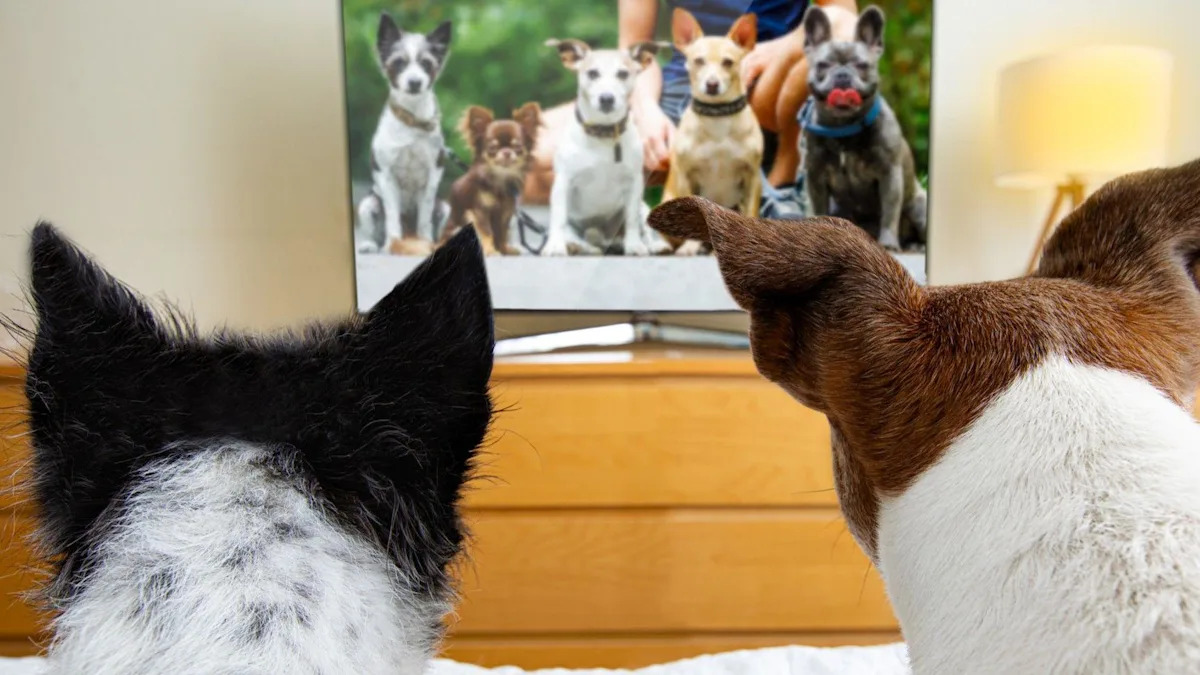
Six years ago, when Luca Carano was living in Barcelona with his then-girlfriend, they decided to leave their dog Luna home alone as they went out for dinner.
They usually took the puppy with them, but on that night they left her at home.
“I was thinking right then, she’s going to be bored and lonely, there should be something on YouTube for Luna,” says Carano, a pilot who now lives in Bologna, Italy.
He decided to act on his idea. He created the YouTube channel Siesta Dog TV which features videos of dogs, for dogs, in colours they can see best.
Cartoons as long as 10 hours each feature illustrated dogs playing around in an animated New York City, or dogs watching duck ponds.
Calming classical-like or ambient music accompanies the images on the screen, all made to relax dogs.
One of Carano’s videos attracted around 3.5 million views.
“I’ve seen how Luna enjoys these videos, and I get so many comments from people who say they feel great leaving their dog alone with my videos because it calms them,” Carano adds.

Dozens of channels stream TV for dogs [Luca Carano]
Over the six years since Carano started out, TV for dogs has snowballed.
A host of channels cater for the increasing number of pet owners who worry about leaving their dogs at home.
“People are more closely attached to their dogs than ever before and they treat them like children and worry about leaving them alone,” says Nicholas Dodman, the director of the Center for Canine Behaviour Studies in Connecticut.
“There’s also more awareness these days about separation anxiety affecting dogs,” he says.
That’s creating demand for dog-friendly TV – other channels include Four Paws TV, Cartoon Dog Music, Puppy Dreamscape and Sleepy Cats.
Some videos show puppies frolicking or close-ups of squirrels, others stream loops of squishy toys enjoyed by other animals or humans.
Carano’s videos, unlike other channels, mainly feature blue hues, which dogs can see much clearer than other colours.
Making such material has become easier thanks to AI.
“Some of our videos are AI, some are hand-drawn, and technology allows us to make the videos set wherever we want, like Hawaii,” says Carano.
“And when it comes down to it, dogs don’t care if what they are seeing is AI.”
But do dogs actually watch TV and does it do them any good? The research is mixed.
A study from the Canine Behaviour Centre at Queen’s University Belfast, published in 2023, looked at the reaction of 50 dogs in a rescue shelter to different screens.
It found that dogs spent only 10.8% of the total available viewing time looking directly at the television monitors.
“The dogs in this investigation directed relatively little attention towards the television monitors and habituated to their presence within a short period of time,” the report said.
The authors stressed that traditional forms of dog entertainment were vital for wellbeing.
“The provision of social contacts, both with other dogs and with humans, is essential and should be considered the most important form of environmental enrichment for confined dogs.”
The lack of attention to screens tallies with research done by Ilyena Hirskyj-Douglas, an assistant professor at the University of Glasgow’s School of Computing.
She conducted two studies that found dogs typically can’t watch videos for a long period of time. “I noticed shorts bursts of video consumption from dogs,” she says.
However, the study only investigated the habits of two dogs.
Other research is more positive.
A study from Auburn University, published in July last year, looked at the viewing behaviours of 453 dogs through surveys completed by their owners.
The researchers only looked at the behaviour of dogs that, according to their owners, already watched TV.
The report said: “Dogs experience a meaningful, object-filled world when they view television.”
“Engagement with television could provide dogs with an enriching, meaningful experience.”

DogTV was a pioneer in video for dogs [DogTV]
Beke Lubeach is certain that TV for dogs is helpful. She is the CEO of Arizona-based DogTV, which launched in the US in 2012.
“Our videos help lower stress in dogs, says Beke Lubeach,
She is referring to a Purdue University study that found that dogs in a kennel who watched videos spent significantly less time pacing and more time grooming and resting.
DogTV content features real dogs and uses AI in a limited way.
“Many copycat services are turning to AI to mass-produce content, but at DogTV, we don’t believe shortcuts belong in pet wellness,” says Lubeach.
“While we are actively testing AI and beginning to use it on a limited basis within select production elements, we are doing so thoughtfully and with strict oversight,” she adds.
DogTV videos are edited in post-production to boost colours that appeal to dogs.
“What’s interesting is when you enhance the reds, the greens, it gives the video more dimension so that it makes the colours pop out and helps dogs see them better.”
DogTV runs several programs with content not unlike exposure therapy. Because so many dogs are afraid of fireworks or going on car rides, videos of those experiences could help nervous dogs to work through those fears, Lubeach says.
“The more dogs get to see it in a controlled environment, the less anxious they’ll be when they go out and experience it,” she says.

DogTV tweaks the colours of its video to appeal to dogs [DogTV]
When it comes to TV, every dog and breed is different, Lubeach stresses.
Dogs resting by a field could be relaxing for one dog, she says, but another dog may prefer videos to be more stimulating, such as dogs chasing each other in a park.
And for dogs that aren’t particularly active, TV can be useful she says.
“Video content is mental stimulation for senior dogs and for lazy dogs, because if they aren’t being physical often they still need to exercise their mind,” adds Lubeach.