Many dogs today enjoy a life of leisure. Today, it is not always obvious what roles these breeds originally served. And most breeds were originally developed to perform highly specific tasks.
Like many other animals, dogs have been the subject of enduring myths. These myths often relate to the roles they performed in the past. Some were more benign and domestic in nature, while others were tasked with harsher work.
Here are 15 dog breeds with historical jobs, which might surprise you.
Dalmatian: Carriage Protectors

Dalmatians served as ‘coach dogs’ many, many years back. In the 17th and 18th centuries, they were bred to run alongside horse-drawn carriages.
They protected horses and passengers from highwaymen and stray dogs. Their natural affinity for horses eventually led them to fire departments.
Here, they would clear paths for horse-drawn fire engines. Each Dalmatian has a unique coat pattern. They were popularized in the film ‘101 Dalmatians.’
Glen of Imaal Terrier: Kitchen ‘Turnspit’ Dogs

Most of you haven’t even heard of this dog. It is well known in parts of Ireland. In fact, it is one of the most remarkable dogs that came out of Ireland. Now, let’s look at the fact that it had one of the most unique jobs in canine history.
They were known as ‘turnspit dogs’. And a lot of times, they were used in kitchens to run inside a large wooden wheel that was connected to a rotisserie spit.
As the dog ran, the meat turned evenly over the fire, effectively ‘cooking’ the food for the household.
Dachshund: Badger Hunters

The name ‘Dachshund’ literally translates to ‘badger dog’ in German. In popular parlance, we also call it the badger, or even the ‘wiener’ (sausage) dog. Their long, low bodies and digging paws are a very distinctive feature of theirs.
They had specifically been designed for burrowing into dens. They did this in order to flush out fierce badgers and foxes.
Today, they are domesticated and not really employed in that sort of work. But they still retain their scenthound instincts. After all, nobody can really rewrite genes.
Akita: Bear and Boar Hunters

The Akita is now a symbol of loyalty. It is known for forming strong bonds with people. It was originally bred in the mountain regions of northern Japan. They were normally used to hunt large game, including wild boars and Yezo bears.
They had been serious working dogs with a lot of power and endurance. They were needed to track and hold many dangerous predators at bay.
In today’s world, however, they are simply more of a reclusive, shy breed that form strong bonds with just one person. One of the biggest advantages, however, is that they do not bark much.
Norwegian Lundehund: Puffin Hunters

This rare breed had been specialized for one very specific task. And that was hunting puffins (and collecting puffin eggs) on the steep Norwegian cliffs.
It wasn’t an easy task in any form, given the harsh weather of the region. In order to navigate all these treacherous environments, the Lundehund evolved unique physical traits.
They can bend their bodies at amazing angles (it has a neck so flexible it can bend backward to touch its own spine). Each of their feet has six toes for a better grip.
Rottweiler: Cattle Drovers and ‘Money Guards’

Rottweilers had originally been ‘drover dogs’. This breed had been used by the Romans to drive out the cattle.
In the town of Rottweil, Germany, they had also become known as ‘butcher’s dogs’ since they were frequently employed by meatpacking centres.
They were required to keep their earnings safe from thieves. Most butchers would often tie their purses around the dog’s neck. They did it after selling their livestock at the market.
Poodle: Waterfowl Retrievers

Once upon a time, these had a massive reputation as well-pampered show dogs. Well, there’s a bit of a history here. Poodles had originally been elite water retrievers.
Not only do they retain this instinct, but they also have style. This breed had been developed in old Germany. Also, their distinctive ‘poodle clip’ was actually functional.
The fur had been left long around the joints and chest. The purpose was mainly to keep them warm in icy water. As for the rest, it was shaved to reduce any kind of drag while swimming.
Chihuahua: Ceremonial Guides and ‘Hot Water Bottles’

We all know the history of the Chihuahua. It is one of the smallest dog breeds in the world. But in spite of its small size, it still has a massive personality. If it senses danger anywhere, it will start barking.
The history of the Chihuahua traces back to the Techichi dog of the Toltecs. Much beyond being companions, they had sometimes been used in religious ceremonies.
They were actually sacrifices that were meant to guide souls to the afterlife. They were also valued as ‘living hot-water bottles’. This was due to their high body temperature. And this provided warmth to the sick or injured.
Rhodesian Ridgeback: Lion Decoys

The Rhodesian Ridgeback is one of the most famous dogs to come out of Africa. They are characterized by a sharp ‘ridge’ that comes out of their backs and points in the opposite direction of their fur.
And they are known as ‘lion hunters’ in popular parlance. While they didn’t actually kill lions, it was bred to track and stalk lions. They were literally keeping them cornered until hunters arrived.
Their incredible stamina allowed them to keep up with large predators in the harsh African landscape for miles.
Newfoundland: Fishing Boat Crew

The massive Newfoundland had essentially been a multipurpose deckhand. And they mostly used to work for Canadian fishermen. They were bred to haul heavy fishing nets out to sea.
Also, they would retrieve their lost gear from the water. They would also rescue those sailors who would fall overboard. So you see, they do have a ‘heroic’ credential as well.
They have webbed feet and water-resistant coats that make them perfect for life in the icy North Atlantic. Today, they are known for their calm temperament and compatibility with children.
Schipperke: Barge Ratters

The Schipperke is a small, sturdy, usually black dog in the Spitz family. They are characterized by their pointed ears, which rest atop their head. Schipperkes actually have double coats.
The outer one is paired with a soft, fluffy undercoat. It is covered by a somewhat harsher-feeling, and much longer outer coat.
These dogs were commonly known as ‘Little Skippers’. Schipperkes had been the quintessential boat dogs of Belgium. They lived on canal barges where their main job was to kill rats and act as tiny, sharp-eared watchdogs for the crew.
Saluki: Gazelle Hunters

The Saluki is one of the oldest breeds in existence. It is also commonly known as the ‘sacred dog of ancient Egypt.
Centuries ago, they had been domesticated by the nomadic tribes in the Middle East. They were used to hunt gazelles, which is a testimony to how fast they are.
The Salukis were so prized by the nobility that they were often found mummified in the tombs of the Pharaohs. They had been bred for extreme speed. And they also had the ability to hunt by sight, rather than scent.
Bedlington Terrier: Mining Vermin Hunters

They looked like a gentle lamb, but they have a history that is far from benevolent. The Bedlington Terrier used to be a tough miner’s companion.
Bred in the coal mines of Northern England, they were tasked with ‘cleaning’ duties. And their most notable jobs were to rid the shafts of rats and other vermin.
Their speed and tenacity eventually made them popular in early dog-fighting pits as well. The dog-fighting days are long gone, but their reputation continues to shine through.
Old English Sheepdog: Livestock ‘Drovers’

These shaggy giants had not originally been used for herding in the traditional sense. They were only used as ‘drovers’.
Their job had been to drive cattle and sheep over long distances from farms to city markets. They were mostly considered working dogs. However, they commanded a really good reputation throughout their native area.
The owners had been exempt from a dog tax. This is why their tails had historically been docked to prove their status as workers. This is one of the biggest traditional working dogs that existed back in the day.
St. Bernard: Alpine Pathfinders

They were developed by monks at the Great St. Bernard Hospice in the Alps. These dogs were search-and-rescue pioneers.
They were used to find and rescue travelers trapped in the snow. Or the ones lost in the treacherous mountain passes between Switzerland and Italy.
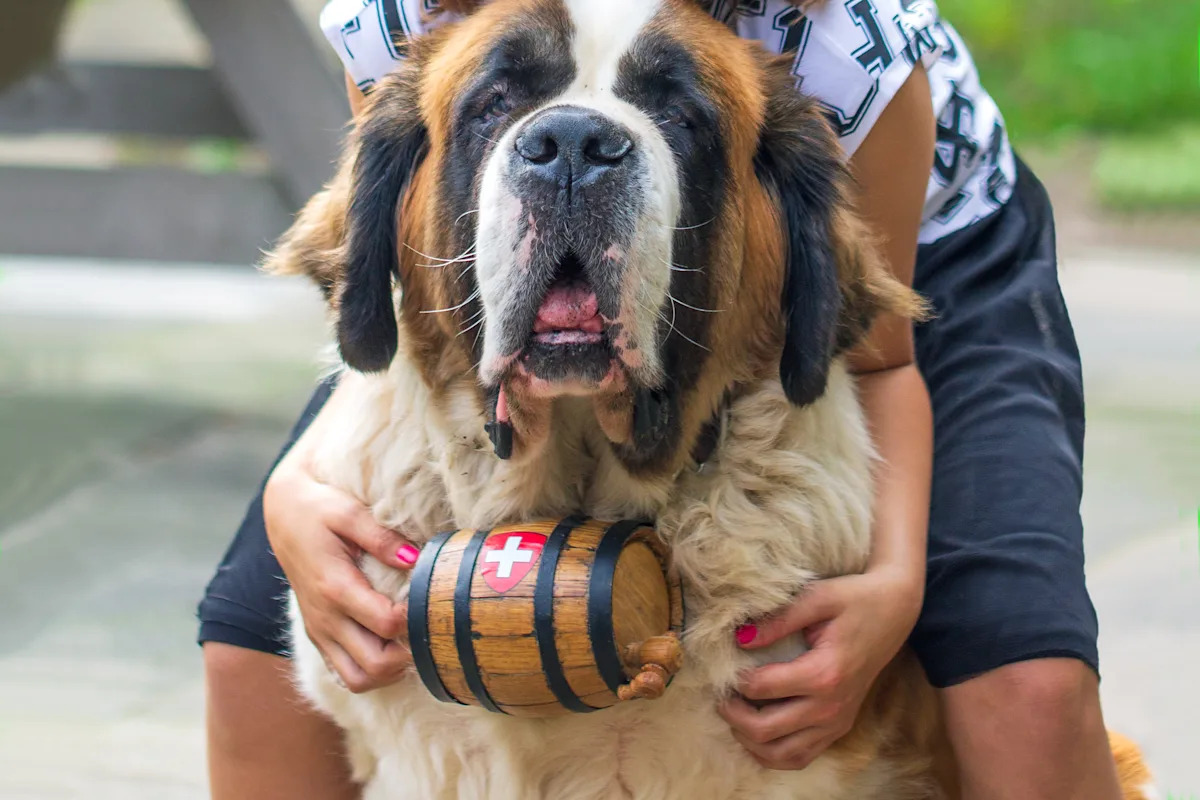
Myth says that these dogs were set loose with a bottle of brandy around their necks, which they would use to warm up lost travelers who were stuck in the snow. Beyond this myth, they saved countless lives. They are not used as frequently for this purpose nowadays, but the legend remains.
Conclusion
This was the list of some of the most amazing canines out there. From helping in meat roasting to rescuing stranded travelers, they have quite a story.
Most people don’t know their backstories, but we’re sure you’ll find them absolutely amazing.