The post 80 Million Years On The Ground Made These Birds Stop Flying appeared first on A-Z Animals.
Quick Take
-
New Zealand’s long isolation without land predators allowed many birds to evolve safe ground‑nesting habits.
-
Kiwi, kākāpō, takahē, weka, and wetland birds depend on burrows or ground nests rather than high tree sites.
-
Introduced mammals like rats, stoats, and cats now raid these nests and threaten slow‑breeding native bird populations.
-
Predator‑free islands and fenced sanctuaries give vulnerable ground‑nesting birds a realistic chance to recover.
New Zealand was once a quiet world ruled almost entirely by birds. For millions of years, the islands had no native land mammals besides bats. Without foxes, weasels, or wild cats, birds faced little danger on the ground. Nesting in trees offered few extra benefits in that environment. Over time, many species safely built nests on the forest floor or in burrows, which explains today’s unusual number of ground‑nesting birds.
An Island World Without Land Predators
New Zealand split from the ancient supercontinent Gondwana about 80 to 85 million years ago and drifted away as part of Zealandia. Because it separated so early, large land mammals never reached the islands, leaving birds to fill roles usually held by mammals. With no ground predators, many birds evolved weaker wings, heavier bodies, and ground-nesting habits.
Evolution’s Push Toward Ground Nesting
Natural selection rewards traits that help animals survive and reproduce. In New Zealand, heavier birds rarely flew, putting more energy into strong legs, digging, and large eggs. Ground nests also stayed stable and hidden under roots, rocks, or tussocks. Parents reached chicks easily without risky flights through forest canopies. Over many generations, birds with ground‑nesting habits passed on their genes. Their descendants still show those traits today, even in the presence of new dangers. Here are some of New Zealand’s iconic ground-nesters.
Kiwi

Kiwis forage at night.
©John Carnemolla/Shutterstock.com
Kiwi are small, round, flightless birds that roam forests at night, using long bills to probe for worms and insects. They nest in burrows or hollow logs on the ground and lay unusually large eggs, producing chicks that hatch well developed and quickly begin walking and feeding.
Kākāpō
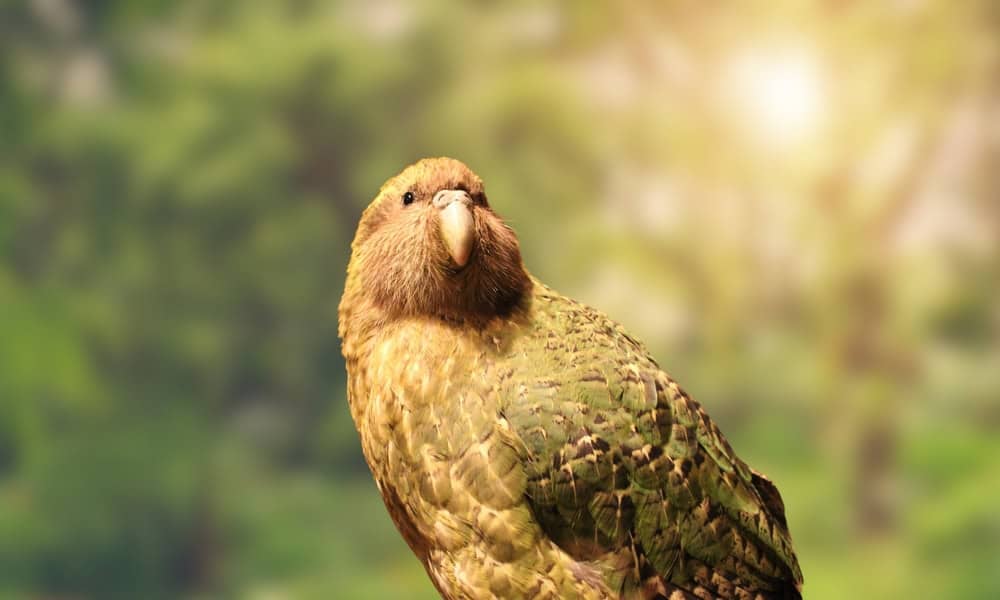
The kākāpō is a giant, nocturnal, flightless parrot that nests in burrows, rock crevices, or cavities among tree roots. With one of the most unusual mating systems among birds, kākāpō males gather at display grounds called leks and produce deep booming calls to attract females. The remaining 235-250 members of the species have been moved to offshore islands where no predators exist.
Takahē

One of New Zealand’s most visually striking birds is the Takahē.
©Robert CHG/iStock via Getty Images
Takahē are large, colorful, flightless rails that build nests in dense alpine grasslands. They feed mainly on tough grasses, using strong beaks to strip and chew plant material in a way few other birds can.
Weka
Weka are bold, curious birds known for their opportunistic feeding habits. They eat insects, fruit, small animals, and even scavenge human items, giving them a reputation for being clever and sometimes mischievous.
When Humans and Mammals Arrived
Human arrival changed everything for these trusting birds. Polynesian settlers brought the kiore, or Polynesian rat, which ate eggs. Later European settlers released ship rats, stoats, ferrets, and cats. These new hunters searched by scent and moved easily at night. Ground nests sat exactly where such mammals hunted most often. Many birds did not recognize the newcomers as serious threats and reacted by freezing in place, rather than running away. Populations dropped quickly as chicks, eggs, and adult birds fell prey to the newcomers.
Predator‑Free Islands and a Future for Ground‑Nesting Birds
To protect these birds, New Zealand now builds predator‑free sanctuaries. On many offshore islands, conservation teams remove rats, stoats, and cats. They then move kiwi, kākāpō, takahē, and other vulnerable species there. Within these refuges, ground nests again stay mostly safe on the forest floor. Visiting these locations feels like stepping back in time to an era before the country was inhabited by mammalian predators. Bird watchers can hear kiwi calls, see takahē graze, and observe seabirds emerge. With enough support, these sanctuary islands offer ground‑nesting birds a real future.
The post 80 Million Years On The Ground Made These Birds Stop Flying appeared first on A-Z Animals.