The post The Growing Movement to Restrict Free-Roaming Cats appeared first on A-Z Animals.
Quick Take
-
Free-roaming cats are efficient predators that threaten wildlife, contributing to extinctions and harming vulnerable species, especially on islands.
-
In New Zealand, cats have damaged bird populations, leading to conservation efforts like relocating the endangered kākāpō to predator-free islands.
-
Places like Iceland and parts of the U.S. enforce curfews, bans, or restraint laws to protect wildlife from roaming cats.
-
Keeping cats indoors or supervised helps protect wildlife while improving cat safety, offering a balanced solution for pet owners.
Cats and people have lived together for thousands of years, but not every place rolls out the welcome mat for kitties. In some communities, free‑roaming felines cause serious trouble for native wildlife, especially ground‑nesting birds and small island species. Some towns have decided that cats must follow strict rules. It raises the question: how can we love our pets and still act as good neighbors to the wild animals around us?
Why Some Places Crack Down on Cats
Domestic cats may look cute and harmless, but they are highly effective predators that kill birds, small mammals, and reptiles when allowed to roam outdoors. Research shows that free-roaming felines have driven dozens of species to extinction and threaten many more. Ground-nesting birds are especially vulnerable because their eggs and chicks are exposed. This is particularly true for island species that evolved without predators. Such animals often freeze instead of fleeing, making them easy targets for hunting cats. When predatory animals enter these ecosystems, wildlife populations can decline rapidly.
New Zealand’s Battle Between Cats and Birds
New Zealand highlights this conflict clearly. With almost no native land mammals besides bats, its wildlife evolved without predators. Introduced cats quickly preyed on vulnerable species like flightless birds, lizards, and insects. Studies have linked feral cats to declines in endangered shorebirds and rare skinks. To protect the critically endangered kākāpō, conservationists relocated remaining birds to predator-free offshore islands with strict biosecurity.

Icelandic Towns with Curfews and Bans
New Zealand is not alone in rethinking pet policies; several towns in Iceland have adopted curfews or outdoor bans. In Akureyri, cats are not allowed outside at night, while nearby Húsavík requires pets to stay indoors entirely. Scientists note that Iceland’s wildlife evolved with few land predators, making seabirds especially vulnerable to predators. On offshore islands, felines have harmed colonies of burrow-nesting seabirds like Manx shearwaters and storm petrels.
European Laws That Favor Wildlife
Across the European Union, legal scholars argue that free-roaming pets may violate wildlife protection laws. EU rules require countries to prevent deliberate harm to protected animals, including native birds, and court decisions interpret “deliberate” to include knowingly accepting likely harm. Allowing domestic animals to roam where they may hunt wildlife can fit this definition. As a result, indoor-only pets or secure outdoor enclosures may become more common across Europe.
Restrictions in American Towns

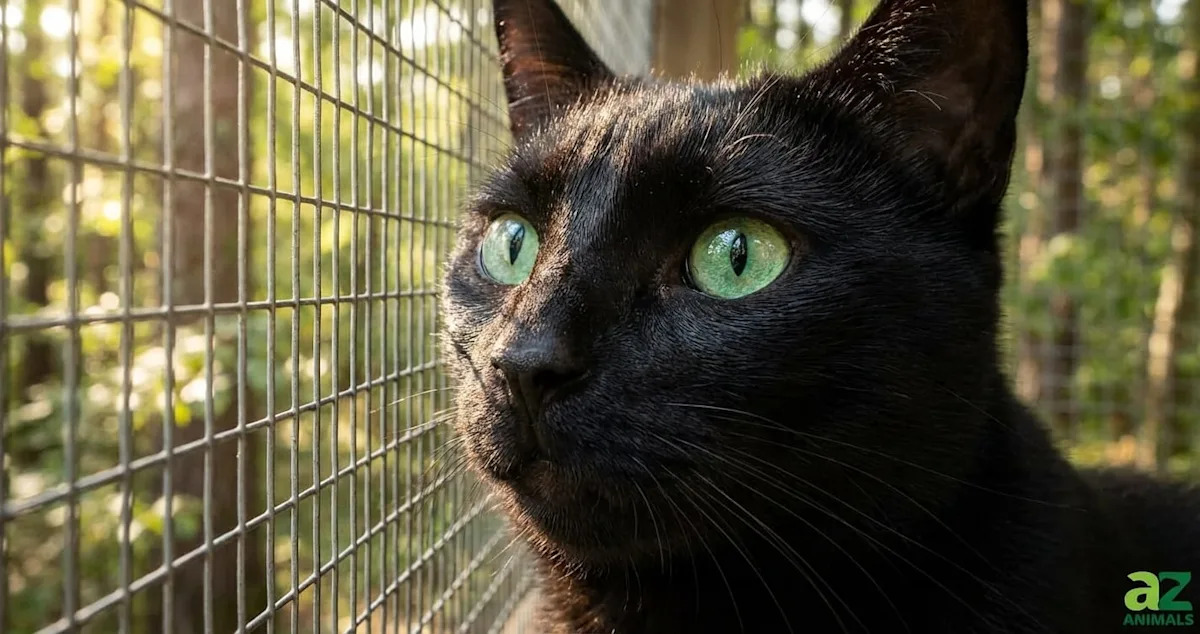
Some towns require licensing, vaccinating, and spaying or neutering pet felines.
©Sata Production/Shutterstock.com
In the United States, animal regulations are usually set by local animal control codes rather than national law. Many communities enforce “at-large” rules requiring pets to stay on their owner’s property or under control. Aurora, Colorado combines licensing, rabies vaccination, restraint rules, and spay or neuter requirements. Other towns limit how many cats a household can have or require outdoor animals to wear identification. Conservation groups say these laws help protect songbirds and ground-nesting species, especially when paired with education so owners understand the high stakes.
Our Cat and Wildlife Expert
We turned for additional insight to Kristiina Wilson, a certified cat behaviorist and owner of Cattitude Adjustment in New York City. She holds a master’s degree in animal behavior and conservation and has over 20 years of experience with domestic cats, including fostering feral cats. Her background also includes wildlife work, such as assisting injured birds at the Wild Bird Fund, supporting the NYC Parks Department raptor scouting project, and working with cheetahs through the Cheetah Conservation Fund.

Why Cats Are So Deadly
Wilson explains, “Cats have innate and hardwired hunting instincts that don’t just go away because they live indoors with us, or because we supply them with food. Cats are obligate carnivores (meaning they must eat meat to survive) and unowned or feral cats may spend between 10-12 hours a day working on getting food. Owned/housed cats who go outside will still hunt *recreationally* as their predator drive is so strong, but often just for 2-3 hours a day. However, that’s more than enough time for a serious impact on their local ecosystem. Cats are the leading human-associated cause of bird mortality, with ground nesting and fledgling birds at the most risk. Reptiles, amphibians, mice, voles, and chipmunks are also at risk.”
Bad for the Ecosystem, Bad for Cats
As a cat lover, Wilson is concerned not just for the wild ecosystem, but for the pets themselves.
“Allowing cats to roam free is as bad for them as it is for the ecosystem that surrounds them!” she asserts. “Cats who roam outside are at risk of attack from larger animals (cats are predators but also prey) such a coyotes, bobcats, bears, raccoons, etc., death from car strikes, poisonings, injuries, infectious disease etc. In my opinion spay/neutering should be required by law in every state. Doing so would help control populations of feral cats as well as help stop needless suffering of cats/kittens AND local wildlife from predation.”
Owned/housed cats who go outside will still hunt *recreationally* as their predator drive is so strong, but often just for 2-3 hours a day. However, that’s more than enough time for a serious impact on their local ecosystem.
Kristiina Wilson, a certified cat behaviorist and owner of Cattitude Adjustment in New York City
Alternatives for Cat Owners
For cat owners who regret depriving their animal of freedom, Wilson suggests these alternatives: “Cat owners should use alternatives to simply opening a door and letting their cats wander randomly, such as catios and walking WITH their cat on a harness and a leash! Harm reduction methods include using Birds Be Safe collars on your cat, placing bird feeders high up and with baffles on them, etc.”
Beyond those outdoor precautions, Wilson emphasizes that indoors can become a much more enjoyable environment for our pets with a little forethought:
“Simulating hunting inside your home is amazing enrichment for your cat! I love to set up a bird feeding station right outside a window (as long as birds are safe from any outdoor cats who may prey on them), and pair that with a puzzle feeder that is shaped like a mouse. This way cats can watch the birds and STALK their prey and then pounce on and eat the “prey” puzzle feeder. Playing with your cats for at least 20 minutes a day (with a wand toy or similar, to really get them running and jumping with something they can catch) is also great. Lastly, make them an enrichment box! Fill a large cardboard box with crinkly paper, catnip, a stick from outside, some treats and toys and let them hunt for all the fun new things they can find!”
Protecting All Species
The communities that place limits on cats aren’t rejecting felines so much as they are expressing concern for birds and other small animals. Cats are simply doing what they evolved to do, at times in environments that have not evolved to withstand them. Thanks to curfews, containment laws, or simple changes at home, loving cats and protecting wildlife no longer have to be opposing goals. They simply require more intentional choices from communities and pet owners themselves.
The post The Growing Movement to Restrict Free-Roaming Cats appeared first on A-Z Animals.