Ever wondered why some dogs look like living teddy bears while others have sleek, short coats? It all comes down to genetics and survival. Many of the fluffiest breeds trace their roots to harsh, cold regions where their coats weren’t just about looks; they were essential for staying alive.
These dogs typically have a dense double coat, which is a downy underlayer for insulation. These are the ‘thermals.’ The coat also includes a tougher, weather-resistant outer layer of guard hairs. They were either pulling sleds in Siberia or guarding palaces in China; their coats were their primary defense against the elements.
Today, that same survival feature is what makes them irresistibly huggable. But behind all that fluff is a story of purpose, toughness, and surprisingly high maintenance.
The Samoyed: The Arctic’s Brightest Smile

The Samoyed is the quintessential ‘cloud dog.’ Hailing from the Oymyakon region of Siberia, one of the coldest inhabited places on Earth, this background explains why their coat provides strong insulation in cold climates.
Beyond aesthetics, their upturned lips prevent drool from forming icicles, which could cause frostbite. So even their facial features serve a purpose. Interestingly, Samoyed fur is often collected by weavers. It is spun into a yarn that is warmer and softer than sheep’s wool, often used for high-end scarves and hats.
They are ‘talkers.’ Expect howls, ‘woos,’ and barks. This vocal nature comes from their history of working closely with humans. They prefer close interaction with their owners.
Pomeranian: The King of the Mane

Don’t let the 5-pound frame fool you; the Pomeranian carries the spirit of its 30-pound ancestors. In fact, Queen Victoria is largely responsible for the Pom’s current look, as she began breeding them down in size while favoring the ‘heavy coat’ look.
To keep a Pom looking like a ball, owners must master the “line brushing” technique, brushing the fur in layers from the skin out.
They are also ‘alert barkers.’ If a leaf blows across the porch, your fluffy friend will ensure you are aware of the ‘intruder.’ This sharp alertness is a leftover trait from their larger working-dog lineage.
The Chow Chow: The Lion of the East

The Chow Chow is one of the few breeds that feels more like a cat in a bear suit. At first glance, their deep-set eyes and folded skin give them a ‘grumpy’ look.
However, it’s actually just a massive amount of facial padding and fur. Historically, they were mainly bred as palace guards, so it’s in their genes to be naturally suspicious.
They require early and consistent socialization as puppies to ensure their ‘protective fluff’ doesn’t turn into aggression. Without that guidance, their natural instincts can take over.
The Alaskan Malamute: The Heavy Hauler

If you take a closer look at their fur, you’ll find that it is oily and coarse. Because of this, if they jump into a frozen lake, they would shake most of the water off before it reaches their skin.
They have a unique way of walking that helps them to minimize energy loss, which is essential for long treks across the tundra.
This is not a dog for a sedentary lifestyle. They need a ‘job’ to do. Without it, that fluffy energy would be redirected into digging holes in your garden or maybe carving out patterns on your sofa. In other words, their fluff comes with serious energy.
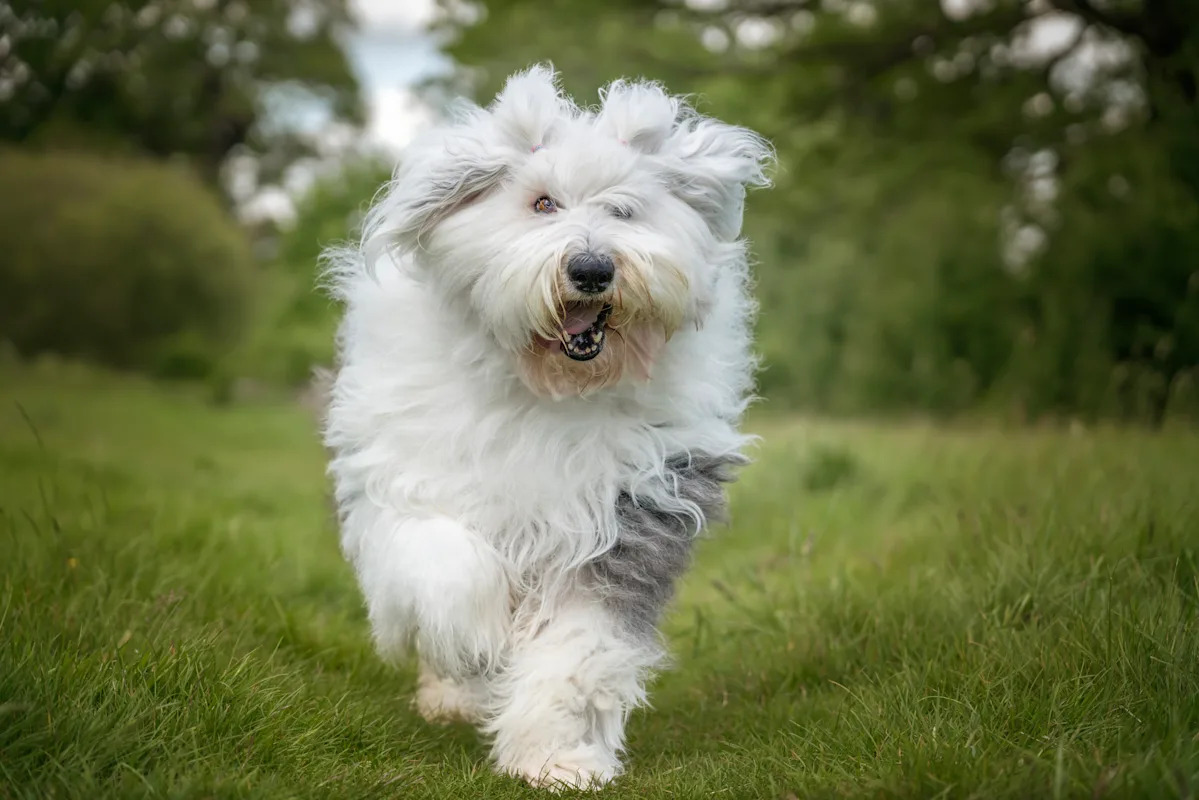
The Old English Sheepdog: The Shaggy Spectacle

Often called the ‘Bobtail,’ this breed is the definition of ‘shaggy.’ People often wonder how they see, but in reality, their long ‘fall’ (the hair over the eyes) actually protects them from the sun and brush.
However, most pet owners use a hair tie to give them a clear view. They are famous for a ‘rollicking’ gait, a side-to-side shuffle that looks like a bear walking.
This is arguably the one that requires significant grooming. Without 3–5 hours of brushing a week, they will need to be shaved to the skin to remove mats. So while the fluff looks fun, it demands serious upkeep.
The Keeshond: The Dutch Companion

The Keeshond is unique because it was never a hunter or a fighter; it was always a friend. Because of this role, they have a naturally warm and expressive personality.
They have distinct dark lines running from the corner of the eye to the ear, making them look like they are wearing designer glasses. They are extremely sensitive to their owner’s emotions. If you are sad, the Keeshond will be the first to bury its fluffy face in your lap.
They were barge watchdogs, so they have a high-pitched, piercing bark designed to cut through the sound of wind and water. Even then, their job was more about alerting than confronting.
The Tibetan Mastiff: The Himalayan Sentinel

This is the ‘Final Boss’ of fluffy dogs. Males can weigh up to 150 pounds, and their “mane” makes them look like a male lion, a feature that wasn’t just for looks but for intimidation.
In Tibet, they slept during the day and guarded the camp at night. As a result, modern owners often find their Mastiffs become very “vocal” and alert once the sun goes down.
Unlike most dogs that shed a little year-round, the Tibetan Mastiff ‘blows’ its entire undercoat once a year. It looks like a snowstorm of fur in your living room. This seasonal shedding reflects their adaptation to extreme climates.
The Bichon Frise: The Hypoallergenic Cloud

The Bichon is the “anti-shedder” of the group. Technically, they have hair. It grows in spirals, and when it sheds, the dead hair gets caught in the curls rather than falling on your floor.
Because of this unique coat, these dogs are often considered more allergy-friendly. They are known for sudden bursts of high energy where they sprint around the house in circles, a phenomenon owners call “the zoomies.”
Keeping them in the “show cut” (the perfect white sphere) requires a professional groomer every 4–6 weeks. So their fluff is more about grooming than survival.
The American Eskimo Dog: The Circus Star

Commonly called the ‘Eskie,’ this dog is all about brains and beauty. Interestingly, they were the first dogs to walk a tightrope in the circus, which means they need mental stimulation (puzzles, tricks, and training).
Their fur is remarkably resistant to staining. Even after a muddy walk, once the mud dries, it often just brushes right out, leaving them snowy white again.
This Ice Cream dog comes in different sizes, so you can get a 10-pound lap cloud or a 30-pound hiking buddy. In fact, it comes in three distinct size tiers. This flexibility makes them suitable for different lifestyles.
The Shih Tzu: The Royal Lap Warmer

The ‘Lion Dog’ was bred to spend its life on the laps of Chinese emperors. Because of this royal background, their role has always been companionship rather than work.
Most Shih Tzus have a slight undershot jaw, which adds to their quirky, ‘person-like’ facial expressions. Because their hair is so fine and long, it is almost always pulled up into a bow to prevent eye irritation and infections.
They are the generally low-energy, fluffy dogs. While a Malamute wants to hike 10 miles, a Shih Tzu is perfectly happy ‘hiking’ from the couch to the kitchen. This contrast shows how fluff serves very different lifestyles.
Conclusion
Fluffy dogs come in all kinds of ‘flavors’: Siberian, Pommy, Bichon, Tibetan Mastiff, Keeshond, and so much more. Owning some of them is an absolute cakewalk. But for others, it takes more effort.
That’s why we always advise people to research well before adopting any breed. Choosing the right breed can result in a rewarding companionship.