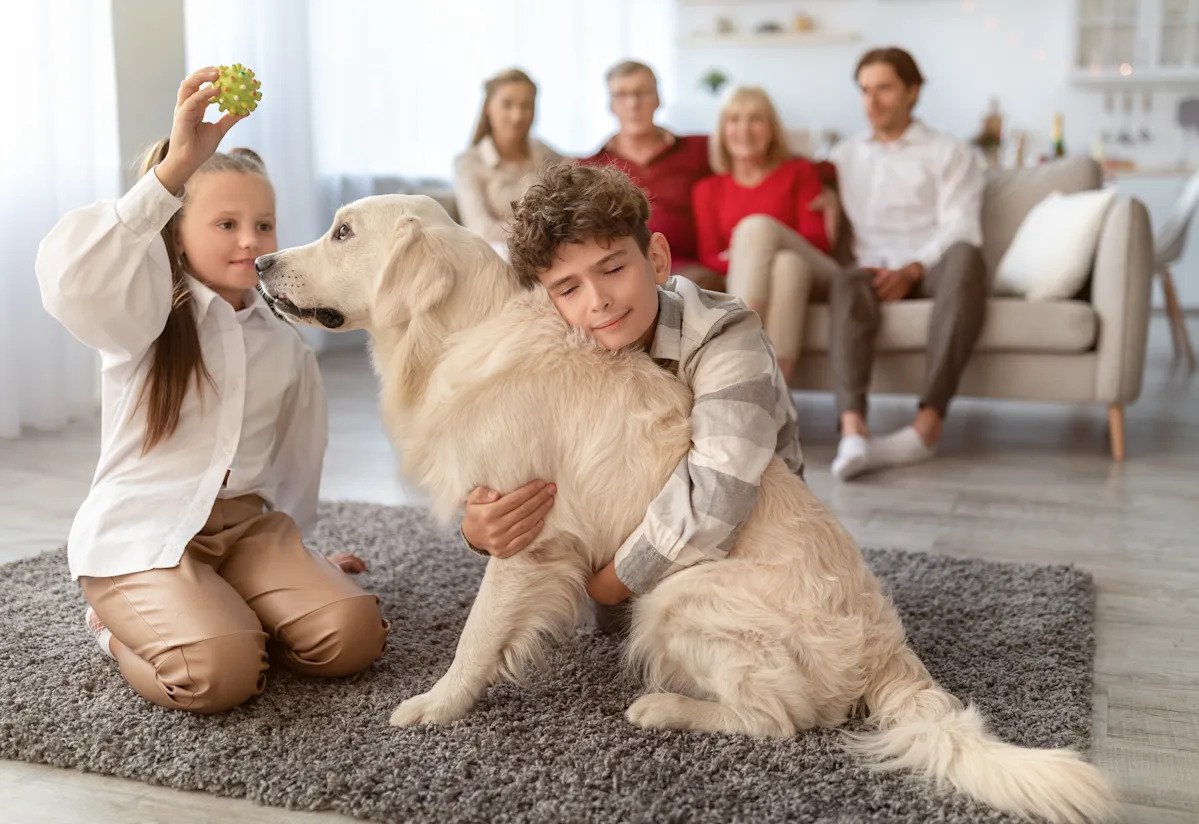
Many families raise children alongside dogs, creating close bonds from an early age. The internet is full of stories where people share their childhood memories of dogs. In fact, it is often viewed as a quintessential childhood experience.
Truth be told, it has both downsides and positive sides. But research suggests that growing up with a dog can have both benefits and challenges. The child can learn quite a few things if raised alongside a pet. They will also learn a variety of life skills while caring for their pets, which will come in handy later in life.
Let’s look at the effects a child can have on a dog—and vice versa.
Physical Health and Immunity

Physical health and immunity are two of the most immediate impacts. The arrival of a child leads to an increase in playing and physical activity in general. Studies indicate that children with dogs exercise an average of 11 minutes more per day.
The forms of play are varied; they include playing fetch in the backyard or simply going on family walks. These active moments help in combating childhood obesity and building stronger cardiovascular health.
Surprisingly, a dog’s impact really extends to the immune system. It has been found that early exposure to dogs (specifically within the first year of life) can lower the risk of developing asthma and allergies. Early exposure to dogs may help support immune system development. They train a child’s developing immune system to be more robust.
Emotional Intelligence and Mental Health

Dogs provide a unique form of unconditional love. It significantly boosts a child’s self-esteem. For example, a child may be struggling at school or facing social rejection. In such cases, the dog is serving as a non-judgmental confidant. The simple act of petting a dog can lower the cortisol (stress hormone) levels. Also, it can trigger the release of oxytocin (the ‘love hormone’). It promotes relaxation and bonding.
Furthermore, having a dog teaches children empathy. Because dogs cannot speak, children must learn to interpret non-verbal cues. For example, a wagging tail or a whimper. Kids need to understand their pet’s needs. This practice of ‘stepping outside oneself’ translates into better emotional intelligence when they are interacting with peers.
Character Development and Responsibility

Dogs help a child to carry out age-appropriate pet chores (such as filling a water bowl or brushing fur). It instills a sense of responsibility and achievement. It teaches everyone a very crucial life lesson. This routine provides a certain amount of structure. These structured routines may be beneficial for some children, including those with attention-related challenges ADHD.
It helps them manage hyperactivity and develop organizational skills.
Dogs also introduce children to the ‘circle of life.’ Pets have shorter lifespans than humans. So, experiencing this provides a safe environment for parents to discuss grief. And this helps children build resilience for future life challenges.
Social and Cognitive Gains

Dogs act as social catalysts and conversation starters. This encourages children to practice their communication skills with strangers and other pet owners. They make social interactions feel much less daunting.
Cognitively, a lot of children benefit from reading to their dogs. A teacher or parent might correct a mistake. However, a dog simply listens. This builds a child’s reading confidence and enjoyment of literacy.
Conclusion
Pets teach love and compassion. They are a welcome addition to any family and have a great impact on any child. Empathy is an important social skill, and interacting with pets can help children develop it. As parents, it can be of great value to set a good example for your kids.
Of course, you need to constantly supervise the interactions between your kid and the dog to make sure that both remain safe. Children should be taught to respect the dog’s space and not to disturb them in their ‘alone’ time. As long as you do that, it will ensure that both the child and the dog remain comfortable and safe.