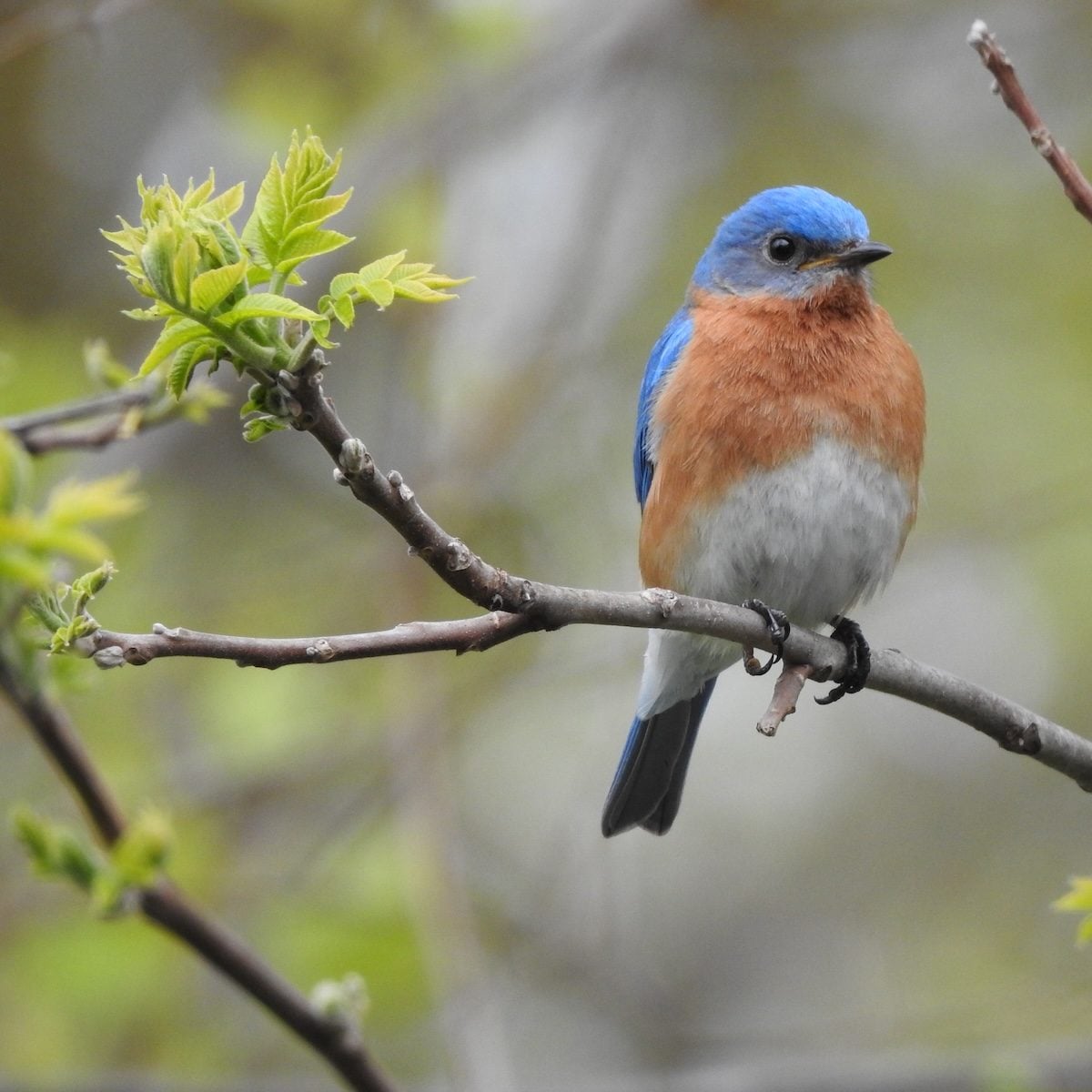
It’s easy to see why eastern, western and mountain bluebirds are among the most beloved backyard visitors. With their gorgeous colors, musical voices and gentle habits, who wouldn’t want to welcome these beauties into the backyard? Attracting bluebirds can take some time and patience. But once you’ve won them over, they’ll bring their special bluebird pizzazz to any yard or garden. Follow these tips and get expert answers to common questions about how to attract bluebirds.
Also, check out beautiful pictures of bluebirds.
7 Tips for Attracting Bluebirds

Bluebirds at a mealworm feeder
-
Open it up. Bluebirds prefer open areas with low grass and perches from which they can hunt insects.
-
Leave it alone. Dead trees provide important nesting and roosting sites for bluebirds and a whole host of other cavity-nesting birds. Leave dead trees standing (or leave dead limbs on live trees) when it’s safe to do so.
-
Plant native. In winter, bluebirds add berries and other fruit to their diet, so planting trees and shrubs native to your area is a natural way to attract them. Junipers, dogwoods, sumacs, hollies, serviceberries and elderberries are good choices.
-
Just add water. A simple bird bath is often enough, but bluebirds are partial to moving water, so even a small fountain or dripper will make your water feature more enticing. A source of clean, unfrozen water is welcome in all seasons.
-
Go chemical-free. Between spring and fall, a bluebird’s diet is mainly insects gleaned from the ground. Pesticides and other lawn chemicals are dangerous for birds that feed this way.
-
Beware of roaming cats. Each year, cats kill millions of songbirds. Newly fledged nestlings are especially susceptible, so be a good bird landlord and keep your cats indoors.
How to Attract Bluebirds FAQ

Choose a nest box with the right requirements for bluebirds.
Is My Yard a Suitable Habitat for Bluebirds?
Bluebirds prefer open to semi-open areas. They feed mainly on insects, often watching from a low perch and then fluttering down to take bugs from the ground. A wide expanse of open, chemical-free lawn provides ideal habitat. Bluebirds like to have a lot of open ground with short grass, so if that isn’t available nearby, they probably won’t use a nest box in your yard.
Psst—if you see a bluebird, here’s what it means.
Can I Attract Bluebirds to a Small Yard?
This partly depends on what your surrounding area is like. A very small yard or one with little or no open space will probably not be suitable for attracting bluebirds to nest, but you may still see them at your feeders for food and fresh water. Live mealworms, which you can buy at pet supply or wild bird stores, make the best feeder fare for these choosy birds. Bluebirds are also strongly attracted to water, so a shallow birdbath close to the ground—especially with a dripper or small fountain feature— may bring them in.
What Food Attracts Bluebirds?

Eastern bluebirds eating live mealworms
If you want to know how attract bluebirds in your own backyard, provide mealworms. Live mealworms are always best, but you can try dried mealworms as well. If you’re feeling ambitious, raise your own mealworms for an unending supply.
What Bluebird Species Can I Attract?

Western bluebird
North America boasts three distinct bluebird species: eastern bluebirds in the east and both western and mountain bluebirds in the west. Learn how to tell the difference between a western bluebird vs an eastern bluebird.
What Kind of Nest Box Should I Buy or Build?
A number of good bluebird boxes are available to buy, but remember that you must be able to open the box for routine nest checks and maintenance. If you’re building your own, check with the North American Bluebird Society for dimensions. The ideal box has an entrance hole 1.5 inches in diameter and is designed to be easily opened for cleaning. Be sure to use a durable wood, such as cedar.
Where Should I Put a Bluebird Box?
Place the nest box on a post in an open area, about 5 feet above the ground, with a predator guard on the post to keep intruders from climbing up.
I See a New Nest in My Bluebird Box. How Can I Tell if It’s a Bluebird Nest?

Young bluebird in a nest
Here’s a quick guide to identifying the eggs and nests of some of the most likely species you’ll find in your bluebird nest box.
-
Eastern, mountain and western bluebird: cup nest made of fine grasses and sometimes pine needles; females lay two to seven pale blue eggs (rarely pure white).
-
Tree swallow: cup nest of dried grass, always lined with feathers; eggs pure white.
-
House wren: nest made entirely of small twigs; eggs clear white, heavily speckled with reddish dots.
-
Titmouse: cup nest of roots, moss and dried leaves lined with hair, fur and scraps of string and cloth; eggs creamy white, speckled with small dots.
-
Chickadee: nest lined with moss, feathers, hair, rabbit fur and plant fiber; eggs white, evenly spotted.
-
Nuthatch: cup made with bark shreds, twigs, grasses, moss and feathers; eggs white, heavily speckled with pale-brown or purplish spots.
-
House sparrow: unkempt domed nest often with scraps of trash; eggs greenish white, splotched gray and brown.
What Do I Prevent Other Birds From Using Bluebird Boxes?
Bluebirds are cavity nesters. Instead of excavating their own nest holes, they use natural cavities in trees, abandoned holes made by woodpeckers, and nest boxes. Several cavity-nesting birds will use bluebird boxes, which is fine as long as the nester is a member of a native species. (In fact, it’s illegal to remove the nest of any native species.) Nonnatives are a different story. House sparrows, for instance, are very aggressive competitors for nesting space and will even kill bluebirds and other natives. So if you’re not prepared to evict house sparrows, being a bluebird landlord may not be for you.
How Many Broods Do Bluebirds Raise Each Year?

A juvenile bluebird fledgling
Many bluebirds will raise one to three broods per season. Once the young hatch, they fledge about three weeks later. Bluebirds can form close-knit families. The young from the first brood of chicks will often help out with subsequent broods by gathering food for the new offspring.
Bluebird vs blue jay: Find out how to tell the difference.
Where Do Bluebirds Go in Winter?

Bluebirds eat berries in winter
Bluebirds disappear from many neighborhoods in winter, and it’s natural to assume that they’ve all gone south, but this may not be the case. Some regularly stay through the winter as far north as Oregon, the southern Great Lakes and New England. They may switch habitats, however, gathering in small flocks and moving into open woods or juniper groves where wild fruits and berries will keep them fed in the cold. During the winter, small groups may roost together at night in tree holes or in other shelters. This is one good reason to consider leaving your nest boxes up for the winter season – attracting bluebirds may be possible even in the winter.
Are Bluebirds Endangered?

Male and female mountain bluebirds
Bluebird populations are directly linked to human behavior. In the early 20th century, loss of habitat and competition for nesting cavities with the more aggressive house sparrows and European starlings had the species in serious decline. Fortunately, humans came to the rescue when enthusiasts realized these beauties were in trouble. Building nest boxes for them became a popular hobby, and the species began to rebound. Populations are now much more stable—and with our continued support, there’s no reason bluebirds shouldn’t grace our lives for generations to come.