NEED TO KNOW
-
A Tennessee air ambulance program saved K-9 officer Luca after he was exposed to toxic ozone gas
-
The Life Force program provides rapid air transport and advanced care for critically injured police dogs
-
The program was inspired by a 2017 incident where a police dog died due to delayed emergency care
A sick dog made history recently as the first K-9 officer transported by air ambulance in Tennessee.
According to information obtained by PEOPLE, Luca, a Belgian Malinois and a full patrol K-9 with the Criminal Investigation Division at the Clay County Sheriff’s Department in North Carolina, needed emergency care after being inadvertently exposed to concentrated ozone gas while on a call.
On Monday, April 20, Luca’s partner, Detective Steven Smith, found the dog in his kennel in distress and rushed him to Big Bear Vet in Hayesville, N.C. Luca was stabilized and sedated, but the “need for advanced care remained critical.”

Luca receiving medical treatment
Credit: LIFE FORCE Air Medical
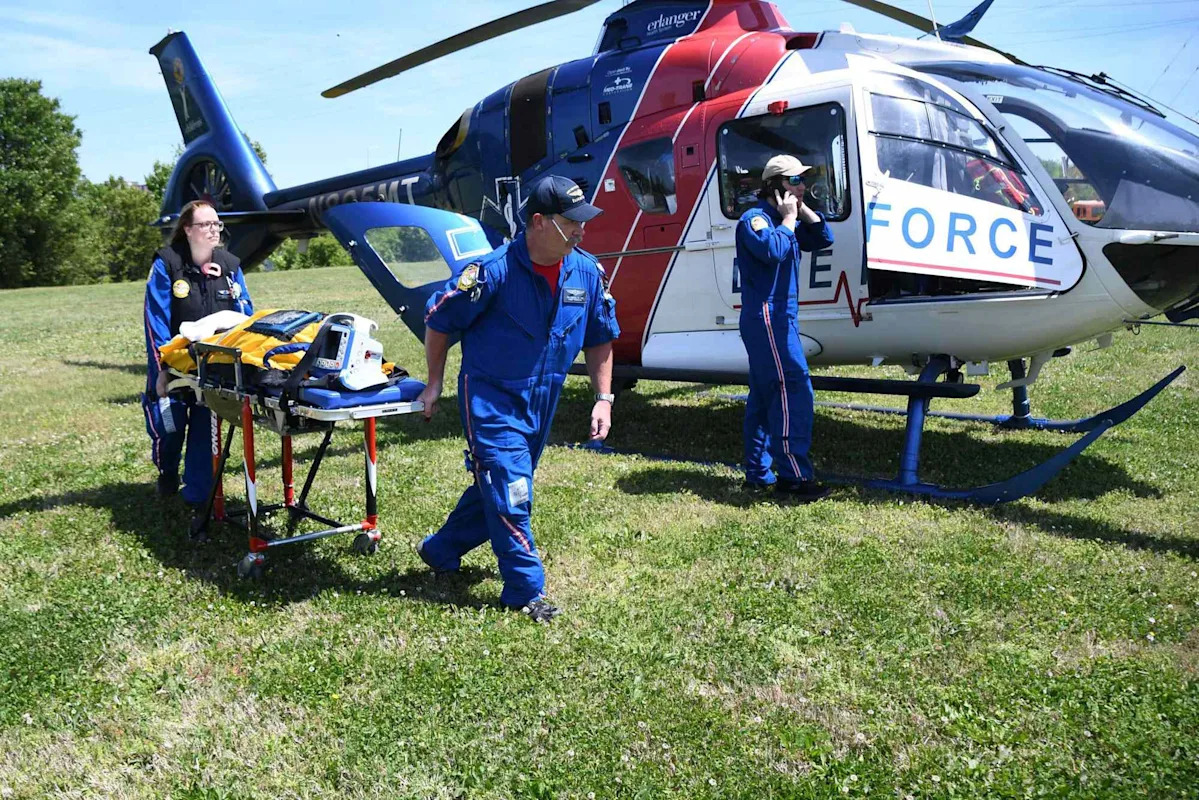
From there, Smith coordinated transportation with Life Force’s new K-9 air transport program with K-9 Transport Program Coordinator Stacy Prater.
“These K-9s are heroes who protect our communities every single day,” Prater said in an exclusive statement to PEOPLE. “They deserve every fighting chance when they are injured in the line of duty.”
The Life Force program is one of the few in the country that is equipped to transport critically injured K-9 officers using an air medical aircraft with a staff and outfitted for advanced clinical care.
“I had Stacy’s phone number. I pulled out my phone immediately,” Smith told local CBS affiliate WVLT. “The next thing I know, there’s a helicopter sitting on the ground in Hayesville.”
Luca, who’s nationally certified in narcotics detection and criminal apprehension, was then transported to the University of Tennessee College of Veterinary Medicine in Knoxville, which only took about 27 minutes in comparison to the hours it would have taken to drive to the specialized trauma care unit at the college.

Luca being transported to receive care.
Credit: LIFE FORCE Air Medical
“As soon as we pulled up into the parking lot, the staff from this hospital is sitting in the parking lot waiting on my dog,” Smith recalled. “That’s something that you see from a person that’s been shot. That’s the kind of treatment that I’m talking about that our dogs need.”
Dr. Kristen Marshall, an emergency and critical care veterinary specialist at the college, stated that the team was well prepared for Luca’s arrival after having done a “dry run” with the helicopter.
“We had a plan in place,” Marshall added, noting that ozone toxicity can be fatal without fast treatment. Thankfully, Luca received assistance in record time and after three days of care, the pup was released to go home.
Smith went on to highlight the significance of the program after witnessing service dogs being stabbed or shot while in the line of duty.
“My dog gets in my vehicle with me and goes out and serves and protects his community just like I do. He should be treated just like I do,” added Smith. “Dogs definitely would benefit from a rapid transport to a hospital that’s equipped to deal with [stab and gunshot wounds].”
The air transport program was inspired by the death of a police dog named Cain, who died in 2017 while being driven to UT after being stabbed in the line of duty.
Read the original article on People