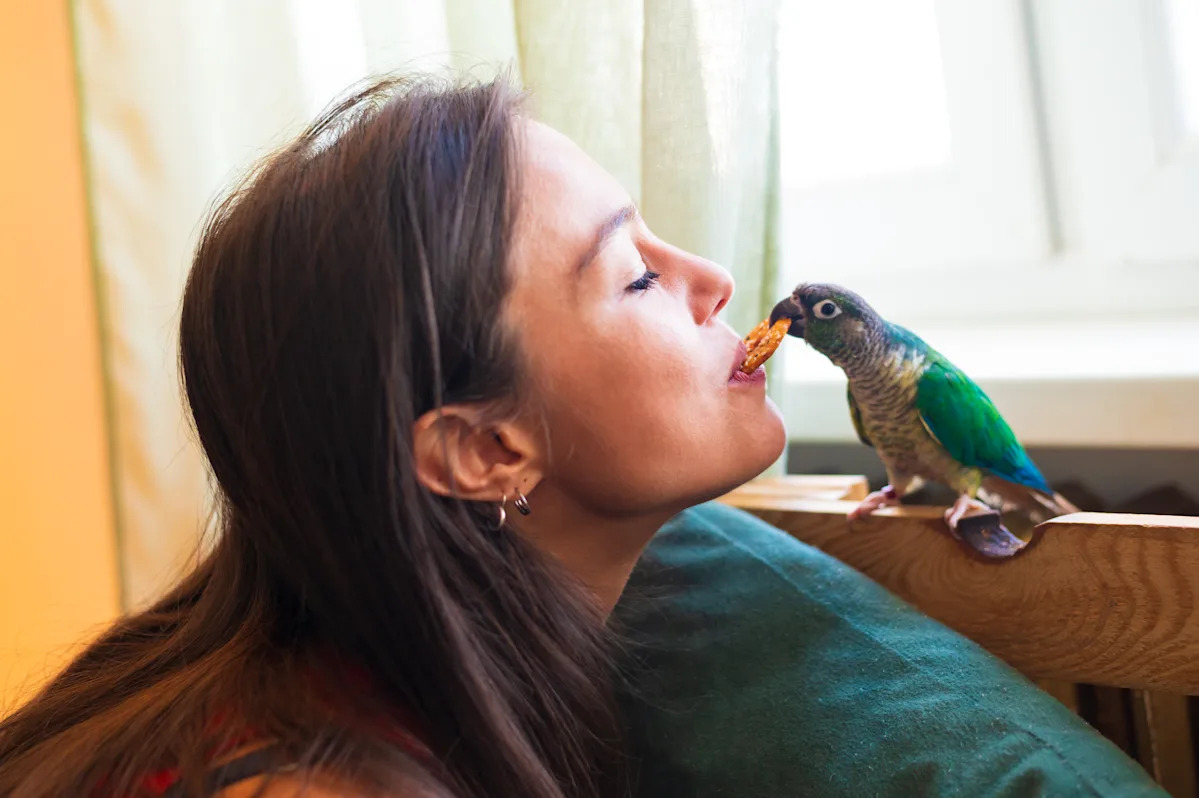
Birds are highly social, intelligent, and emotional creatures. In fact, they are way smarter than we give them credit for. They mostly thrive on companionship. In the wild, they create and belong to complex social groups. In flocks, they share responsibilities such as grooming and protection. When kept as pets, a bird often transfers this instinctual need to bond with their human caretakers.
They may view their human caretakers as flock mates or parental figures. Understanding these behaviors is crucial for fostering a deep, trusting, and healthy relationship. If your bird exhibits these signs, they see you as a trusted member of their inner circle.
Preening You (Allopreening)
This is one of the most significant indicators of trust and occurs when a bird attempts to preen you. This involves gently running their beak through your hair, nibbling your ears, or grooming your skin.

In the wild, this behavior is called allopreening and is reserved for close companions and mates. They do this chiefly to maintain feather health and reinforce bonds. It is a clear sign that they view you as a family member, rather than a predator.
Following You Everywhere (Shadowing)
Some birds closely follow their owners. They are constantly flying, hopping, or walking after you. This behavior indicates they view you as part of their flock.

The birdie wants to share the same spaces, observe what you are doing, and make sure you are safe. If they fly to you immediately upon entering a room, it signifies deep affection and attachment.
Intense Vocalization (Flock Calling)
Birds communicate with their flock throughout the day. Does your bird call out to you when you are in another room? Or does it greet you with happy chirps and screeches when you return?

This means that they are using ‘contact calls.’ They are asking where you are and informing you of their whereabouts, ensuring the ‘flock’ is safe and together.
Beak Grinding and Soft Chirps
Sometimes, a bird is calm, content, and feels entirely secure in your presence. They will often grind their bottom beak against their top beak, creating a grinding, crackly sound. This is usually accompanied by fluffed-up feathers.

This behavior means they trust you enough to let their guard down. Gradually, they will enter a deep state of relaxation, often right before napping.
Sharing Food (Regurgitation)
This behavior can certainly seem unappealing to humans. However, regurgitation is a primary way birds express love and bond with their mates. If your bird shakes their head and brings up food for you, it is a sign of intense affection.

Your feathered friend is just trying to take care of you. This indicates that they view you as a close family member to whom they are responsible.
Mirroring Your Activities

Birds are social learners and often mimic the behavior of their flock mates. They need to feel involved, after all. Sometimes, your bird begins to eat when you eat, and preens itself when you are grooming (like brushing your hair). They may also start singing when you are talking. All this is ‘mirroring.’ This behavior shows a desire to fit into your daily routine and be part of your community.
Falling Asleep on You (Vulnerability)
Prey animals do not sleep in the presence of someone they distrust. If a bird sleeps on your shoulder, then they feel absolutely safe. They may even sleep in your hair, or even on one leg near you (that’s adorable!).

If they are sleeping with one foot tucked up and a relaxed, slightly puffed posture, it shows total trust that you will protect them.
Lowering Defenses (Turning Their Back)
Sometimes, your bird will turn their back to you while perching or eating. This indicates trust rather than avoidance. Parrots have blind spots in front and behind them.

Therefore, turning their back means they trust you to watch for predators and protect them. In this sense, they are like a loyal flock mate.
Head Bowing for ‘Scritches’
Sometimes, a bird might bow its head down. They are basically showing you the top of their head for you to scratch. By doing this, they are showing submission and trust. It’s essentially asking for affection and grooming.

They feel secure enough in your presence to lower their head (this is a very vulnerable posture). Also, they allow you to interact with them closely.
Conclusion
If your bird is showing these signs, it means you have successfully built a ‘sacred’ bond with your pet. They no longer perceive you as a threat. But rather, they see you as their parent, partner, and best friend. However, being their flock mate comes with responsibilities. They will demand your time, just as they would from other birds in the wild. You definitely want your bird to trust you. However, it is important to prevent them from becoming so attached that they cannot behave independently. Don’t let them become ‘velcro birds’, as this can lead to stress.
Always make sure your bird is safe from accidental injury when they are following you around the house, as they often get very close to your feet.
By acknowledging these behaviors, you can nurture a lifelong friendship with your bird, ensuring they feel secure, loved, and part of your family.