The post This Overlooked Detail Outside Forests Could Be the Key to Saving Bird Species appeared first on A-Z Animals.
Forests are some of the most common places to find birds, and they are typically home to many different species. When forests are broken into smaller patches, the usual assumption is that the wildlife will slowly disappear from them as fewer trees surely mean fewer species. However, new research suggests that size is only part of the story. In many cases, what happens just outside the forest edge can have a surprising effect on which species survive inside it.
Why the Surrounding Landscape Matters
Scientists often describe the land around a forest as the “matrix”. This surrounding area can be anything from farmland to open water. For a long time, it was considered little more than empty land, which was of little consequence to the animals living in the forest. However, for birds, this surrounding landscape is not an empty void; they often move into and across it in search of food and to avoid predators.
Some landscapes are more difficult to cross than others, as some forest birds are less inclined to risk crossing a vast open expanse. Forests surrounded by open habitats are more isolated. These ones are at a greater risk of losing some of their species, regardless of their size. However, a new study of more than 1,000 fragmented forests found that small forest fragments surrounded by habitats that offer some degree of cover – whether a few trees, some hedges, or vegetation at field edges – can support far more bird species than similar-sized patches isolated by water. This suggests that the persistence and diversity of bird species within forest fragments are strongly associated with the condition of the land immediately around them.

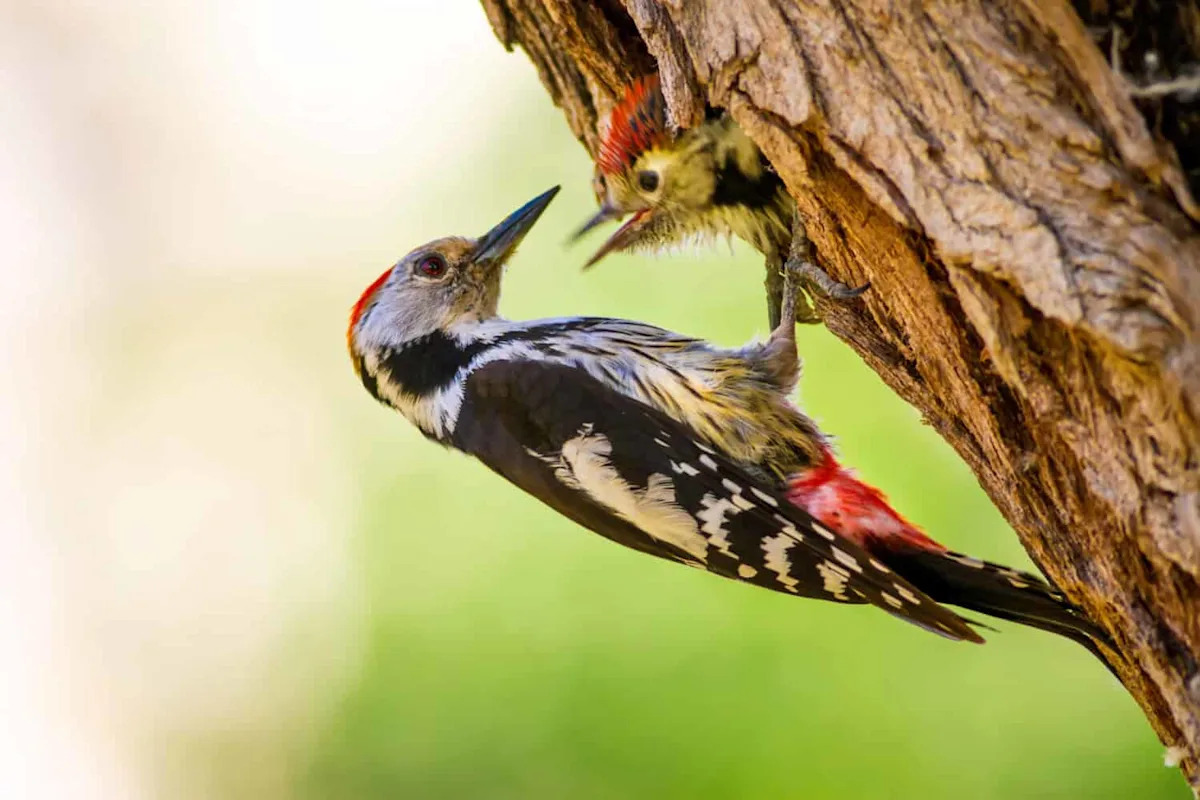
The area around a forest is just as important as the forest itself for many birds.
©RickGraham Photography/Shutterstock.com
It’s important to note, though, that not all non-forest areas are equal. This is because those with some tree cover or vegetation function very differently from completely bare or flooded surroundings. This makes them far more usable for wildlife.
How Birds Actually Use the Landscape
It’s easy to think that forest birds remain entirely within the forest habitat. However, in reality, they use both the forest and the surrounding landscape every day. The forest may be where they nest, but outside it they forage for food and explore new territories. Open ground can act as a barrier, limiting their range to the forest and its immediate surroundings. The open expanse exposes them to predators and unfamiliar conditions, so they tend to remain in familiar areas. Over time, this isolation increases the chance of the population vanishing due to natural factors. These factors could include poor breeding seasons, illness, or predation.
In comparison, areas with a line of trees are more appealing to birds. They break up the open habitat into smaller chunks, reducing the risk of exposure to predators. These features can therefore link fragmented areas together, allowing the birds to travel or recolonize other patches. It also means that the forests in these areas have a greater variety of birds. This is because there is a greater chance of birds moving back in from other areas if populations decrease in the initial location.
It’s also important to note that some bird species cope better with fragmented habitats than others. Generalist species—those that are more adaptable and can survive in multiple habitats—are more likely to cope with open areas and are more willing to use surrounding mixed habitats. In contrast, specialist species—those that rely on a specific habitat to survive—are less likely to venture outside the forest. These are the species that are most at risk when habitats become fragmented. They are also the ones that benefit most from an improved surrounding habitat.

Birds that rely on forest habitats are more likely to survive when the surrounding land is also suitable.
©Fidel/Shutterstock.com
What This Means for Conservation and Land Use
These findings change how fragmented landscapes can be managed. Large forests still matter enormously, but smaller patches are much more vital than once assumed. Where smaller forest remnants remain, improving the surrounding landscape can help conserve the wildlife that lives within them. Improving the land around a forest fragment can make it easier for birds to move, feed, and maintain stable populations.
From a conservation standpoint, especially for farmers and ranchers, this could involve planting or allowing hedgerows to grow, preserving scattered trees, or leaving space for patches of vegetation around field edges. Land use planning also plays a role. Large treeless expanses of cleared ground cause isolation, while green corridors or suitable tree cover can greatly reduce it.
Even forests that have become fragmented can be improved through restoration work. The study showed that adding small amounts of tree cover within a few hundred feet can have a positive effect on the survival of many species. It also demonstrates that even human-modified landscapes, such as farmland, can play a vital role in conservation if managed effectively.
The post This Overlooked Detail Outside Forests Could Be the Key to Saving Bird Species appeared first on A-Z Animals.