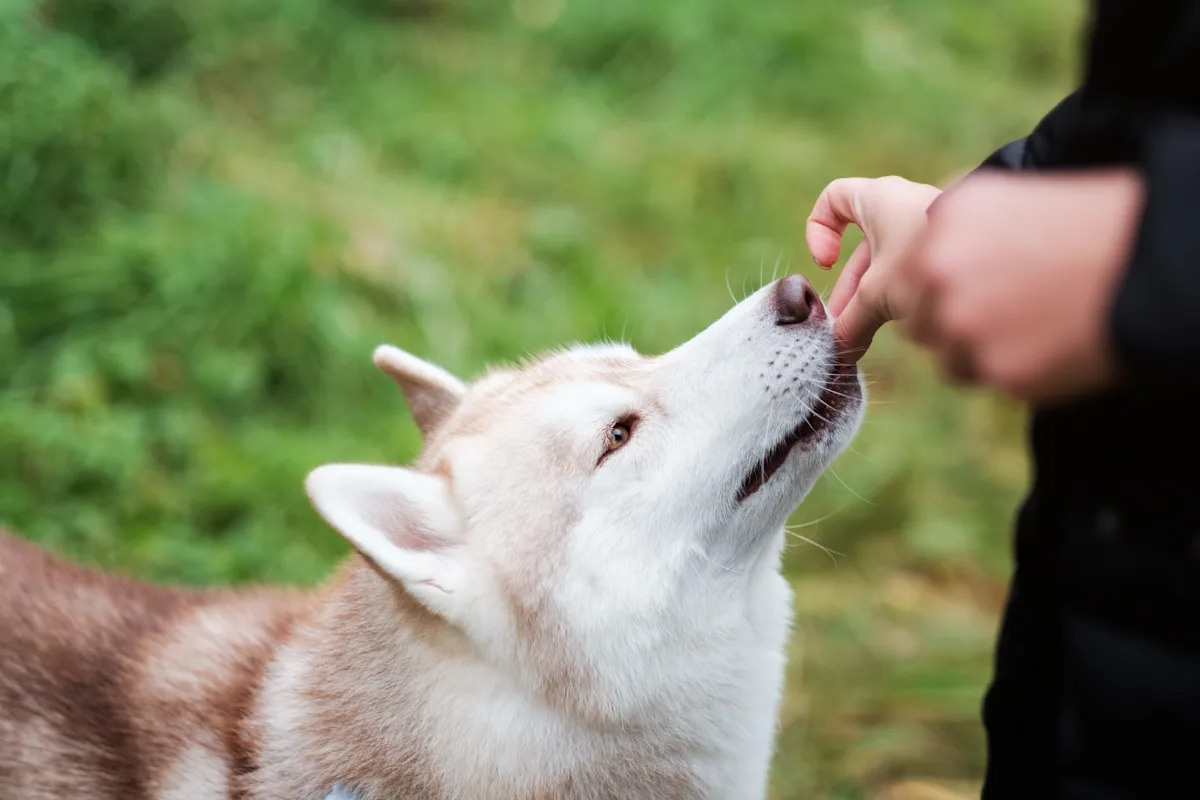
If you’ve ever stood in a puppy class with a dozen leashes tangled and everyone fumbling for kibble, you already know the answer: yeah, treats work. Dogs aren’t trying to be difficult; they’re just living in a world full of smells, squirrels, and other dogs, and food is one of the few things that can cut through all that noise when you’re asking for a sit or a recall.
The trick isn’t whether to use treats; it’s how you use them so you don’t end up with a dog that only listens when your hand’s in a pouch.
Treats help dogs learn faster
Dogs are more likely to repeat behaviors that are followed by rewards. If sitting brings a small piece of chicken, the dog will sit more, and this principle is called operant conditioning. Food is a strong motivator for most dogs. Words alone do not grab attention like food does.

A trainer uses a treat right at the moment the dog does what is asked. If the treat comes too late, the dog does not know what was right. A quick treat makes learning clear and fast.
Puppies learn where to pee with treats, while grown dogs learn to walk without pulling with treats. The treat marks a good moment. Without it, the dog has to guess, and guessing slows the training.
They strengthen the human–dog bond
Training with food is not a bribe; in fact, it builds a bond. The dog starts to see the owner as the one who brings nice things, and that feeling makes the dog feel safe.

Dogs trained with rewards act more sure of themselves, and they try new tricks and do not hide or freeze up. The dog works because it feels good to work. The dog is not scared of a yell or a jerk on the leash.
When trust grows, daily life gets easier. The dog comes when called and waits at the door. The owner feels less frustrated, and the dog feels calmer. Both sides win.
Timing matters
Speed matters a lot, and here’s where a lot of owners make mistakes. The treat needs to come one or two seconds after the good act. If the dog sits, then sniffs the floor, then looks at a fly, and then gets a treat, the dog may think the treat was for looking at the fly.

This rule is called positive reinforcement. Good act, then good thing, right away. Good trainers keep treats in a small bag or pocket. They say “yes” the second the dog sits, then hand the food.
That fast link teaches the dog what is right. Owners who dig for treats too long miss the moment. The dog links the treat to whatever it did last, not to the sit. It’s always good to keep treats ready and be quick.
Too many treats can be harmful
This is the part nobody likes to hear after a good training session. It’s easy to get generous, especially when the dog is performing well, but those calories stack up. Most pet dogs aren’t running marathons. They’re sleeping, taking a lap around the block, maybe chasing a toy for five minutes, and then back on the couch.

Extra food turns into extra weight, and that hits joints, hearts, and lifespans. Vets see it constantly. Another problem pops up when dogs decide regular kibble is boring and hold out for the good stuff. If treats start making up more than about ten percent of daily intake, you’re probably headed for a picky eater or a chunky one, sometimes both.
Breaking a big biscuit into four or five bits works just as well for the dog’s brain, and it lets you do more reps without blowing the day’s calories. Count them if you have to. It’s not fun, but neither is putting a dog on a diet at age six.
Treats should not be the only reward
If a dog only listens when it sees food, training is not done. Food cannot be the only way. The plan is to use less food as time goes on. Experts suggest mixing the rewards from the start.

Give a treat for sitting three times. The fourth time, give a verbal praise and a scratch. The fifth time, the reward can be clipping the leash to go outside. The sixth time, a short game of tug.
Dogs like play, kind words, and touch. Owners pick food because it is fast and easy. Using other rewards keeps the dog from saying no when no food is shown. It also keeps the dog thin and fit.
Conclusion
Treats can be effective training tools. They help dogs learn fast and help build trust. They make the right act clear. Three points matter most. First, give the treat quickly so the dog associates it with the right act. Second, keep pieces small and count them in the day’s food. Third, do not rely solely on food. Add praise, petting, and play.
Treats should not last forever. Once the dog knows “sit” or “stay,” start to skip the food sometimes. A trained dog sits because it knows the house rule, not only for a treat. Treats make a dog happy, smart, and healthy if used with care. Used without care, treats can lead to weight gain or selective eating habits.