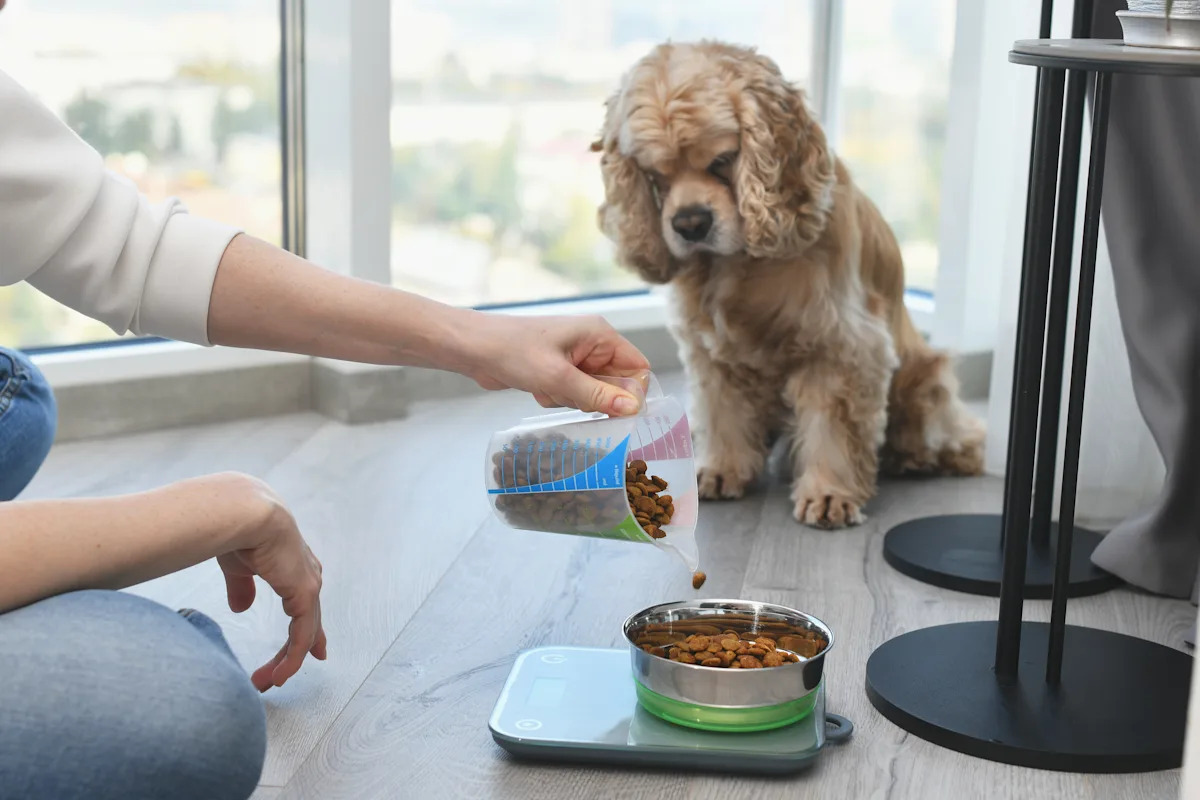
When you bring home a puppy, you’re also taking on a big responsibility. New pet parents often get confused about how much to feed a puppy. They struggle with deciding the quantity for feeding. It is important to know the correct portion for your puppy, as overfeeding can lead to unwanted weight gain, and underfeeding can affect healthy growth and development.
How much to feed a puppy actually depends on the breed you adopted and their age, whether they are two to six months old or up to a year. To prevent any health and weight-related issues, it is important for you to understand the basics of feeding a puppy.
1. Feeding depends on weight (most important point)
If you want to decide what portion to feed your puppy, the easiest way is to look at its weight. All breeds have a different growth structure. While some are large and need more meals throughout the day, others are small in size and need up to two to three meals per day.

You will find many general guides mentioning specific grams per kilogram (gm/kg) that can be followed. For example, a 13 lb puppy may need around 3.5 to 5 ounces of food per day, depending on the food type. You can divide this into multiple meals.
According to veterinary practitioners, your puppy’s diet has to be adjusted based on their weight to maintain a healthy body. Some general guidelines suggest calculating food based on weight, but exact amounts vary by food type and breed.
2. Age also changes how much they eat
All pet owners should know that a younger puppy up to 6 months and an older puppy up to 1 year do not eat in a similar way. When a puppy is young, they grow fast, and for this reason, they need more food. As they grow up to be a year old or more, they need less food compared to their size.

A 2-to-3 month-old puppy may need more energy for growth and to sustain itself as compared to a 6-to-8 month-old puppy of the same weight. Some research suggests puppies may need 5 to 10% of their body weight as food daily. This keeps them strong enough to sustain themselves in the future.
3. Use feeding charts (easy method for beginners)
As a pet parent, if you do not know where to begin the feeding diet for your puppy, you should consider feeding charts that are labeled on dog food bags, which are very helpful. These charts talk about the daily portions to be given to your puppy. It suggests the feeding diet in terms of cups or grams.

Some general feeding guides also mention that small puppies up to 6 months old will need half to one (½ to 1) cup of food per day, whereas medium-aged puppies from 8 months to 1 year might need around 1 to 3 cups daily.
4. How many times to feed (very important)

You can divide a puppy’s meal into multiple small meals throughout the day. This is because they might need more than one meal, and they do not eat enough food in a single go. Puppies up to 6 months have small stomachs, so you can follow a simple routine as suggested by many vets:
-
Puppy up to 3 to 4 months: 3 to 4 meals equally divided per day
-
Puppy up to 4 to 6 months: 3 meals a day at a decided time
-
Puppy of 6+ months: 2 meals a day
If you keep a proper feeding routine, this ensures that your dog is trained when it comes to food and requirements. This helps them build a daily schedule.
5. Calories matter, not just quantity
You’ll come across multiple dog foods, which come in different calorie quantities. Some have more calories, whereas others might have less. Calorie-dense foods contain more energy in smaller portions.

For example, a general guide suggests a puppy weighing 10 lb would need around 649 calories per day. But this highly depends on the kind of growth and body condition. If your puppy is quite young, they will need high-calorie food, which is divided into smaller meals throughout the day. Pet owners are recommended to check the food labels and not rely on the portion size.
6. Adjust based on activity and body condition
Even though puppies are very energetic in their early stages of life, the energy levels of each one differ. While some are very playful and hyperactive, others can be very calm and reserved. Active puppies may need slightly more food, while less active ones may need less.

Veterinary guides often convey that a puppy’s feeding depends on their body condition and activity level, not just a certain number of grams daily. A food proportion that is adjusted based on activity and body condition helps prevent any obesity-related disease in the future. More active puppies may need slightly higher portions, but adjustments should be gradual.
7. Always check the food label + vet advice
Any food brand you choose for your puppy will have a different feeding guide on its label. The exact daily amount depends on the food brand and its nutritional density. Dog owners should know that every breed has diverse needs.

Some foods have low calorie levels, while others have more. It is advised to discuss your puppy’s diet plan properly with a veterinarian to ensure your puppy’s diet supports healthy growth.
Conclusion
Every puppy has different feeding habits. There is no single portion that works for every puppy. While some eat more because of their active routine, others may eat less depending on their metabolism and size. You should first start with the guidelines and later adjust the portion, as required. If you are ever unsure about the grams per kg, always know, “When in doubt, ask a vet.”