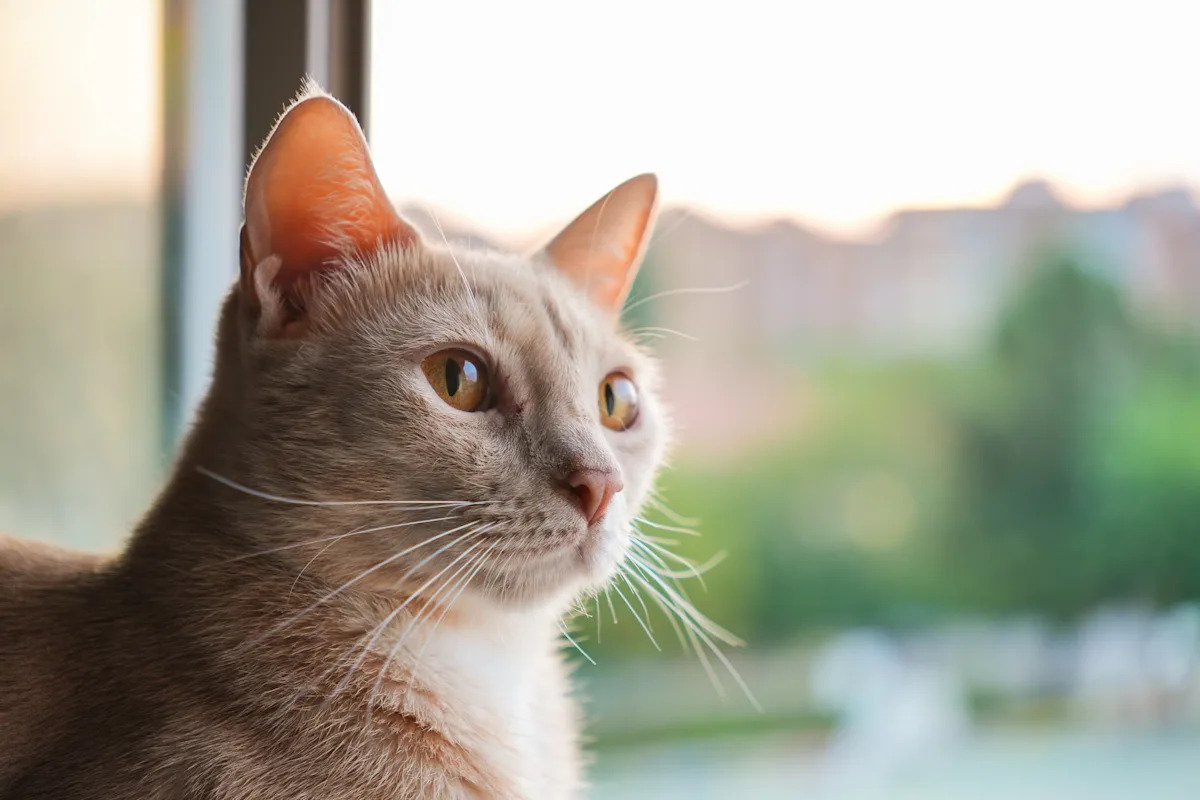
Once upon a time, cats used to be lone hunters. Although they evolved with time, this ‘solitary’ nature remained ingrained in their minds.
Today, the felines are mostly domesticated. An indoor lifestyle normally keeps them safe from traffic, predators, and diseases. Unlike in the old times, a housecat does not need to be outdoors a lot. An exclusively indoor cat undergoes a lot of significant changes due to a less complex environment in comparison to the outdoors.
If a cat never goes outside, its brain witnesses a shift. It goes from processing constant sensory input (smells, sounds, prey movement) to managing a familiar, static territory.
Reduced Sensory Input and Brain Stimulation
The outside world is constantly changing, and it’s a high-stimulation environment. Indoor cats miss out on the diverse sights, sounds, and smells. These are the ones that naturally exercise their brains. Without this constant influx of novel stimuli, an indoor cat’s brain adapts to a lower level of engagement.

Studies indicate that a lack of environmental input can lead to mental under-stimulation. This can result in behavioral changes that owners might misinterpret as ‘calmness.’ However, it may actually be chronic boredom.
Hyper-Focus on Routines
You see, indoor cats tend to develop a much sharper memory when it comes to routines. Their environment is mostly static, after all. Therefore, their brains become incredibly tuned to household patterns.

This includes a lot of things, not least of all the feeding times. It can be the sound of a key in the door or the location of every object. Yes, this can make them secure and predictable. However, it can also lead to a lot of increased anxiety when routines are interrupted.
Instinctual Changes and Mental Frustration
A cat’s brain is biologically hardwired for ‘predator’ stuff. Namely, hunting, stalking, and territorial patrolling. And if these behaviors cannot be performed, this may lead to frustration.

These are some of the things cats do when frustrated.
Behavioral Redirection: Bored cats often redirect their hunting instincts onto toys. They do it on furniture or bite and chase moving objects, including ankles.
Destructive Tendencies: A lack of stimulation can lead to destructive behaviors. This includes tearing curtains or scratching furniture. By doing all this, they try to create their own challenges.
Overgrooming: Boredom can trigger stress-related habits like overgrooming. This can be mistaken for a medical allergy.
Neuroplasticity and Adaptation
Did you know that an indoor cat’s brain does not stop growing? Here’s an interesting fact, its neuroplasticity adapts to the environment it is given. Now, that environment can have vertical space, toys, and loads of human interaction. If everything goes right, a cat’s brain can remain active.

However, if the environment is barren, outcomes may be less favorable. The cat may experience cognitive decline faster than an active, outdoor cat.
Cognitive Dysfunction Syndrome (CDS)
Many people know that indoor cats live much longer. Therefore, they are more susceptible to feline cognitive dysfunction syndrome. This is kind of similar to Alzheimer’s disease in humans. Affected cats experience disorientation, changing sleep-wake cycles, and forgetting the location of the litter box.

Yes, aging affects all cats. But indoor cats require proactive mental stimulation (puzzle feeders, training) to slow down this decline.
How to Mitigate the Effects
So, how to prevent the effects of CDS in cats? Very simple. You need to prevent a sedentary, unstimulated brain. And for this, indoor environments must be actively enriched.

Vertical Space: Cats need to climb and watch. This helps to stimulate their territorial instinct.
Puzzle Feeders: Provide your cat a puzzle feeder that makes them “hunt” for their food. It keeps their brains sharp.
Active Play: Daily interactive play with wand toys stimulates the ‘hunt’ cycle. It involves stalking, chasing, and catching.
Conclusion
We must never forget that cats were once creatures that lived in the wilderness. They hunted, roamed, and lived all on their own. They might have become domesticated now, but that does not mean that those instincts have died.
They are still there. We might want to keep our cats indoors for long periods to protect them, but we should also make sure that they remain emotionally enriched.