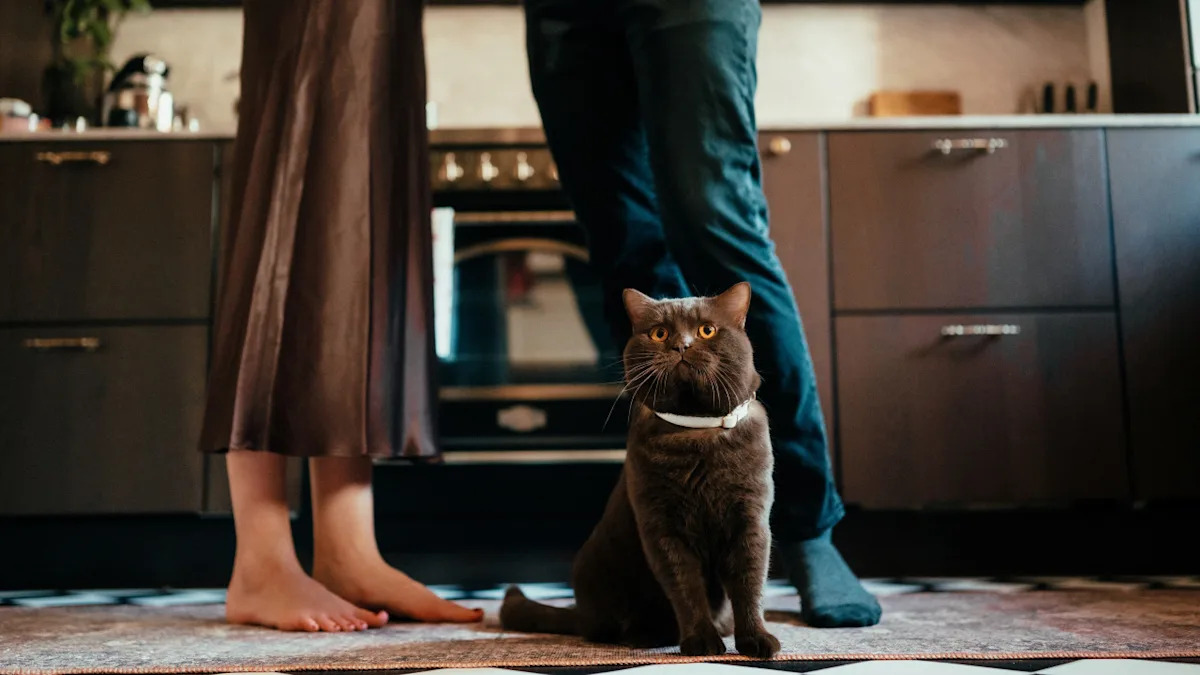
If you’ve ever watched your cat march straight up to your boyfriend, roommate, husband, or brother and absolutely announce their presence like they’re filing a noise complaint, you’re not imagining things. Cats do, apparently, raise the volume for men, according to a recent study.
Earlier this month, the journal Ethology published new research on Friday, November 14, examining how 31 pet cats greet their humans at home and found one very consistent pattern: when the person walking through the door is a man, cats meow more often. Not dramatically differently, not more affectionately, not more anxiously — just louder.
Since then, the finding has been popping up everywhere. The New York Times highlighted it. Local TV stations turned it into their feel-good (or feel-called-out) segment of the day. And on Friday, November 28, it hit a whole new audience when Grace Eckerle, a morning news anchor at WRDE-TV, doubled down in a TikTok that quickly picked up traction.
“Alright cat owners, this is either the best or worst news you’re going to hear all day,” she begins. “A new study came out, CNN published it. Cats are more likely to meow, they meow more frequently at their male owners. Do you know why? Do you know why cats are meowing more at men? Because they don’t listen.”
She’s not wrong, at least according to the research. The scientists behind the study filmed quick “welcome home” moments between cats and their humans. When a woman walked in, the cat did its usual greeting routine (think tail up, a leg rub, maybe a soft meow). When a man walked in, the greeting looked almost the same, except the cat meowed more often. The authors didn’t pin down a single cause, but they did float one possibility: male caregivers may need more clear vocal signals to notice and respond. The internet, of course, has already translated that into one simple conclusion — men don’t listen.
“Lmaooooo I was just telling my man he doesn’t listen today. This is solid evidence,” one person wrote in the comments section of Eckerle’s post.
“See, even cats know men don’t listen,” another said.
“I just told my bf this and he said ‘oh I love it’ which proves he didn’t listen and the study is accurate,” chimed in a third.
“This actually makes sense my cat meows at my fiancée way more than me,” someone else added.
And the fun part is this isn’t the only fascinating thing researchers have uncovered about our tiny, furry landlords lately. Earlier this year, one team reported that in relaxed cuddle or petting sessions, both cats and humans showed a measurable oxytocin boost — when the contact was on the cat’s terms.
Another group made headlines with a project suggesting that some cats can thrive as therapy animals, especially for people who don’t connect as much with dogs. There’s even emerging AI work that uses meows to estimate a cat’s age, which may feel like the beginning of a sci-fi movie but is very real.
This story was originally published by Parade on Nov 30, 2025, where it first appeared in the News section. Add Parade as a Preferred Source by clicking here.