Oceania is a continent of unparalleled natural diversity, home to wildlife found nowhere else on Earth. From the rainforests of Papua New Guinea to the coral reefs of Australia, the region hosts species that are both unique and mesmerizing. Travelers can witness creatures whose evolution has taken astonishing paths due to the continent’s isolation. These encounters offer experiences that feel almost magical, providing a rare window into ecosystems unlike any other.
Exploring Oceania’s wildlife requires patience, respect, and curiosity, but the rewards are unforgettable. Many species are best seen in their natural habitats, where their behavior and interactions with the environment are most striking. Guided tours, national parks, and protected reserves allow visitors to witness these animals safely and responsibly. Whether on land, in the air, or underwater, Oceania promises encounters that are truly once-in-a-lifetime.
Kangaroo – Australia

Image Credit:Shutterstock.
Kangaroos are perhaps Australia’s most iconic animals, hopping freely across open plains and national parks. Their powerful legs and distinctive movement make them fascinating to observe in the wild. Visitors often spot them grazing at dawn or dusk, providing excellent photographic opportunities. Unlike in zoos, seeing kangaroos in their natural environment shows their social behaviors, from playful interactions to alertness against predators.
Some species, like the red kangaroo, can reach impressive heights and cover large distances in a single bound. Observing mothers with joeys in their pouches is a uniquely Australian experience. Wildlife reserves such as Kangaroo Island offer safe observation without disturbing their habitat. Kangaroos’ gentle curiosity and remarkable agility make them unforgettable encounters for travelers.
Koala – Australia

Image Credit:Shutterstock.
Koalas are tree-dwelling marsupials known for their slow movements and endearing appearance. They feed almost exclusively on eucalyptus leaves, which gives them a strong aroma unique to their habitat. Spotting a koala resting among the branches is a serene experience that reflects the tranquility of Australian forests. Koalas are best observed in national parks where conservation efforts ensure their safety and the protection of their environment.
Their gentle, sleepy demeanor hides a surprisingly complex set of behaviors, from social interactions to vocalizations. Eco-tours in Queensland or Victoria often allow visitors to learn about koala habits while maintaining respectful distance. Photographs capture their soft fur and expressive eyes, making them icons of Australian wildlife. Koalas’ rarity and charm make them one of Oceania’s most sought-after animal encounters.
Kiwi – New Zealand

Image Credit:Shutterstock.
The kiwi is a flightless, nocturnal bird that has become a symbol of New Zealand. Its small size, long beak, and extraordinary sense of smell make it a unique member of the bird world. Spotting a kiwi in the wild is rare and requires visiting protected sanctuaries or guided night tours. Their shy, elusive behavior adds to the thrill of encountering one in its natural environment.
Kiwis play a vital role in the forest ecosystem, dispersing seeds and maintaining soil health. Conservation programs have helped stabilize populations despite historical declines due to introduced predators. Visitors can learn about breeding programs, habitat preservation, and the cultural significance of kiwis to Māori communities. Seeing a kiwi in the wild is a magical and educational experience unlike any other.
Tasmanian Devil – Tasmania, Australia

Image Credit:Shutterstock.
The Tasmanian devil is a nocturnal marsupial famous for its loud screeches and voracious feeding habits. Despite its fearsome reputation, it is relatively small and plays a crucial ecological role as a scavenger. Observing Tasmanian devils in wildlife sanctuaries highlights their social interactions, vocalizations, and feeding behavior. The species faces threats from a contagious facial tumor disease, making conservation efforts critical.
Night tours in Tasmania allow visitors to witness these fascinating creatures in semi-natural habitats. Feeding sessions are particularly engaging, showing their strong jaws and quick reflexes. Tasmanian devils are a testament to Australia’s unique evolutionary pathways. Encountering them up close is thrilling, educational, and unforgettable.
Wombat – Australia

Image Credit:Shutterstock.
Wombats are burrowing marsupials known for their stocky build and slow, deliberate movements. They dig extensive tunnels, often creating intricate underground homes that provide protection and temperature regulation. Seeing a wombat in the wild highlights its solitary yet industrious nature. Their short, stubby legs belie impressive strength and digging capability.
Wombats are mostly nocturnal, emerging at dusk to feed on grasses and roots. National parks such as Cradle Mountain offer chances to spot these animals while minimizing disturbance. Their unique backward-facing pouch protects young from soil during digging. Wombats’ charming and unusual behavior makes them one of Australia’s most memorable wildlife encounters.
Platypus – Australia

Image Credit:Shutterstock.
The platypus is a semi-aquatic mammal with a duck-bill, webbed feet, and venomous spurs in males, making it one of the most unusual creatures on Earth. Observing it in rivers and streams requires patience and often early morning or twilight visits. Platypuses are shy and secretive, yet their movements are graceful and mesmerizing underwater. They exemplify Australia’s evolutionary uniqueness, combining mammalian and reptilian traits in one animal.
Conservation areas like Eungella National Park in Queensland provide ideal observation points. Platypuses hunt small aquatic animals, using electrolocation to detect prey in murky water. Despite being elusive, glimpsing one in the wild feels like discovering a living relic. Their odd appearance and secretive behavior make the encounter unforgettable for wildlife enthusiasts.
Kakapo – New Zealand

Image Credit:Shutterstock.
The kakapo is a nocturnal, flightless parrot known for its large size, owl-like face, and critically endangered status. It is entirely unique, being both a parrot and ground-dwelling bird, which is rare worldwide. Kakapos are extremely rare, with populations monitored closely by conservationists. Seeing one involves visiting protected island sanctuaries where these birds are carefully managed.
These parrots are herbivorous, feeding on native fruits, seeds, and plants. Conservation programs include intensive monitoring and hand-rearing chicks to ensure survival. Encounters with kakapos are highly regulated, making every sighting extraordinary. Their quirky appearance, gentle behavior, and rarity make them a crown jewel of Oceanian wildlife experiences.
Cassowary – Northern Australia & New Guinea

Image Credit:Shutterstock.
Cassowaries are large, flightless birds with striking blue and black feathers and a bright casque atop their heads. They inhabit dense rainforests and are known for their elusive behavior and surprisingly strong legs. These birds play a critical role in seed dispersal for many tropical plants. Observing a cassowary safely requires maintaining distance, as they can be aggressive if threatened.
Rainforest tours in Queensland and New Guinea offer opportunities to spot them while respecting safety guidelines. Their prehistoric appearance gives visitors the feeling of stepping back in time. Cassowaries are shy but unforgettable, with movements both graceful and powerful. Seeing one highlights the uniqueness of Oceanian avian evolution.
Tree Kangaroo – Papua New Guinea

Image Credit:Shutterstock.
Tree kangaroos are marsupials adapted to life in trees, unlike the ground-dwelling kangaroos of Australia. Their strong limbs allow them to leap between branches in dense tropical forests. Spotting one requires guided treks into remote forested areas. Their rarity and arboreal lifestyle make them one of the most extraordinary mammals to observe.
Tree kangaroos feed on leaves, fruits, and flowers, often moving silently through the canopy. Conservation efforts protect their habitat from deforestation and hunting pressures. Encounters are typically quiet and respectful, emphasizing observation over interaction. Witnessing these creatures in their natural treetop environment is a remarkable Oceanian wildlife experience.
Quokka – Rottnest Island, Australia

Image Credit:Shutterstock.
Quokkas are small, friendly marsupials native to Rottnest Island, often called the “world’s happiest animals” due to their smiling expressions. They are mostly nocturnal but can be seen during the day hopping around the island’s bush and grasslands. Visitors enjoy photographing them, though feeding or handling is prohibited to ensure their health. Quokkas are social and curious, adding to their irresistible charm.
The island’s guided tours help visitors observe quokkas responsibly. Their population is limited to specific habitats, which makes encounters feel special and memorable. Their photogenic smiles and approachable demeanor attract worldwide attention. Seeing quokkas in the wild combines cuteness, rarity, and a uniquely Australian experience.
Dugong – Northern Australia

Image Credit:Shutterstock.
Dugongs are marine mammals related to manatees, inhabiting shallow tropical waters of northern Australia. Observing them often requires snorkeling or eco-cruises, as they graze seagrass beds beneath the water. Dugongs are peaceful and gentle, offering a calm, almost meditative wildlife encounter. Their rarity makes each sighting extraordinary, particularly in protected marine reserves.
They play an important ecological role in maintaining healthy seagrass ecosystems. Conservation programs monitor populations and prevent human interference. Snorkelers and divers who spot dugongs often describe the experience as magical. Dugongs highlight the underwater wonders of Oceania’s coastal waters.
Flying Fox – Various Pacific Islands

Image Credit:Shutterstock.
Flying foxes are enormous fruit bats found across Oceania, particularly in tropical islands. Their wingspan can reach up to 1.5 meters, and they feed primarily on nectar, fruits, and flowers. Observing them at dusk as they take off in synchronized flight is both dramatic and awe-inspiring. Despite their size, flying foxes are vital pollinators for many native plants.
They roost in large colonies, creating impressive spectacles against the evening sky. Conservation efforts protect these bats from habitat loss and hunting pressures. Watching flying foxes in the wild underscores the interconnectedness of Oceanian ecosystems. Their beauty, ecological importance, and unique behavior make them unforgettable wildlife encounters.
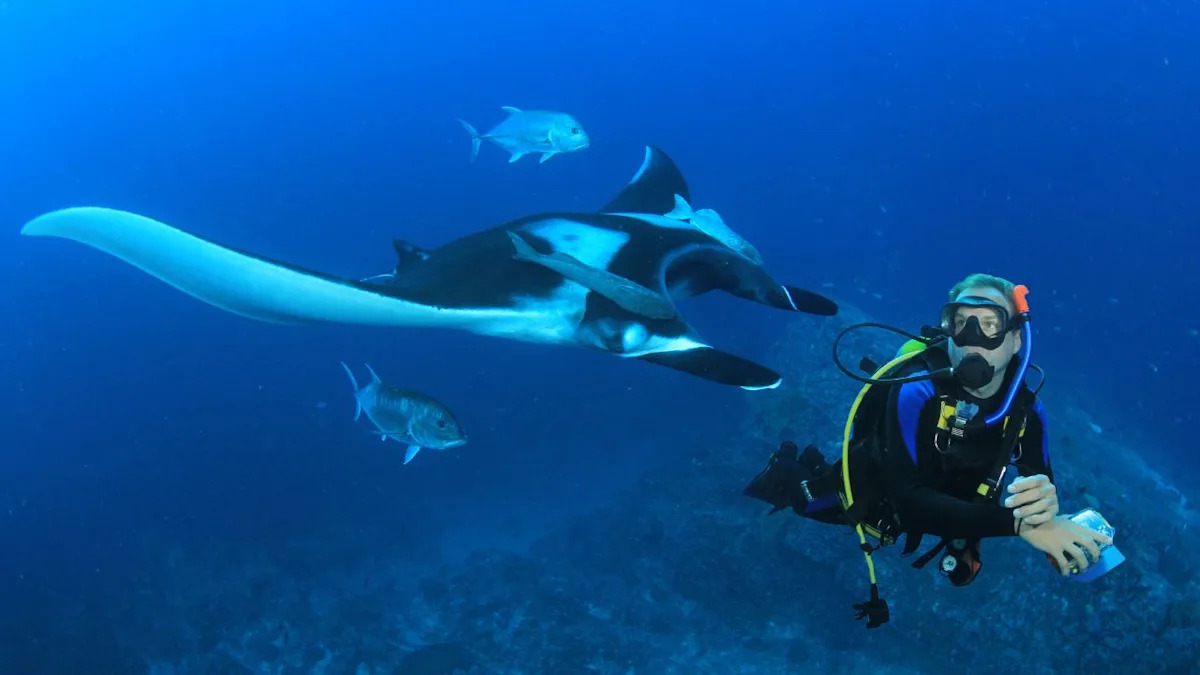
Manta Ray – Great Barrier Reef, Australia

Image Credit:Shutterstock.
Manta rays are graceful, enormous fish that glide through the warm waters of the Great Barrier Reef. Snorkeling or diving with these gentle giants offers an unparalleled sense of weightlessness and awe. They feed on plankton, filtering it through wide, open mouths as they move elegantly through the water. Encounters highlight the Reef’s biodiversity and the importance of marine conservation.
Guided tours ensure visitors can approach safely without disturbing their natural behaviors. Their size and fluid movements make manta rays some of the most mesmerizing creatures in Oceania. Watching them soar beneath the surface creates a profound sense of connection with marine life. Manta rays are a must-see for any serious wildlife enthusiast visiting Australia.
Sea Turtle – Oceania’s Coral Reefs

Image Credit:Shutterstock.
Sea turtles inhabit many of Oceania’s coral reefs, including those in Fiji, Tonga, and Palau. Swimming alongside these ancient reptiles is a serene and humbling experience. They glide effortlessly, showcasing grace, strength, and a connection to millions of years of evolution. Many species, like the green and hawksbill turtles, nest on secluded beaches that travelers can visit responsibly.
Marine protected areas allow observation without interference, preserving their natural habitats. Turtles play critical roles in maintaining healthy reef ecosystems. Witnessing hatchlings emerge or adults gliding through coral gardens creates memories that last a lifetime. Sea turtles represent the wonder and diversity of Oceania’s wildlife, making encounters truly incomparable.