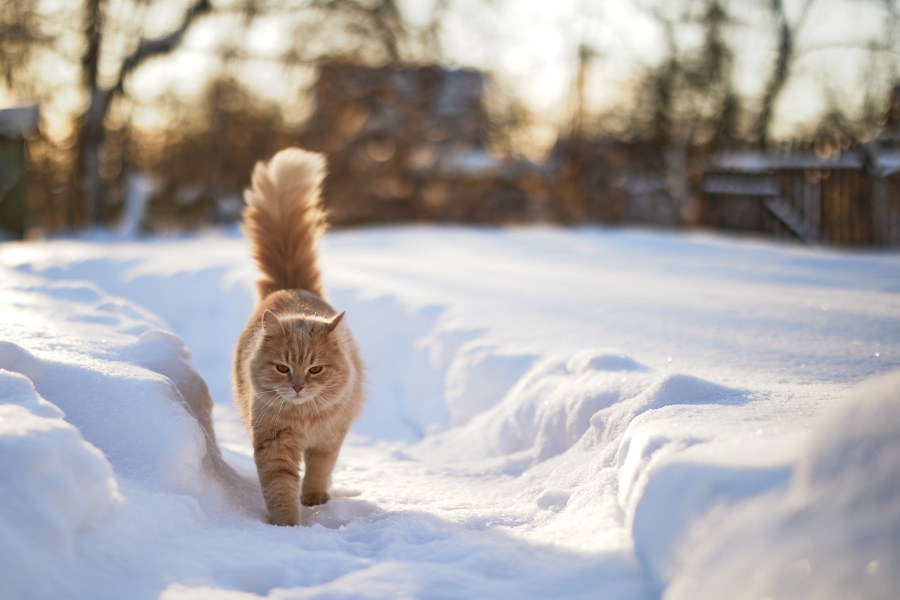
COLUMBUS, Ohio (WCMH) – As temperatures drop, the hundreds of thousands of stray and feral cats in central Ohio begin to seek a warm place to escape the elements.
Cats are prone to freezing to death in the winter if they cannot find adequate shelter. Generally, most healthy cats feel uncomfortable once temperatures drop below 45 degrees, and temperatures below 32 degrees are dangerous for all cats, according to PetMD.
While there are no exact figures regarding the number of outdoor cats in central Ohio, Columbus Humane has regularly cited an estimate of around 400,000 in Franklin County alone. To help ensure cats have a warm place to escape frigid temperatures, residents can build or obtain an outdoor shelter.
One widely recommended homemade cat shelter uses a 30-gallon storage bin, a 20-gallon storage bin, Styrofoam, straw, a marker and a box cutter. The process begins by cutting a six-by-six-inch doorway into the larger bin, positioned several inches above ground level to help keep out rain and snow. A Styrofoam slab is then placed on the bottom of the larger bin for insulation.
The smaller bin is set inside the larger one. Using the marker, the doorway opening is traced onto the smaller bin and cut out. Both entryways are then lined with duct tape to cover rough edges.
Straw is put in the bottom of the smaller bin and in the spaces between the two containers. After the lid is placed on the smaller bin, a layer of straw is added on top, and the larger bin’s lid is added.
-
How Columbus Humane’s cat shelters can be replicated at home (Photo courtesy/Columbus Humane)
-
(Photo courtesy/Columbus Humane)
-
(Photo courtesy/Columbus Humane)


Some animal welfare groups advise taping down the outer lid and weighing down the shelter to prevent it from being blown over. A door flap made from vinyl or rubber can also be added to the entryway for extra protection from the cold.
For a simpler option, a homemade cat house can be made by purchasing a Styrofoam cooler, cutting an entryway and filling it with straw. Straw is a necessity for any homemade shelter, since it repels moisture and helps keep cats dry. Blankets, towels and hay should not be used because they absorb moisture and can grow mold.
A couple of local animal welfare organizations also give away free cat shelters. Columbus Humane, an adoption center and animal abuse law enforcement entity, began distributing shelters for the first time last year. Residents who want to secure a shelter can call the nonprofit at 614-777-7387 or reach out to the agency on social media.
Colony Cats, a nonprofit that has served central Ohio for over two decades, has been handing out shelters over the past few years. The organization alerts the public when it has shelters sitting outside its adoption center in Dublin on its Facebook page. While the shelters are free, the organization welcomes donations.
“We have sent out over 150 so far,” executive director Mona McKinniss said. “We put them out as we get the coolers donated, a couple times a week. We post on social media when they are available.”
Both shelters rely on donations and volunteers to make the cat houses, which results in a limited and fluctuating supply. Residents can also purchase heated outdoor cat houses from retailers such as Chewy, Amazon or Walmart.
Another way residents can help outdoor cats in the winter is putting out dry kitten food, which provides extra calories so they can better preserve body heat, McKinniss said. Heated water bowls are also helpful for cats when temperatures are below freezing.
Felines may resort to seeking warmth under the hoods of cars in the winter, and they can be injured or killed when the ignition is turned on. Many animal welfare organizations suggest people bang on their hoods to scare off any hidden animals when starting their vehicles during colder months.
Copyright 2025 Nexstar Media, Inc. All rights reserved. This material may not be published, broadcast, rewritten, or redistributed.
For the latest news, weather, sports, and streaming video, head to NBC4 WCMH-TV.