Key Points
-
A cat-proofed Christmas tree keeps your pet safe while still letting your home feel festive all season long.
-
Choosing a stable artificial tree helps prevent accidents and protects cats from pesticides, needles, and unsafe water.
-
Decorating smart—like avoiding tinsel, breakables, and hooks—keeps tempting items out of reach and reduces injury risks.
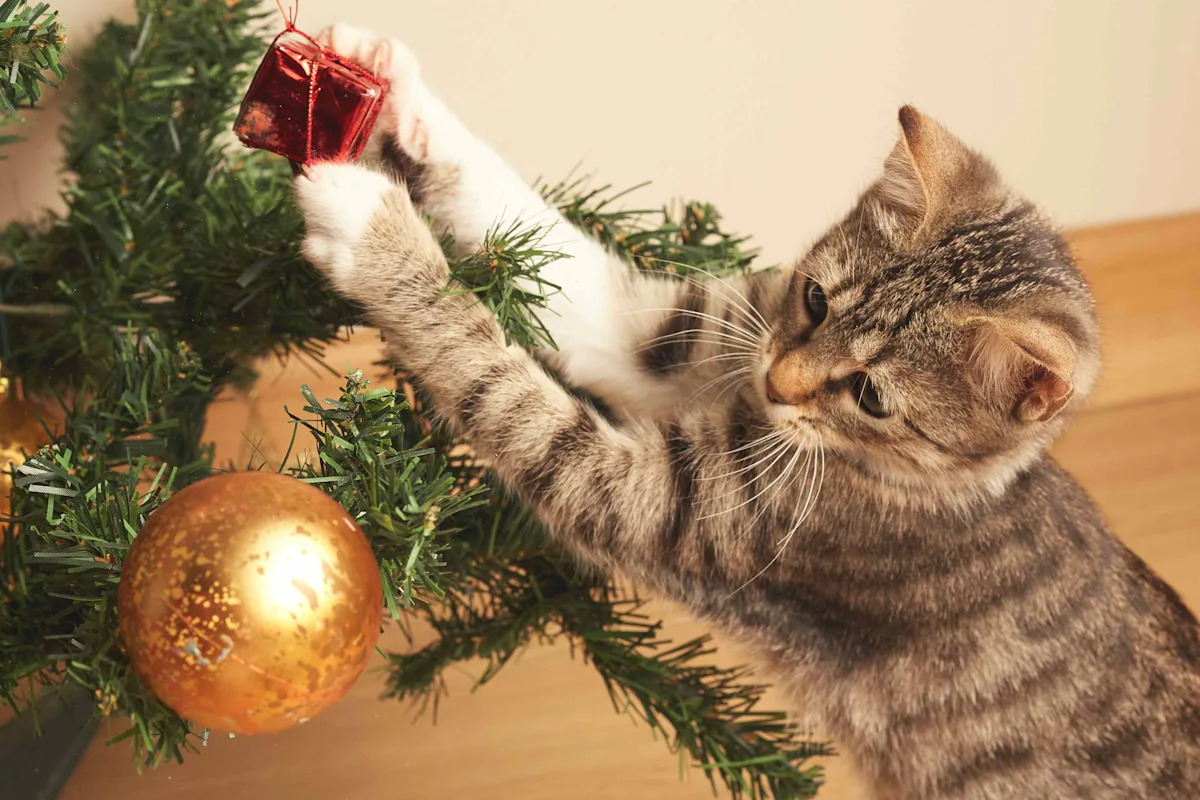
During the holiday season, the Christmas tree is the heart of the home for many households. But for cats, that same tree becomes a playground filled with branches to climb, dangling toys, and new scents to explore. While their curiosity is innocent, it can lead to a real safety hazard, from toppled trees and toxic needles to broken decorations.
Luckily, we spoke to experts to learn how to keep your Christmas tree and your cat safe. Here, we share their insights on the best ways to cat-proof your tree while also enjoying the magic of holiday décor all season long.
Meet Our Expert
Related: What Is Catnip and Is It Safe for Your Pet? Veterinarians Weigh In
Why Cats Love Christmas Trees
Cats are natural climbers, making a Christmas tree the perfect seasonal playground. It offers ideal places to perch and play, along with hiding spots and enough height for them to climb to survey the room.
Kate Luse, a certified cat behavior consultant and owner of Healthy Cattitude Cat Behavior Consulting, explains that trees provide a vertical space that cats are instinctively drawn to and allow them to get up high, away from anything down below that might scare them.
Christmas trees mimic the outdoors, adding to their appeal, according to Kendall Putnam, a managing DVM at Animal Doctors of South Tampa. The combination of climbable branches and cozy spaces beneath the tree can be irresistible to cats, so ensuring the tree is secure and safe is essential.
How to Cat-Proof Your Christmas Tree
Experts share how to keep your cat safe this holiday season while still enjoying your holiday décor.
Choose a Cat-Friendly Tree
While real Christmas trees have their allure, opting for an artificial tree is the safest choice if you have a curious cat at home. Real trees are often sprayed with pesticides that your cat can absorb through the skin simply by rubbing against the tree, says Luse.
In addition to ingesting pesticides, having a real tree poses the risk of your cat swallowing fallen needles, which can cause serious gastrointestinal issues. Drinking water from the tree stand can also be dangerous, especially if there have been any additives to the water, says Luse.
Once you have chosen the tree, ensure it is securely in place. If the tree isn’t steady, it could fall over if your cat attempts to scale it, which could lead to injuries, says Putnam.
Prevent Climbing
Preventing your cat from climbing your Christmas tree can be difficult, especially when you’re not home to watch them. If you don’t want to take any chances with your cat climbing the tree, you may need to place it in a room with a door that can be closed, suggests Luse.
“Another option is to put an x-pen around the tree, but that will only work if your kitty isn’t interested in jumping the pen to get to the tree,” says Luse. “You could also opt for a little tree that doesn’t have the lure of vertical space to the cat (e.g., table-top trees).”
Decorate Your Tree Safely
Cats are drawn to dangly and flashy things, which means Christmas tree ornaments can feel like dream toys to them. Here are a few things to consider before decorating your tree with your beloved holiday décor:
-
Avoid tinsel and long strands: Putnam suggests not putting any tinsel on your tree or lengthy ribbons on wrapped gifts, as the long, shimmery strands are often too tempting for some cats and kittens to play with. “In addition to wanting to play with it, they may want to chew on or eat it,” says Luse. “Ingesting anything like this could cause an obstruction, which is a medical emergency.”
-
No glass or breakable ornaments: Avoid hanging breakable ornaments on the bottom half of the tree. Placing them at the very top is the safest option, so your cat doesn’t bat them off the tree, shattering them and potentially injuring themselves, says Putnam.
-
Use string instead of hooks: Don’t use hooks to hang the ornaments, as they can result in cuts to your cat’s paws if they play with them. Instead, Luse recommends hanging ornaments using a string and creating a loop at the top for them to hang.
Read the original article on Martha Stewart