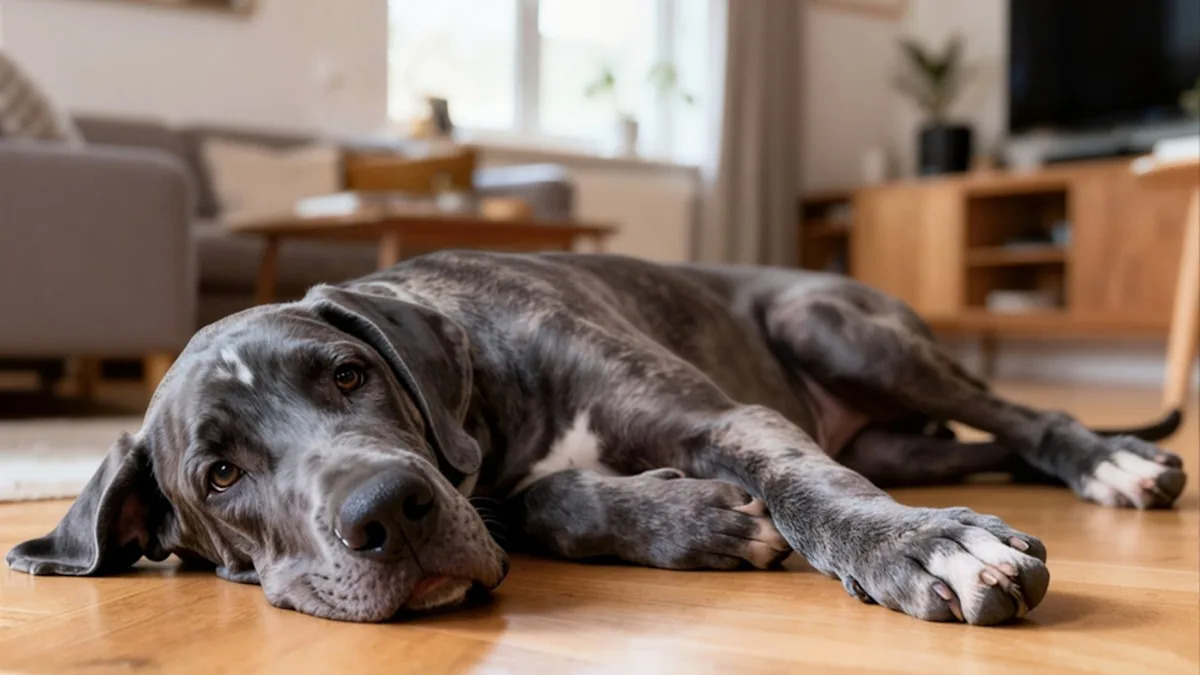
Sometimes our dogs get so perfectly sleepy and relaxed that they end up snoring loudly while they snooze. Caroline Maurer, known as Figment Cottage Gardens on social media, caught her Great Dane taking a nap, and his “purring” is making all of us want to take a cat nap too!
Make sure your sound is on so you can hear the Great Dane’s satisfied purrs of contentment. Mom even asks if he’s truly that relaxed and at peace, and we can all confirm that he most certainly is!
Caroline summed it up perfectly in the caption, calling him “the biggest baby of all time,” and it instantly made us smile. We love when our fur babies are so happy and feel so safe that they can completely let themselves go like that!
We loved @miamisburg.roots.and.shoots’ comment, “That’s the greatest when you know you provide that peace and comfort to them, and they can snore/purr peacefully.”
Related: Adorable Video of English Bulldog Snoring Is Making Us All Want ‘That Good Sleep’
🐶SIGN UP to get “pawsitivity” delivered right to your inbox with inspiring & entertaining stories about our furry & feathered friends🐾🐾
Why Do Dogs Snore?
Why do dogs snore? Stevenson Ranch Veterinary Center explains: “Dogs snore for various reasons, just like people do. Snoring happens when air movement is restricted in the nasal passage or throat. Your dog’s anatomy plays a big role in this. For example, some dog breeds have shorter snouts, which can make snoring more common. These breeds include Bulldogs, Pugs, and Boston Terriers. Also, factors like your dog’s sleeping position, age, and even their weight can contribute to snoring.”
Other factors that contribute to snoring include obesity (“Overweight dogs have excess fat around their throat, which can block airways and cause snoring”), allergies (frequent vacuuming and using an air purifier or humidifier helps), and nasal congestion (if your pooch has a cold).
Just like humans, your dog’s sleeping position can contribute to snoring: “Dogs that sleep on their backs are more likely to snore because their tongue and throat muscles relax and obstruct airflow.” They recommend encouraging your dog to sleep on their side rather than on their back to help keep the noise down.
This story was originally published by PetHelpful on Dec 22, 2025, where it first appeared in the Pet News section. Add PetHelpful as a Preferred Source by clicking here.