Few things are more rewarding than receiving a cat’s affection, because you know that you’ve actually earned it from them. Cats are not like dogs: while some are extroverted and friendly from the get-go, cats tend to be more cautious and pickier about who the befriend. If a cat doesn’t like you, they won’t waste their time with you—and if they’re merely ambivalent about you, you may need to do a little extra work to clinch a friendship with them. So, if you want to learn how to make friends with cats and earn their trust, read on!
It doesn’t matter if you’re trying to rescue a stray cat, get closer with your best friend’s cat, or build a bond with your newly adopted kitten, putting in the active groundwork to get a cat to befriend you goes a long way. Although every cat has their own distinct personality (and thus will respond to some appeals for their affections more than others), below are 10 ways to earn a cat’s trust and become its bestie.
Thanks to these tips, you’ll be able to establish a connection easier. You’ll also be able to read a cat’s body language better and know how cat’s communicate. These things will help you when you are trying to get a cat to like you.
How to Get a Cat to Like You
Learning how to get a cat to like you starts with respecting their boundaries and responding to their body language in a calm, positive way. By creating experiences that build cat trust—whether through gentle play, slow blinking, or offering treats—you help strengthen your bond with your feline friend and make them feel comfortable and safe around you. See ten tips to help you befriend a cat and get a cat to like you, below!
Let Them Approach You First

A curious cat that wants to befriend a person.
Have you ever tried to pick up a cat that didn’t want to be held? Even if it’s a cat you’re already cool with, they’ll probably bolt before you even reach them. After all, cats are all about their personal space above all else. With cats, you want to let them initiate contact, especially if you’re just getting accustomed to one another. Once they come over to check you out, then you can gently reach out a hand for them to sniff and see how they respond.
“But that’s the problem—my cat doesn’t even want to approach me!” you may say. OK, no problem. That just means you need to do a few more things to make yourself an approachable person first, and one big way you can do that is by speaking their language!
Use Friendly Body Language

A happy cat displaying their belly and winking.
Another way that cats are different from dogs is that a cat’s body language is more subtle, though they are no less expressive once you know how to read them.
One form of cat cmmunication used a lot when befriending cats is called the “slow blink.” If you’ve never heard of it before, it’s when cats are relaxed and they squint their eyes and blink slowly at you, sometimes looking away from you afterwards. When they slow blink, they’re communicating that they feel safe enough to be vulnerable around you.
If you slow blink at your cat, you can then communicate the same friendly message to them, and you’re more likely to get an amiable response back. It really works! Combine the slow blink with a seated or squatting position, an extended hand, and a soft, soothing voice, and you’re even more likely to get the cat to approach you.
Try Gentle Petting

A cat who trusts a person to touch them.
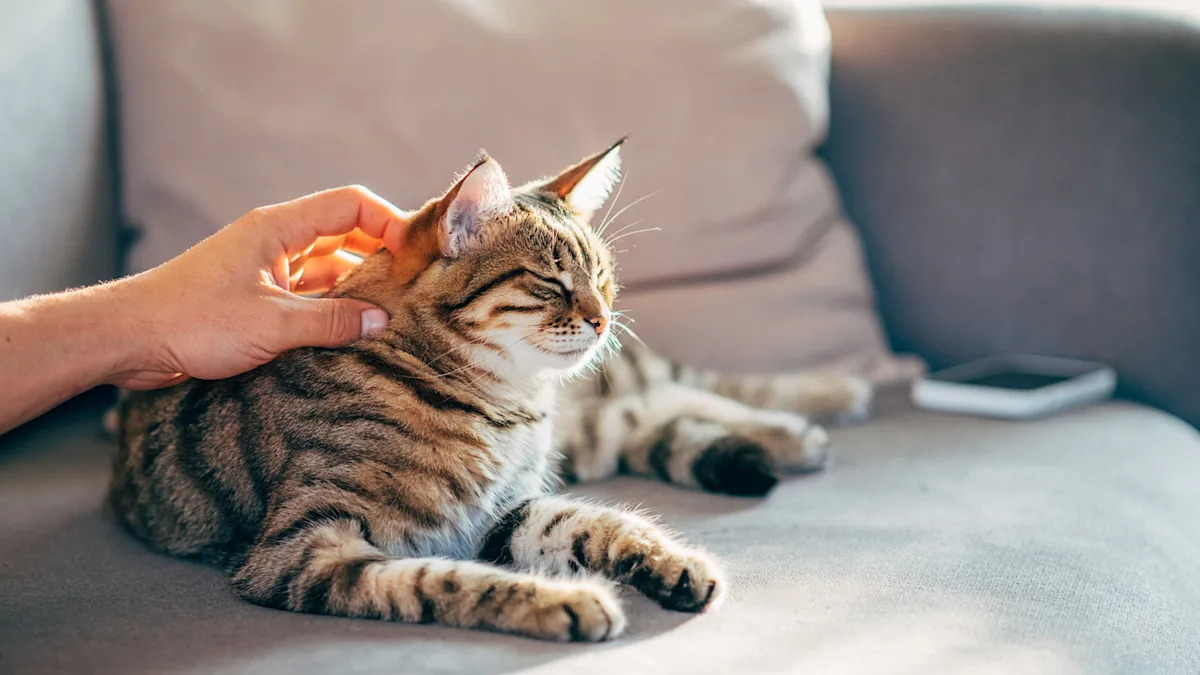
If you get to the point where the cat feels comfortable enough around you to hang out near you, or even sit in your lap, you can try to pet them gently to see if they like it. There’s no hard-and-fast rule on what your cat will like, so just play it by ear and read their body language. Some like having their backs petted, others want their ears or neck scratched, some even prefer simple side-by-side hangouts to petting, and so on. If the cat starts responding negatively or moves away after you try a certain thing, give them space and try something different next time. However, if they start displaying happy and comfortable body language, though, such as purring or “making biscuits,” you can safely assume that they like it!
One word of advice: a happy cat may roll over to display their belly for you. While that’s certainly a friendly sign, that doesn’t necessarily mean they want you to pet it. A cat’s belly is its most vulnerable part, so by displaying it, they’re demonstrating their trust in you, and touching their belly might make them anxious. Although there are exceptions, most cats aren’t big on belly pats unless they’ve been acclimated to them from birth, so pet at your own risk!
Use A Soft Voice

A woman who has befriended a cat.
Another way you can get a cat to trust you is by watching the volume you speak. We don’t like it when people yell at us, so why should your cat? No matter how friendly the words you’re using are, it’s the tone that actually conveys the message to your cat. Use a soft, gentle voice around them, especially when you’re first trying to attract it to you, and you’ll establish yourself as a calming, steady presence.
Feed Them Good Food on a Steady Routine

A pet parent feeding their cat.
Cats are creatures of habit, so establishing a predictable feeding routine helps alleviate your cat’s anxiety and lets them know that you’re a trusted caretaker. The cat’s health should always come first, too, so make sure that you’re feeding them high-quality food that meets all their nutritional needs—don’t hesitate to ask your vet for recommendations!
Play With Them Frequently

Two kittens playing with a cat toy.
Cats love playtime! It keeps them physically healthy by encouraging them to exercise, and it also provides them with psychological enrichment and stimulation. Playtime can be a great opportunity for bonding time with your cat, especially if you play with them every day. Once you start doing this, you’ll notice that your cat likes you more and more.
If you’re still learning about your cat’s personality, we recommend picking up a variety of cheap cat toys and seeing what kinds they respond to the most, and honing in on those for playtime. Feathered wands and laser pointers are often big hits with cats because they stimulate their hunting instincts. However, if you’re going to use a laser pointer, we recommend ending your play sessions with a treat. Since they can’t actually “catch” the laser pointer’s dot, giving them a treat at the end to reward their efforts keeps them from getting frustrated!
Use Positive Reinforcement

A cat standing up to get a treat.
Positive reinforcement is essential for training and encouraging good behavior in any pet, cats included. When they demonstrate a positive behavior, such as approaching you or sitting still for a quick grooming session, reward them with a treat, a nice pet, some kind, soft praise—whatever incentive you know they’ll respond to. If they know they’ll get extra special treatment for doing something you like, they’ll do it more frequently!
Provide a Safe Space for Them

A cat hiding out in a cubby hole.
Even if you and your cat are well on your way to becoming best buddies, a cat still needs somewhere peaceful and private that they can retreat to if they feel overwhelmed, tired, or anxious. This can be a cubby hole, a cat tree, or a cat house (especially for stray/outside cats). Wherever their safe space may be, allow them to have access to it whenever they want, and don’t try to force them out of it when they’re hanging out in there.
Make Your Home A Calm Place for Cats

A cat relaxing and feeling safe.
Making your whole house a cat-friendly space keeps them happy and relaxed in their day-to-day lives. In turn, that helps a cat to like you more and trust that you have their best interst in mind. You can do this by:
-
Keeping their litterboxes clean, and making sure there are enough litterboxes for them all (one box for every cat + one extra is recommended for households with multiple cats).
-
Give them scratching posts or scratcher boards that they can groom their claws on, rather than your furniture.
-
Keep their water bowls fresh, and clean them regularly to prevent them from developing algae and bacterial growth.
-
Give them high-up perches on the walls or next to the window: cats enjoy having perches high off the ground that they can climb up on.
-
Allow them access to other hiding spots around the house beyond their one “safe space.”
-
If your cat is particularly on the anxious side, playing soft, calming music and using calming pheromones can help them relax. This may be especially helpful for getting a newly adopted cat to settle down and acclimate to their new home.
Keep Your Cat Healthy With Regular Vet Checkups

A veterinarian holding a cat.
Cats don’t like going to the vet, and a vet trip might not endear you to your cat in the moment as their pet parent. Nevertheless, a healthy cat is a happy cat, and the relatively minor ordeal of keeping them mentally and physically healthy with regular vet checkups is well worth it to ensure that you two share many more years together!
How To Know If Your Cat Trusts You

A grey cat getting head scratches.
As we said before, cats are more subtle than dogs when it comes to body language. You don’t have the wagging tails and big, goofy grins to rely on when figuring out if a cat is your friend. However, there are still plenty of tells to clue you in on whether or not your cat likes you. Along with talking with their eyes and displaying their belly, a trusting cat will often:
-
Rub Themselves on You: They’re using their scent glands to mark you as “their territory.” They’re essentially claiming you as their own!
-
Give You Headbutts: When a cat bonks you with their head (an action also known as “bunting”), that’s a sign of affection not dissimilar to a hug. They have lots of scent glands in their face, so headbutting is another way of marking you as their own—and a great way to ask for pets as well!
-
Talk at You: Instead of yowling or hissing, happy cats will often chirp, beep, meow, or purr at people they like. Of course, some cat breeds are more vocal than others, so this depends somewhat on how “talky” your cat is!
-
Have a “Happy Tail”: A tail that’s held straight up is a friendly sign, while a “question-mark” shaped tail is an indicator of playfulness and curiosity. And if they wrap their tail around your leg as they walk past, they’re essentially giving you a hug!
-
Lick and “Love Bite” You: Cats in colonies mutually groom each other, so when a cat licks you like they’d groom another cat’s fur, it’s a way of saying that you’re family. A little gentle nibble is also an affectionate grooming behavior—though understandably, many pet parents will want to discourage these well-meaning “love bites.”
-
Follow You Around the House—Even to the Bathroom: Some cats will want their alone time more than others, but oftentimes, your cat will want to be in your presence, even if that just means sharing the same room together and not necessarily actively cuddling with you. Don’t be surprised if your cat even wants to follow you into the bathroom—they know they’ve got you as a captive audience in there!
This story was originally published by PetHelpful on Dec 29, 2025, where it first appeared in the Cats section. Add PetHelpful as a Preferred Source by clicking here.