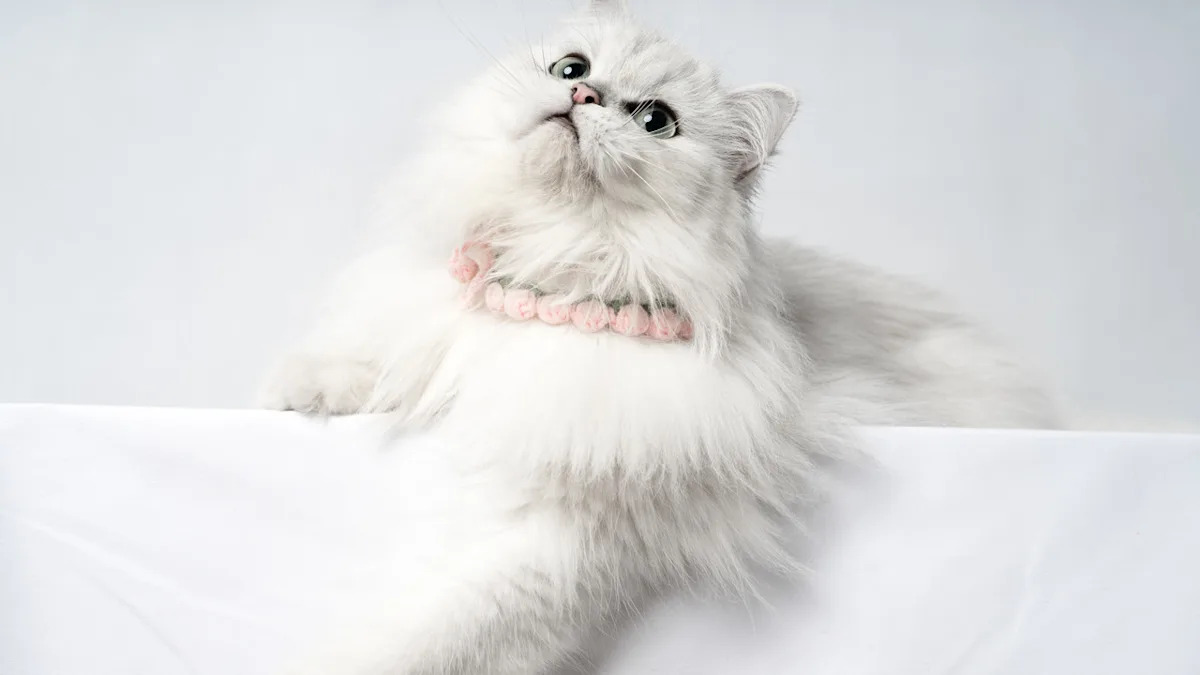
There’s no denying it, Persian cats are easily one of the most iconic, instantly recognizable breeds of housecat. Beloved in their native homeland of Persia (modern-day Iran) for hundreds of years before being introduced to the West by Italian traveller Pietro della Valle in the 17th century, Persians have since taken the cat fancier world by storm. Members of this beloved cat breed have even been adopted (and spoiled rotten) by such famous cat lovers as Marilyn Monroe, Martha Stewart, Freddy Mercury and Florence Nightingale (who is believed to have owned more than 60 Persians throughout her life). So, if you’re thinking of getting a Persian cat, read on to discover 13 things you must consider first.
After all, despite being such a popular pet, there’s a lot about the Persian cats that most pet parents aren’t aware of, and if you’re toying with the idea of adopting a pretty Persian, it’s important to know exactly what you’re getting into. That way, you can make sure your cat is happy and that your cat feels loved and safe. You’ll also find that by knowing these things, you’ll be able to bond faster with your furry family member as well since you’ll know more about them and their needs.
With the help of Embrace Pet Insurance veterinary consultant Dr. Chyrle Bonk, we’re covering all the things that cat lovers need to know to get a full understanding of this magnificent breed. You may even be surprised by a few of them! Check them all out below!
1. Purebred Persian Cats Can Be Very Expensive

A white Persian cat posing for a beauty shot in a studio.
One question that may pop into your head as a potential cat parent is, “Are Persian cats expensive?” Hopefully after reading all of this, you feel more empowered to make an informed decision about whether or not to adopt a Persian cat. However, if you choose to move forward, expect to pay a potentially heavy fee, especially if you’re dead-set on adopting a purebred Persian. Although specific pricing varies on breed pedigree and where you live (and who you know), the average Persian cat cost for a purebred Persian kitten often starts at around $1,500, and can easily veer into the $2,000-$3,000 range or higher, especially if you’re looking for a show-quality cat.
If you’d prefer to avoid a breeded, then adopting a Persian cat from a shelter might be the better option, though you may have to compromise a little on rigid adherence to breed standards. That still doesn’t mean you can’t find a purebred Persian at a rescue, though. In every region of the United States (and in many other countries), there are lots of reputable purebred rescue organizations (and even breed-specific ones, including those specializing in Persians) that can help you adopt a rescue cat from the rare breed of your choice.
2. Persian Cats May Need a Specialized Diet

An orange Persian cat licking their chops.
What are a Persian cat’s food requirements? To help a Persian’s health, it’s best for pet parents of these pretty cats to place them on a specialized diet. Premium pet food brands like Royal Canin and Orijen even produce specialized Persian cat chow formulas to help with specific health concerns like promoting skin and hair health, controlling hairball formation, and weight management. However, it’s best to consult their vets for dietary recommendations first, since each Persian cat will have their own unique medical needs.
3. Persians Are the Ultimate “Glamour Cats”

A beautiful ginger Persian cat mid-step.
While all cats are cute, there’s no denying that the Persian’s distinct looks help set them apart from most other cats. If you’ve never seen one, it’s their unique look that sets them apart. Dr. Bonk tells us that what helped these fabulous felines quickly gain popularity in Europe was their faces and fur. “Persians are known for their brachycephalic (short-nosed) face and their long, thick haircoat, two of the main traits that brought them to Europe in the first place,” Dr. Bonk explains. “Due to their facial anatomy, Persians tend to have large, round eyes and chubby cheeks.”
Their long-flowing coats and cute, coquettish faces have made Persian cats the darlings of the feline world. They’re the highlight of cat shows, their chubby faces are plastered on cans of Fancy Feast across the globe, and if you’ve ever seen a James Bond villain (or a parody of one) malevolently stroking a fluffy white cat in their arms, chances are it’s a Persian cat.
4. There Are Two Different Types of Persian Cats

A pair of Persian kittens.
A flat, brachycephalic face is one of the defining physical traits of the Persian breed, but even then, there’s some variation. There are actually two distinct basic types of Persian cats: Doll-faced and Peke-faced. The Doll-faced Persian (sometimes called the “traditional” Persian, since they more closely resemble the breed’s ancestors) has a slightly more pronounced nose than the Peke-faced or “modern” Persian, which was selectively bred to have extremely flat facial features.
5. Persian Cats Aren’t Strong Jumpers

A Persian cat staring down a set of steps.
Persian cats are all about the looks, but they come up a bit short in the athletics department—literally. “[Persians] also have a solid body and thick legs that don’t lend to them being great jumpers,” Dr. Bonk notes. Those short legs and dense, “cobby” body are desirable traits of the breed (at least according to The Cat Fanciers’ Association’s breed presentation standards), but they make the Persian less agile than the average housecat.
If you want your Persian to be able to access high-up perches in your house, consider giving them ramps, wall-mounted cat steps, or other similar furnishings to help safely accommodate their physical limitations.
6. Persians Come in Many Different Colors

A Persian cat with a dilute calico coat.
When people picture a Persian cat, they often imagine the classic snow-white beauty popularized in movies and advertising (yes—think Fancy Feast and James Bond films). While white Persians are iconic, they’re just one option among a surprisingly wide range of coat colors. According to The International Cat Association (TICA), white, black, blue, red, cream, chocolate, lilac, silver, golden, sable, tortoiseshell, and various combinations of the above are all acceptable colors for breed-standard Persian cats. These fluffy cats also display multiple coat patterns, such as bicolor, tricolor, tabby, and calico, making each cat’s appearance truly unique.
7. Persians Are Major Shedders

A Persian cat in a sunny spot having their head brushed.
Do Persian cats shed a lot? This probably comes as no surprise to anyone who’s ever laid eyes on a Persian cat, but that long, glamorous coat comes at a price. Persian cats do shed a ton. “Persians have a double haircoat, which means they have long guard hairs and a short, dense undercoat,” Dr. Bonk explains. “Both layers will shed, so regular grooming is necessary to prevent mats and snarls.”
So, how hard is it to take care of a Persian cat? Daily brushing helps reduce loose hair and keeps the coat healthy, while also minimizing hairballs and skin issues, which is an important consideration for anyone thinking about getting a Persian cat.
8. Persian Cats Have Specific Grooming Requirements

A Persian cat getting their face trimmed.
While Persian cat parents need to be vigilant about sticking to a regular coat brushing routine, that alone isn’t all that hard if you have the right tools. Dr. Bonk recommends using a comb or brush with both coarse and fine teeth to grab all the excess shed hairs and break up snarls and mats.
But that’s not all, as properly grooming a Persian cat requires more than simply brushing out their coat once every day or so, which is why some people consider Persian cats to be high maintenance. “Due to their face shape, excessive tearing can also be a problem, so wiping their eyes with a damp cloth will help remove crusts and moisture to help prevent skin issues,” advises Dr. Bonk. “Regular tooth brushing, occasional baths, and nail trimming are other important parts of grooming a Persian.”
9. Persian Cats Have Calm Personality Traits

A fluffy Persian cat cuddled by their owner.
What is a Persian cat’s personality really Like? Persian cats may be high-maintenance as far as their grooming needs are concerned. However, when it comes to their temperament, Persians are as laid-back as it gets. Because of that, Persian cats are considered good pets.
“Persians tend to be quick learners, mellow yet playful, and very loyal and affectionate to their family,” Dr. Block tells us. “They can be standoffish toward strangers, and though they love to be near their family, they also revel in some alone time.” If you’re looking for a cat with a sweet, easy-going, and engaging personality, a Persian cat will likely fit the bill nicely.
10. Persian Cats Enjoy Lounging

A silly Persian cat lounging on a cushion.
If you’re thinking of getting a Persian cat, know that they are more about lounging than playing. Between their short, heavy-set bodies and their low-key personalities, it probably won’t surprise you to learn that Persian cats aren’t the most energetic breed. Dr. Block tells us most Persians are “pretty laid back” and content to lounge around all day, so you probably won’t see your Persian get crazy “zoomies” as often as cats from other breeds. Still, while you don’t need to exercise your Persian a lot, encouraging a little bit of active playtime is a good habit (if your cat is game), since it can help keep them from becoming overweight.
11. Persian Cats Do Enjoy Light Playtime

A Persian cat playing with a wand toy.
If you do want to encourage your Persian cat to engage in a bit of healthy exercise every day, Dr. Bonk recommends getting actively involved by using interactive toys you can play with together. After all, Persians are a very loyal breed, and if you make yourself part of their playtime routine, they’re more incentivized to play along.
“Interactive toys are great ways to keep them busy while you’re away, but toys that incorporate playtime with some one-on-one time with their owners, such as wand toys, are often favorites,” says Dr. Bonk. “…Given the right toy, they can become very playful.”
However, even during playtime, Persian cat parents need to strike the right balance. You shouldn’t force a Persian cat to play if they’re not interested, and while you’re playing with your Persian cat, keep a close eye on them to make sure that they’re not showing signs of exhaustion.
12. Persian Cats Are Prone to Respiratory Problems

A Persian cat getting a checkup at the doctor.
Before bringing a Persian cat home, it’s important to know about a Persian cat’s health and how to care for a Persian cat. Once you do, you cna help keep them feeling good and happy. One common Persian cat medical issue has to do with their breathing. “A Persian’s unique face shape gives them a constant grumpy expression as well as some potentially serious health issues,” warns Dr. Bonk. “Brachycephalic breeds like Persians, and even some dog breeds, can suffer from brachycephalic airway syndrome, which can include things like narrowed nostrils, a longer than normal soft palate, and everted laryngeal saccules, all of which can cause obstructions in the airways making it difficult to breathe, especially during exercise and high humidity.”
Maintaining a healthy weight through moderate exercise and a balanced diet can help reduce complications. However, weight management alone won’t prevent airway problems, so owners should avoid forcing Persians into strenuous activities.
13. Persian Cats Are Also Genetically Predisposed to Other Medical Issues

A Persian cat at the vet.
Brachycephalic airway syndrome is one of the more serious common health issues that Persian cats suffer from, but because of their flat faces, long hair, and (oftentimes) maloccluded jaws, they are frequently predisposed to other significant medical concerns as well.
“Along with respiratory issues, Persians can also suffer from eye issues like excessive tearing, which can lead to skin infections, and entropion, where the eyelashes turn in towards the eye and painfully rub on the surface,” Dr. Bonk tells us. “A Persian’s long hair can also make skin issues more common, especially if they aren’t groomed properly. Mats and tangles in the hair can lead to skin irritation and infection. Finally, dental disease can be a real issue as the shape of their face can cause crowding and overlapping of their teeth, creating areas where food can get caught.”
This isn’t to say that your Persian cat will suffer from all of these medical issues, but because they are more vulnerable to conditions like these, you should be vigilant about your cat’s health. Specific veterinary screenings like ophthalmic exams, heart screenings, and dental checkups should be incorporated into your Persian cat’s veterinary care regimen to monitor for signs of these common (but significant) conditions.
Persian Cat Breed Basics

A cute Persian cat peeking out of a cat tree.
If you want a calm, sweet-hearted, and loyal companion cat with striking visual appeal to boot, the Persian cat has what you’re looking for in spades. Between their mellow, affable temperament and their one-of-a-kind looks, it’s no wonder that this long-haired cat has managed to steal the hearts of cat lovers the world over. At the same time, responsible cat parents need to be prepared for the consequences of owning and caring for a Persian cat, which involves near-constant grooming and possible high veterinary needs.
Factor in the high price tag for one with the aforementioned concerns, and it’s safe to say that the Persian cat won’t be the right breed for every pet parent. Still, if you’re willing to accommodate the Persian’s high-maintenance needs and go the extra mile to keep them happy and healthy, you’d be hard-pressed to find a more loving, intelligent and charismatic feline friend.
Breed Basics of the Persian Cat
Weight: 7-12 lbs.
Height: 10-15 inches
Lifespan: 8-11 years
Temperament: Gentle, quiet, sweet-natured (if a bit aloof towards strangers)
Activity Level: Low
Grooming Needs: High
Medical concerns: Respiratory and cardiac issues stemming from brachycephalic facial structure, excessive tearing, entropion, vulnerability to skin infections, dental disease, jaw misalignment
This story was originally published by PetHelpful on Jan 28, 2026, where it first appeared in the Cats section. Add PetHelpful as a Preferred Source by clicking here.