You and your dog have a special bond that no one else shares, which can make it feel like you operate on another wavelength. But because dogs communicate differently than people do, it’s understandable to wonder sometimes if your pet is sharing the same feelings of happiness as you. After all, since dogs don’t talk, trying to figure out what they are expressing can be tricky. So if you’ve ever thought to yourself, “How can I tell if my dog is happy?” you’re not the only one. To help you understand your dog better, we rounded up 7 adorable ways dogs say ‘I’m happy’ without barking, according to vets.
All in all, dogs will usually bark when they’re excited and happy, but most pet parents don’t know that’s not the only way dogs express their happiness. “Some dogs simply aren’t big barkers or they share their feelings in other ways,” says Aimee Warner, DVM, resident veterinarian at Waggel. “For example, a quiet dog can also be happy, it’s more about a dog’s body language and recognizing dog behavior cues.” Abel Gonzalez, DVM, clinical director at Dutch, agrees. “A happy dog isn’t the loudest or the most energetic—it’s the one who feels safe enough to be themselves,” he says.
Remember, your dog is an individual, and learning their emotional signs is an ongoing process. That’s why Warner says it’s good to pay attention to them so you can catch subtle, non-verba hints you may otherwise miss. By knowing the signs that your dog is happy, you can then do what you can to keep that joy going. With that in mind, check out how dogs show they are in a good mood and happy without barking, according to vets.
Related: 8 Adorable Signs You Hold the Top Spot in Your Dog’s Heart, According to Trainers
7 Signs Your Dog Is Happy Without Barking

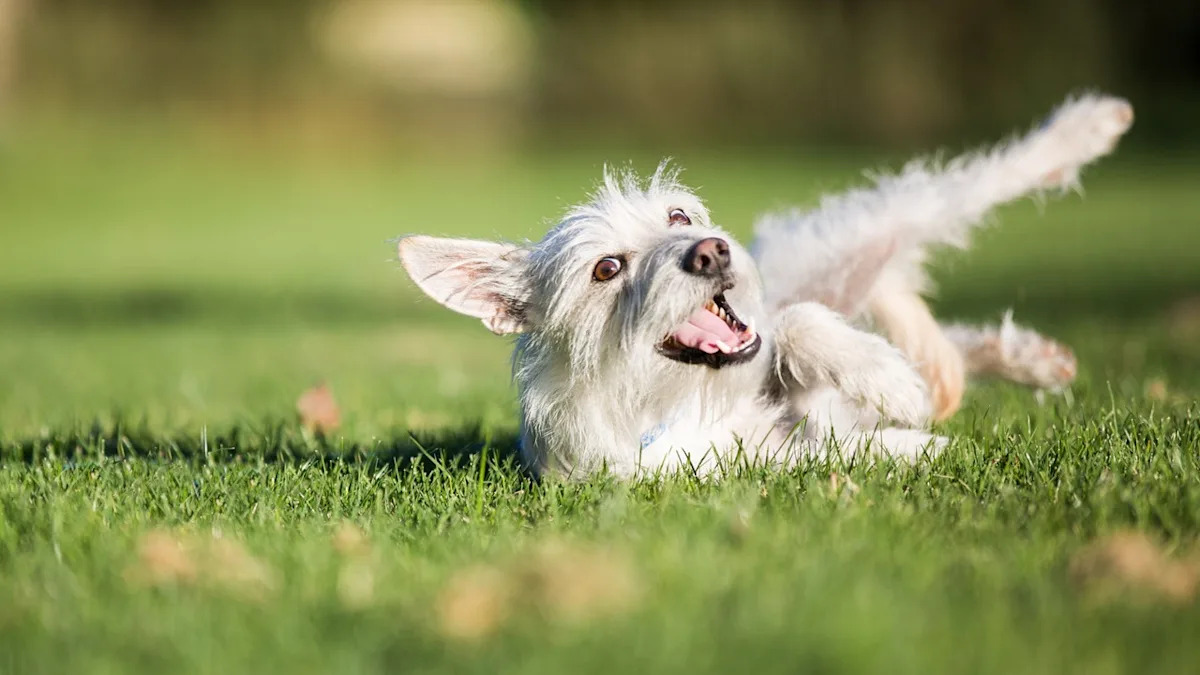
A joyful dog who feels safe and happy with its owner.Getty Images LSOphoto
(Getty Images LSOphoto)
Every dog is unique, and just because your dog doesn’t bark or show certain behaviors doesn’t mean they’re unhappy. Dogs express happiness without words in subtle ways and learning to recognize these signs of a happy dog can strengthen your bond and improve their well-being. From tail wags and relaxed body language to playful behavior and soft facial expressions, there are plenty of nonverbal ways dogs show joy.
1. They Have Laidback Body Language
The exact way a dog shows happiness can vary from pup to pup, but according to Warner, happy dogs typically display relaxed, tension-free body language. This means their neck and muscles are soft, their posture is loose, and they appear calm and at ease. “A wagging tail in a relaxed manner can be an example that indicates this,” Warner shares.
Paying attention to these subtle canine body language cues can help you recognize when your dog is truly is a good mood even if they aren’t barking or making loud noises to tell you.
2. They Do a Happy Dance
Dogs can develop a special happy dance, like wiggling, spinning, or hopping around, according to Ashly Smith, DVM, regional medical director for Small Door Veterinary. “It’s their way of physically expressing joy,” she says. “This behavior usually happens when a dog feels safe and excited, often greeting their favorite person or anticipating something they enjoy, like a walk or treat.” Smith adds that this is a “healthy outlet” for energy and an overall cue of a confident and content dog.
3. They Give You a Special Blink
Dog emotions can be subtle, and one of the clearest nonverbal signs of joy is the “slow blink.” This is when a dog deliberately slows down how fast they close their eyes, and it can be a sign of contentment. “Blinking slowly shows they are comfortable around the people around them,” Warner explains. “This is similar to how humans relax their facial muscles when they are relaxed.”
Basically, it’s a quiet little signal that says your dog feels safe and is totally happy to be by your side. Think of it as your dog’s way of saying, “I’m comfy, I trust you, and life is good.”
4. They’re All About Zoomies
If you’re curious what a funny dog happiness cue is that you can watch out for, it’s zoomies! These sudden bursts of energy are a sign that a dog is happy, according to Smith. In fact, these quick, playful sprints are one of the most recognizable dog happiness behaviors. “Dogs release built-up excitement or stress this way, and it’s especially common after playtime or when transitioning from rest to activity,” she notes. “Zoomies are a positive dog behavior, showing that a dog has energy, curiosity and is mentally stimulated.”
Overall, when zoomies happen in a safe environment, they are a strong indicator that your dog feels cheerful, which can caues them to express happiness without making noise to do so.
Related: 7 Sweet and Subtle Signs Your Dog Respects You, According to Vets
5. They Smile
How do dogs express happiness? Some dogs naturally have a mouth that appears to smile, like a Samoyed and Shiba Inu. However, many dogs outside these breeds will also “smile” when they’re happy. “When a dog is happy, its mouth will be slightly ajar with relaxed lips and the tongue falling naturally into place, not tense,” Warner says. “The overall appearance is one of ease.”
When this happy dog facial expression is paired with loose posture and calm body language, it’s a strong indicator your dog is feeling comfortable and joyful—often expressing happiness without them having to bark.
6. They Play Bow
One cute dog behavior that means your dog is happy is when they play bow. If you’re not familiar with this, a play bow is when a dog stretches their front legs forward while keeping their rear up. “This is a clear invitation to engage,” Smith reveals. “I often see this in dogs that are happy, confident and socially comfortable.”
This move occures when a dog wants to communicate that they have playful intentions to other dogs or humans, reinforcing social bonds, according to Smith.
7. They’re Psyched to Do Anything
Happy dogs are often eager and enthusiastic about everyday activities, whether it’s going for a walk, playing, or simply spending time with you. “A dog who seeks you out, checks in visually, or brings you a leash isn’t just excited, they’re expressing attachment,” Gonzalez says. “That enthusiasm reflects a strong human–animal bond, emotional security and consistent positive experiences.” These pet behaviors are common indicators of a happy, well-adjusted dog, even when they’re expressing joy without barking.
Sources:
This story was originally published by Parade Pets on Feb 1, 2026, where it first appeared in the Dogs section. Add Parade Pets as a Preferred Source by clicking here.