The post Meet the Walking Shark That Crawls Instead of Swimming for Survival appeared first on A-Z Animals.
Quick Take
-
Walking sharks use their fins to move along the seafloor, allowing them to navigate shallow reefs, tide pools, and tight spaces where swimming isn’t practical.
-
These sharks live in warm Indo-Pacific waters and can tolerate low oxygen conditions that would stress or kill many other fish.
-
Their egg-laying reproductive strategy is considered efficient because it requires less energy than live birth and produces fully formed young ready to survive on their own.
Sharks have a branding problem. For many people, the word alone conjures images of horror: sleek predators stalking through open water, ominous fins slicing through the surf, rows of teeth on full display. You may even hear a familiar theme in your head. Dun-dun. Dun-dun. Yup, sharks seem scary, all right. Fortunately, they’re relegated to the ocean. I mean, imagine if they could walk?
What? They can?!? Are you telling me there’s such a thing as a walking shark?
Yes, there is such a thing as a walking shark, but no, it’s not going to walk up on land to come bite your head off. Walking sharks aren’t a single species, but a group of closely related sharks that share a remarkable ability: they can move across the ocean bottom using their fins in a way that looks surprisingly similar to walking.

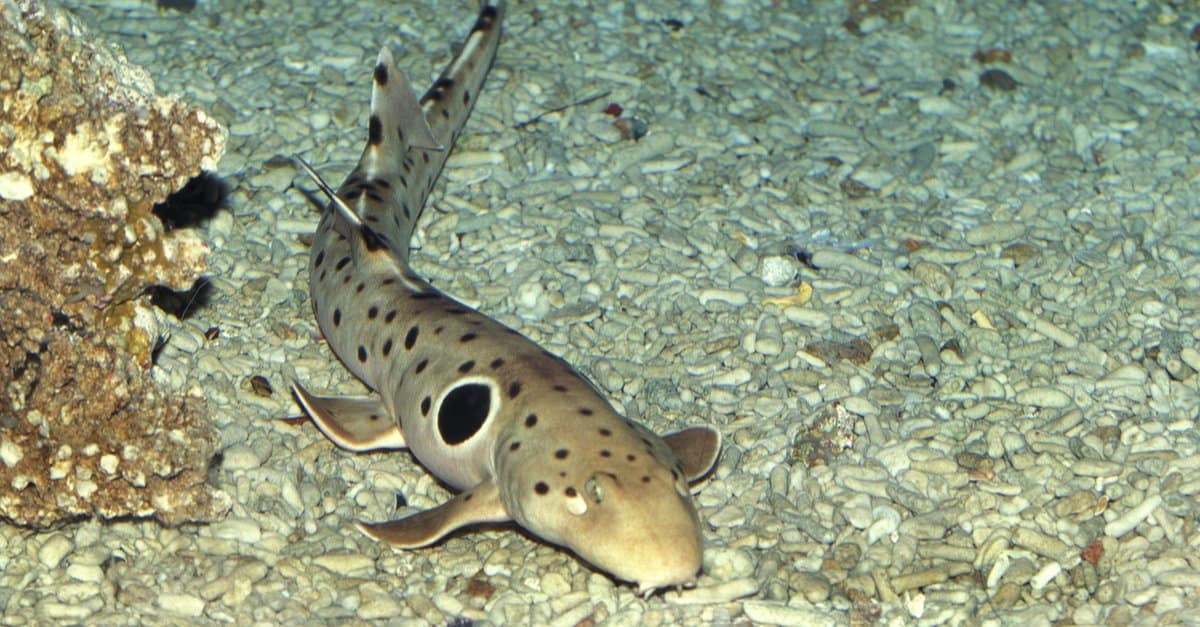
Walking sharks, like the epaulette shark, belong to an ancient shark lineage and typically grow just a few feet long, making them far smaller than most people imagine.
©slowmotiongli/Shutterstock.com
(slowmotiongli/Shutterstock.com)
What Exactly Is a Walking Shark?
The term “walking shark” generally refers to small sharks in the genus Hemiscyllium. The most famous of these is the epaulette shark, but scientists currently recognize several species of walking sharks, many of which were only identified in the past few decades.
These sharks are relatively small. Most adult walking sharks grow to about 2.5 to 3.5 feet long, depending on the species. That makes them closer in size to a goldfish than to the great whites people usually imagine when they hear the word shark. Their bodies are slender, their heads are blunt, and their eyes sit high on their heads, which helps them see while resting on the seafloor.
Walking sharks belong to a very old lineage. Fossil evidence suggests their ancestors were around more than 250 million years ago, long before dinosaurs walked on land. Over time, these sharks adapted to shallow coastal habitats where swimming nonstop isn’t always the best strategy.
Where Do Walking Sharks Live?
Walking sharks live in the warm, shallow waters of the Indo-Pacific region. You’ll find them around northern Australia, New Guinea, Indonesia, and parts of the surrounding island chains. They’re especially common on coral reefs, tidal flats, and seagrass beds.
Unlike many sharks that prefer deeper water, walking sharks often live in extremely shallow areas—regularly found in tide pools and reef flats where water levels can drop dramatically during low tide. In some cases, they may be left in pools with very little water and low oxygen levels, conditions that would stress or kill many other fish. This shallow-water lifestyle has shaped nearly everything about how walking sharks move, hunt, and reproduce.
Do Walking Sharks Really Walk?
Yes, they really do, but not in the same way land animals do. Walking sharks use their pectoral and pelvic fins to push themselves along the seafloor. Instead of holding their fins stiff like most sharks while swimming, they bend and rotate them, planting each fin against the bottom and pushing forward. The movement looks a bit like a slow crawl or shuffle. Watch this video to see for yourself.
This style of movement lets them navigate tight spaces in reefs, crawl over rocks, and even move short distances across exposed reef surfaces when tides are low. Researchers have documented walking sharks surviving for hours in low-oxygen conditions and briefly out of water, as long as their skin stays moist. From an evolutionary standpoint, this is a big deal. The way walking sharks use their fins may offer clues for scientists about how early fish may have transitioned toward limb-like movement long before vertebrates moved onto land.

Walking sharks inhabit shallow Indo-Pacific reefs, tide pools, and seagrass beds, where water levels and oxygen concentrations can change dramatically.
©slowmotiongli/Shutterstock.com
(slowmotiongli/Shutterstock.com)
What Do Walking Sharks Eat?
Walking sharks are nighttime hunters. During the day, they usually rest under ledges or in crevices, blending in with their surroundings. At night, they become active, using their crawling ability to their advantage.
Their diet consists mainly of small bottom-dwelling animals like crabs, shrimp, snails, worms, and small fish. Instead of chasing prey through open water, walking sharks rely on stealth and persistence. They probe into cracks and holes, using suction to pull prey out of hiding. This low-energy hunting style pairs perfectly with their slow, deliberate movement and helps them thrive in environments where food can be patchy.
A Shark That Can Handle Extreme Conditions
One of the most remarkable things about walking sharks is their tolerance for environmental stress. Studies have shown that epaulette sharks can survive for hours in water with very low oxygen levels. They do this by slowing their metabolism and adjusting how their cells use energy.
This ability is crucial in tide pools and shallow reefs, where oxygen levels can drop quickly under the hot sun. It also means walking sharks are more resilient to short-term environmental changes than many other shark species. That resilience plays a role in their reproduction as well.
How Do Walking Sharks Reproduce?
Walking sharks are egg-laying sharks. Unlike sharks that give birth to live young, walking sharks lay eggs that develop outside the mother’s body. The eggs are enclosed in tough, leathery cases often called “mermaid’s purses.” These egg cases have long tendrils that help anchor them to coral, rocks, or seagrass so they don’t drift away with currents.
Females typically lay their eggs one at a time over an extended period rather than releasing many eggs all at once. This spreads out risk and increases the chances that at least some offspring will survive. Once laid, the eggs are left entirely on their own. There’s no parental care, but the egg case itself provides strong protection against predators and physical damage.
Inside the egg case, a developing shark embryo grows slowly over several months. Depending on water temperature and species, incubation can last anywhere from three to five months or longer. The embryo feeds on a yolk sac, which provides all the nutrients it needs until it’s ready to hatch. As it grows, the tiny shark develops its fins, gills, and distinctive body shape.

Epaulette sharks can survive for hours in low-oxygen water by slowing their metabolism, a rare ability among sharks.
©slowmotiongli/Shutterstock.com
(slowmotiongli/Shutterstock.com)
Researchers often describe walking shark reproduction as easy, which isn’t to say it’s effortless. They’re comparing it to other shark reproductive strategies that require far more resources and time. Some sharks carry embryos internally for a year or more. Others produce only a handful of offspring after long gestation periods. Walking sharks, by contrast, lay eggs regularly, don’t need to support embryos inside their bodies, and can reproduce in relatively small, stable habitats. Their eggs are tough, well-protected, and well-suited to shallow reef environments.
This lack of a larval stage is another reason their reproduction is considered efficient. When a walking shark hatches, it’s a fully formed miniature version of the adult. It already knows how to use its fins to move along the bottom and begins hunting small prey almost immediately.
A Shark That Breaks the Mold
Walking sharks don’t fit the stereotype, which is exactly what makes them so fascinating. Not all sharks need speed, size, or spectacle to survive. By hugging the seafloor, tolerating harsh conditions, and relying on a simple, efficient reproductive strategy, these small sharks have carved out a successful niche in some of the ocean’s most challenging habitats. They’re specialists, finely tuned to life on shallow reefs. And unlike some of their larger, more vicious relatives, they’re not in the least bit scary—unless you’re a crab hiding out in a tide pool.
The post Meet the Walking Shark That Crawls Instead of Swimming for Survival appeared first on A-Z Animals.