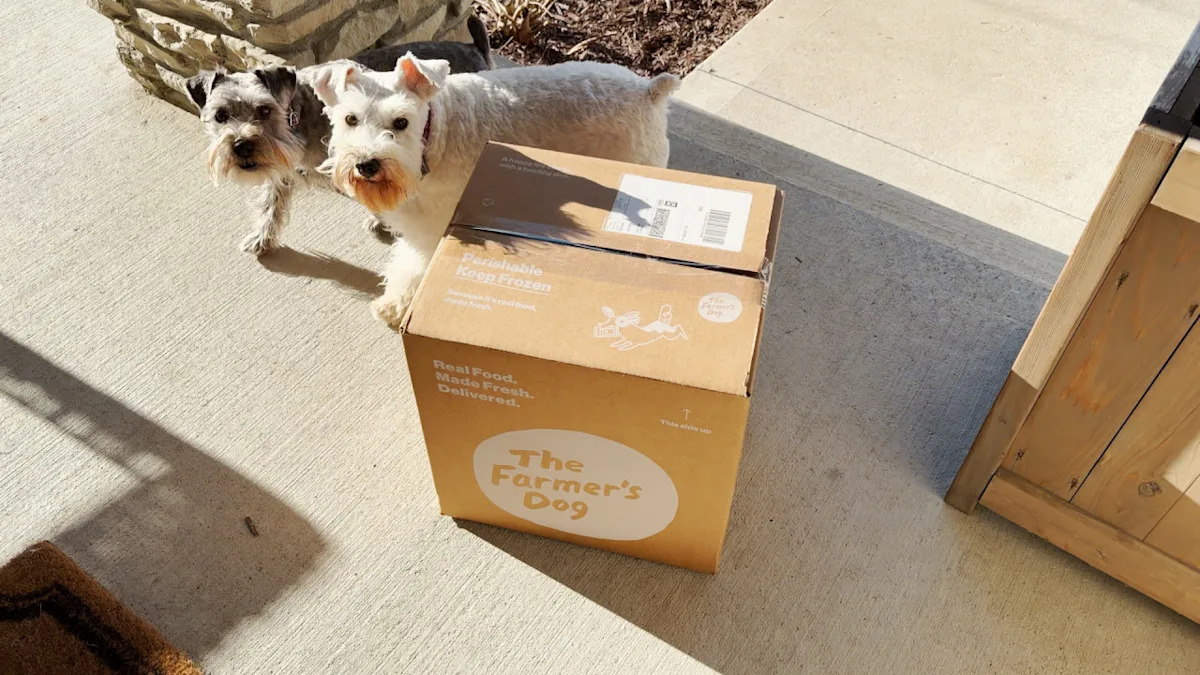
For the past few years, dinner at our house has been predictable. Scoop kibble. Set bowls down. Listen for crunching.
Rosie Barker, 3, and Sophie Grace, 1, have been eating FreeStyle High-Protein Kibble Turkey & Sweet Potato Recipe without much complaint. I usually order a 22-pound bag from my local dog bakery, which offers free delivery Monday through Friday. It’s convenient, shelf-stable and easy to store in a large sealed container at room temperature.
But when I had the chance to try The Farmer’s Dog, I was curious whether fresh food would actually feel different or simply look different.
Years ago, I had a subscription for my 13-year-old mini schnauzer, and she loved it. This time, I wanted to see how my two younger dogs would respond.
What Comes in a Farmer’s Dog Delivery Box
Our trial shipment included 14 days of fresh food tailored to both dogs. Each dog received seven packs across three recipes: Pork & Grain, Beef & Grain and Chicken & Grain. The box also included a bag of Chicken Snap Sticks treats. Everything arrives insulated with clearly labeled pouches and a personalized feeding guide based on each dog’s breed, age, weight and activity level.
One upgrade I immediately noticed compared with my previous subscription was the storage container included with the shipment. It’s clear, air-tight and designed to hold two food packs at a time in the refrigerator. Built-in markers show exactly where to cut the bags and how to measure portions, which makes daily prep surprisingly simple.
The moment I opened the first pouch, both dogs appeared in the kitchen.
What The Farmer’s Dog Food Looks and Smells Like
If you’re used to kibble, the difference is obvious right away. The texture is soft and scoopable, and you can clearly see vegetables mixed into the meat. I noticed pieces of carrots and grains throughout the meals. The smell is also noticeably different from traditional dog food. It smells like real cooked food.
Serving it is straightforward. The food stays refrigerated and you scoop the recommended portion into your dog’s bowl. It takes less than a minute, though it does feel more like preparing a meal than pouring from a bag.
How to Transition Your Dog to The Farmer’s Dog
I followed The Farmer’s Dog recommended transition schedule and slowly mixed the fresh food with their existing kibble over several days. Sophie Grace handled the change seamlessly. Rosie Barker had a brief tummy bug during the transition, which can happen when dogs switch diets. After a short adjustment period, she was back to normal and continued eating enthusiastically.
What surprised me most was their excitement around meals. Both dogs started waiting by their bowls before dinner and licking them as if to remind me it was time to eat. That level of anticipation was new.
What Happened After a Week on The Farmer’s Dog
By the end of the first week, both dogs were finishing their meals consistently. Sophie had no digestive issues, and Rosie’s stomach settled quickly after the transition.
The biggest difference for me was ingredient visibility. Instead of uniform pellets, the meals contain recognizable ingredients you can actually see.
There has also been growing attention around ingredient transparency in pet food. Fresh food brands like The Farmer’s Dog emphasize human-grade ingredients and third-party testing, which may appeal to owners who want more clarity about what goes into their dog’s bowl.
How Much The Farmer’s Dog Costs Per Day
Fresh dog food is undeniably more expensive than kibble. For the shipment we received, the meals totaled $110.29, which works out to about $7.88 per day to feed both Rosie Barker and Sophie Grace. The order also included Chicken Snap Sticks treats, which retail for $11.99, and shipping was free. For comparison, the 22-pound bag of kibble the dogs were eating previously costs about $86.59 every six weeks, or roughly $2.06 per day.
Storage is another difference worth noting. Their kibble could be kept in a sealed container at room temperature, while The Farmer’s Dog meals must stay frozen until needed and refrigerated once opened. If you have limited freezer or fridge space, that’s something to consider.
If I were committing long term for both dogs, I would likely mix fresh food with kibble to keep costs manageable while still incorporating fresh meals.
The Farmer’s Dog Special 50% Off Deal
If you’d like to have your pups try it out, the subscription for The Farmer’s Dog is currently on sale! In fact, right now there’s a special offer where you get 50% off your first box, with free shipping. While the type of food you select varies slightly in price depending on your dog’s food plan, it’s a worth trying out. For example, their chicken and grain dog food is usually $8.05 a day, but right now, you can get it for $4.03, and their beef dog food is only be $4.41 a day instead of their normal price of $8.81 a day. If you go with these two choices, that means you’ll get your first box for $4.12 a day instead of $8.24.
On top of that, you’ll also get your first bag of Snap Sticks for free with your order instead of having to pay $11.99 for them. So, all-in-all, the total of your first box, which includes 14 days of food, will be $55.72 (wthout tax) thanks to this 50% off offer. How great is that? So, sign your pet up and see what they think of it! If your dog doesn’t end up liking it, you can even get your money back, according to the website.
The Farmer’s Dog vs. Kibble: What’s the Difference?
The biggest difference between fresh dog food and kibble comes down to ingredients and processing. Kibble is shelf-stable and convenient, but it’s typically made through a high-heat process that turns ingredients into dry pellets.
Fresh food services like The Farmer’s Dog use gently cooked meat and vegetables that stay refrigerated and resemble real meals. For many dogs, the most noticeable difference is taste and texture. Fresh meals tend to be softer, more aromatic and often more appealing to picky eaters.
The trade-off is cost and storage, since fresh food requires refrigeration and generally costs more than traditional dry food.
Who The Farmer’s Dog Might Be Best For
Fresh dog food services like The Farmer’s Dog may appeal most to owners who want greater transparency around ingredients or who have dogs that struggle with traditional kibble. It can also be a good option for picky eaters since the softer texture and aroma often make meals more appealing. That said, the higher cost and refrigerator storage requirements mean it may not be practical for every household.
For Rosie Barker and Sophie Grace, the biggest difference was simple. They were genuinely excited for dinner. Every evening they started hovering near their bowls before mealtime, licking them as if to remind me the kitchen was officially open. That kind of enthusiasm is hard to ignore.
Fresh dog food isn’t the most budget-friendly option, but it certainly offers a level of ingredient transparency many pet owners are looking for. For our household, the most realistic long-term approach would likely be mixing fresh food with kibble to balance cost and nutrition.
But based on their reaction alone, Rosie Barker and Sophie Grace would opt for The Farmer’s Dog food over kibble every time.
This story was originally published by PetHelpful on Mar 14, 2026, where it first appeared in the Shopping section. Add PetHelpful as a Preferred Source by clicking here.