NEED TO KNOW
-
A Texas animal rescue is fighting to save the life of a Boston terrier after a rattlesnake bit the dog
-
Neville, the Boston terrier, was rushed into the Austin Pets Alive! (APA!) Shelter Pet Hospital in critical condition after being bitten twice by a rattlesnake
-
APA! is using Neville’s story to warn other pet owners about the dangers of snake bites, as spring and early summer are the peak for rattlesnake activity
A Texas animal rescue is fighting to save the life of a terrier after a rattlesnake bit the dog twice — and taking the opportunity to warn the public about the danger of snake bites ahead of summer.
Neville, the Boston terrier, first garnered attention online when Austin Pets Alive! (APA!) shared a post to Instagram about his rattlesnake encounter on the afternoon of Thursday, March 26.
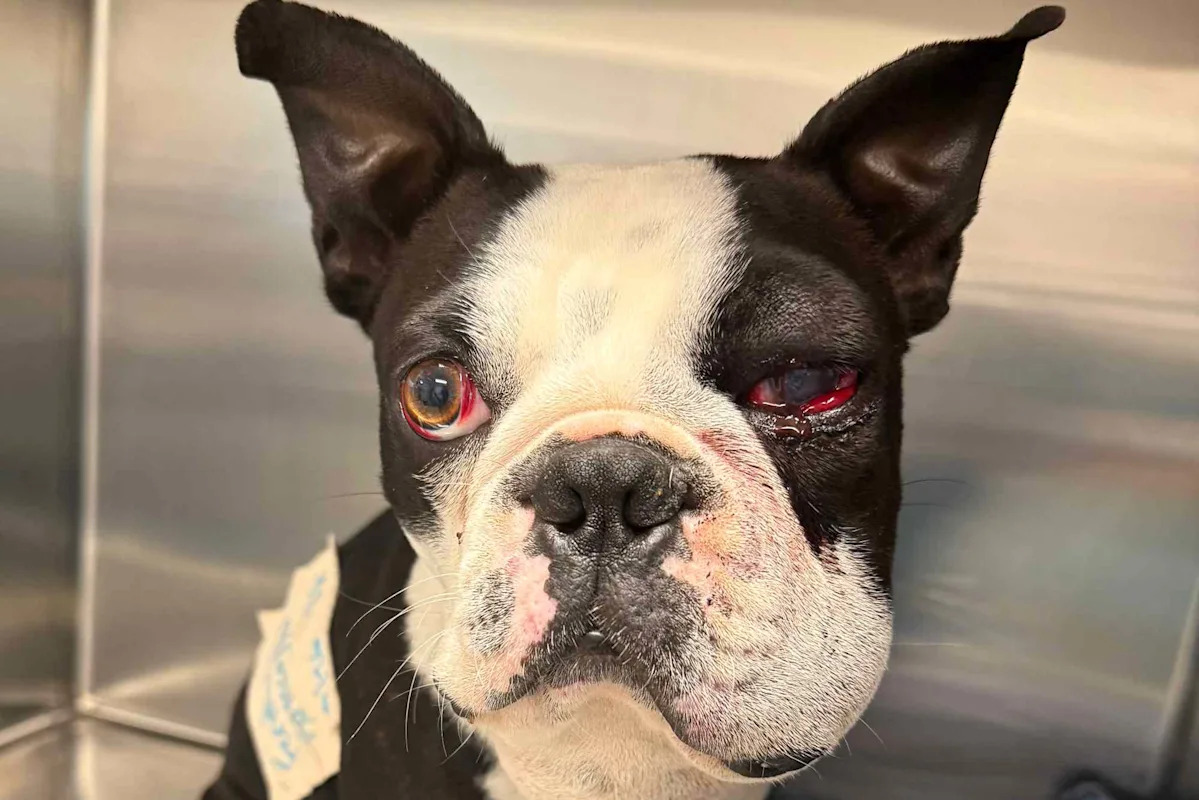
Neville was rushed into the APA! Shelter Pet Hospital in critical condition after being bitten twice by a rattlesnake, including one bite on his tongue and another near his eye.

Neville the Boston terrier at Austin Pets Alive!
Credit: Austin Pets Alive!
According to the rescue, his family made the difficult decision to surrender the dog to their veterinarian over humanely euthanizing the pup, since the treatment was complex and expensive.
“After he was surrendered to the vet clinic, the clinic reached out to APA! asking if the nonprofit could take him,” the rescue said in a statement. “When Neville’s family realized what it would take to save him, they made the heartbreaking decision to surrender him — and asked if we could help give him a chance.”
The rescue’s medical team immediately began administering antivenom, IV fluids, pain management, and antibiotics to Neville. Veterinarians were also concerned that Neville could lose his eye.
“His face swelled so severely that the nonprofit’s medical team couldn’t even locate the puncture wounds,” the APA! wrote about the pup’s injuries.
APA! shared with PEOPLE that Neville is deep in the recovery process as he’s still facing several severe snake bite symptoms, including regurgitation and increased scleral bleeding in his right eye — but his swelling is improving, and his eye is visible again.
“Neville isn’t completely out of the woods yet, but our team is showing him lots of love and care as he recovers,” said Rebecca Giamona, the assistant medical care director at Austin Pets Alive! “Unfortunately, he is still experiencing gastrointestinal (GI) motility issues, and even through that, he REQUIRES human affection.”

Neville receiving treatment for his rattlesnake bites at Austin Pets Alive!
Credit: Austin Pets Alive!
Never miss a story — sign up for PEOPLE’s free daily newsletter to stay up-to-date on the best of what PEOPLE has to offer, from celebrity news to compelling human interest stories.
APA! is using Neville’s story to warn other pet owners about the dangers of snake bites, as spring and early summer “mark the height of rattlesnake activity in Central Texas.”
“Pets are at risk any time they’re outdoors, including in yards, on trails, or anywhere snakes may be sheltering from the heat,” the rescue noted.
According to the rescue, dog owners living in areas with snakes should always keep an eye out for sudden changes in their pets’ health, including sudden weakness or collapse, swelling in the body, visible puncture wounds, bleeding, shaking, dilated pupils, vomiting or diarrhea, bloody urine, or difficulty breathing.
“Dogs may react immediately after a bite, or symptoms can take up to 24 hours to appear,” APA! explained. “If you notice any of these signs, do not wait. Get to a veterinary clinic immediately.”
Veterinarians treat dogs for snake bites using antivenom, fluids for hydration and blood pressure support, pain medication, antibiotics, and, occasionally, extra oxygen if the dog is having difficulty breathing.
“The most important factor in survival is speed,” APA! states. “About 80% of dogs can survive a rattlesnake bite if treated right away. Left untreated, the odds drop significantly.”
The shelter is also asking for donations ahead of the beginning of rattlesnake season, as well as veterinary clinic donations of antivenom vials.
As for Neville, the rescue shared that the Boston terrier still has a “long road ahead,” including one to two weeks of hospitalization, additional antivenom, and ongoing intensive care.
“But,” the shelter added, “he’s resting comfortably on pain medication and, in true Boston terrier fashion, whining for attention.”
Read the original article on People