The post Love Animals? Here Is the Big Difference Between Shelter Work and Animal Control appeared first on A-Z Animals.
Quick Take
-
The roles of animal shelter worker and animal control officer differ in many ways, including where they work and what they do.
-
Neither role requires a college degree.
-
Teens can begin preparing for either job at a young age.
If you’re getting closer to graduating from high school and hoping to go to college so you can get a job working with animals, know that you have many options. Among the plethora of choices are two careers that don’t require extensive education or experience. These include working as an animal shelter worker or an animal control officer.
Both are promising careers that offer incredible job security. While the two titles may seem similar, there are actually many differences between these two professions. In this guide, we’ll outline the day-to-day operations for both animal control and animal shelter workers so you can get an idea of how you’ll spend your time. We’ll also discuss educational requirements, expected salary ranges, and everything else you need to know to make the best choice for your future.
What Is an Animal Shelter Worker?
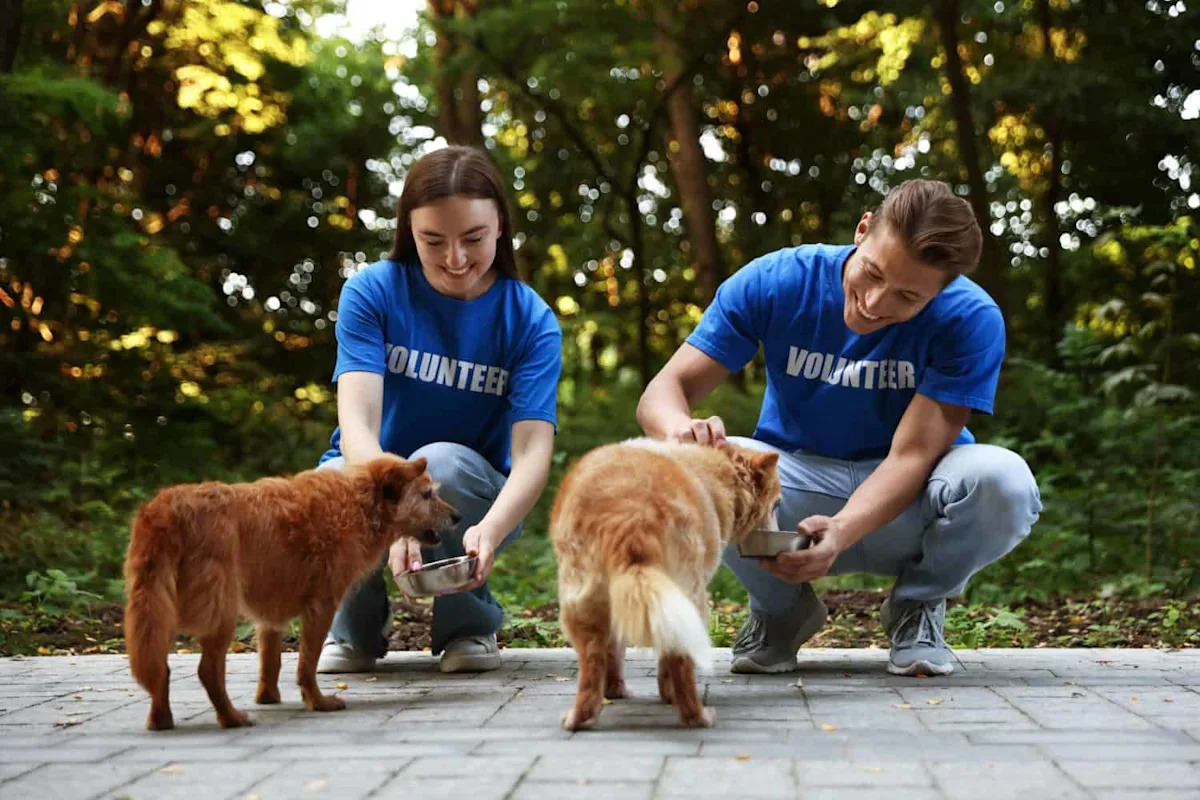
As the name implies, an animal shelter worker is someone who works at a shelter or rescue facility and assists animals. The shelters often take in surrendered pets, strays, and animals rescued from neglect or abuse. Your primary tasks will involve maintaining the animals and ensuring their health and safety. In the meantime, you’ll also work with people inside and outside your organization to find a new home for the animals.
What Animal Shelter Workers Actually Do
If you’ve watched enough movies, you might imagine that animal shelter workers spend their days playing with puppies and kittens. However, there’s much more to the job than that. While each shelter will differ, daily tasks may include:
-
Feeding and caring for the animals. That may involve ensuring that all animals are provided with food and fresh water, clean living spaces, basic grooming, and enrichment and socialization. You’ll provide this care for a variety of animals, including dogs, cats, reptiles, birds, and even the occasional farm animal.
-
Cleaning kennels and facilities. You’ll likely spend a large part of your day cleaning. Expect to disinfect cages and kennels, wash bedding and blankets, clean food bowls and equipment, and sanitize rooms to prevent the spread of disease.
-
Monitoring animal health. Since a core part of your job is ensuring the health of animals, you’ll be checking on them frequently during the day. You’ll check the animals for signs of illness or injury and watch for signs of stress or changes in behavior.
-
Helping animals get adopted. The other core responsibility of an animal shelter worker is to help animals find a new home. Duties in this vein may include talking to potential adopters, explaining animal personalities and needs, assisting with adoption paperwork, and helping families choose the right pet.
-
Intake and animal assessments. Shelters regularly receive new animals that are strays found by the public, animals brought in by an animal control officer, and those that are surrendered by their owners. Your job will be to record each animal’s details and health records, make behavioral observations, and complete other required paperwork.
Basically, you’ll have a lot on your plate in this line of work. However, take your job seriously, and you’ll find the work very rewarding.
Education, Skill, and Salary Information

If you have a passion for animals and you’re self-motivated, then working in a shelter may be right for you.
©BearFotos/Shutterstock.com
(BearFotos/Shutterstock.com)
The education requirements for animal shelter workers are relatively straightforward. Unless you plan to work in management or a specialized field in the business, you’ll only need a high school diploma or GED, or you can learn everything via on-the-job training. However, attending college and obtaining a degree in animal science, biology, zoology, or veterinary technology could help you advance in your career.
Skills
When you’re at work, you’re likely going to be surrounded by animals, so being comfortable around them is key. Beyond a love of furry friends, you’ll also likely need other skills, including:
-
Strong cleaning and organizational habits
-
Compassion for animals in stressful situations
-
Good communication skills
Keep in mind that working in this field can also be very emotionally challenging. On one hand, you may grow attached to certain animals while they’re at the shelter, and you may be sad to see them go. You might also be emotionally affected when you see pets being abandoned and hurt, so mental strength is required.
Typical Salary
When you work as an animal shelter worker, your primary reward will be helping animals in need. While this is not always the most financially fulfilling career, it’s very rewarding to people who love it. According to the U.S. Bureau of Labor Statistics, on average, you can expect to earn approximately $33,860 per year. That said, if you work your way up at a shelter, you could make closer to $50,000.
What Is an Animal Control Worker?
While an animal shelter worker primarily works in an office or shelter, an animal control worker is often out in the field. Their primary roles involve protecting animals and the public by enforcing animal-related laws. They are a bit like police in that they respond to calls about animal distress in the community and go where they’re needed. In the role, you’ll often work for city and county governments or public safety departments.
What Animal Control Workers Actually Do
If you’re looking for action and variety in your work, then the job of an animal control worker may be for you. During the course of a week, you will find yourself in a variety of situations and scenarios with many different animals. Some of these situations will be more dangerous than others, so training will be key. Core responsibilities in this profession include:
-
Responding to emergency calls. In this profession, you’ll respond to a variety of calls for both humans and animals who are in distress. Typical calls may include: injured animals, dangerous wildlife, loose livestock, animal bites, and aggressive dogs, among others.
-
Capturing stray or dangerous animals. Not every job will entail an animal that’s cute and cuddly. You may also be required to capture dangerous animals using nets, traps, protective equipment, and specialized capture poles.
-
Investigating animal cruelty. Some days will be harder than others in the role of an animal control worker. In some instances, you may be required to go to people’s homes or businesses to investigate animal cruelty. During the process, you may witness animal abuse, neglect, illegal animal fighting, and dangerous living conditions.
-
Enforcing animal laws. Most cities or neighborhoods have animal-related laws, and you may be called out to enforce them. Such legal issues may include enforcing pet licensing requirements, leash laws, vaccination rules, and limits on dangerous animals. In some instances, you may also be required to testify in court about what you found.
-
Educating the public. Another important part of your job will be education. You may visit schools or businesses to discuss topics such as responsible pet ownership, vaccinations, proper animal care, and local animal laws.
Essentially, this job is much more active and involved than that of an animal shelter worker. You will need to be prepared to step out of your comfort zone and be ready for surprises every day.
Education, Skill, and Salary Information
Like an animal shelter worker, you’re unlikely to need a college degree to work as an animal control worker. Most positions require only a high school diploma or a GED or offer on-the-job training. Due to the nature of the job, some agencies may also require certification in programs such as animal handling, law enforcement procedures, or animal cruelty investigation. If you want to work your way up the ladder in the organization, a degree in animal science, criminal justice, or biology can help. You can also gain experience by volunteering at shelters.
Skills
In addition to some law enforcement tactics and comfort interacting with the public, there are other skills that you may need to acquire to succeed in this career. You’ll need to leave your fear at the door and have confidence in handling aggressive animals. Your daily work may also involve plenty of walking and occasional running, so being physically fit is key. The job also requires a variety of soft skills, including quick decision-making, conflict resolution, and strong communication.
Typical Salary
Due to the nature of the work, you may earn more money than you would as an animal shelter worker. According to government reports, you should expect to make an average of $43,000 per year. However, there are folks in this career who make closer to $70,000 annually. Due to the danger of the work, you can expect to make a bit more than in some other animal-related professions.
Comparing Both Careers
If you’re deciding between working as an animal shelter worker or an animal control officer, you need to look at what each entails. There are many differences between the two jobs. One career has you working in a dedicated shelter, while the other has you out in the field. Also, the main focus of each career differs. Animal shelter employees are focused on animal care and adoption. Control officers focus on public safety and law enforcement.
Where the Fields Overlap

If you really love animals, then you can work in any number of rewarding careers.
©New Africa/Shutterstock.com
(New Africa/Shutterstock.com)
In addition to their focus on animal care, both careers overlap in several ways.
-
Animal control officers bring animals to shelters. You could meet and talk with folks in other occupations throughout your day. Shelter workers then care for the animals that were taken into the establishment.
-
Both jobs protect animals. The shelter employee protects animals in their care. The animal control officer often cares for animals found in the community or in distress.
-
Both jobs require compassion. Whether you’re caring for a dog in a shelter or rescuing a large predatory animal from an unfit home, you will need compassion in both careers.
Which Career Is Better For You?
With these differences in mind, how do you decide which profession is right for you? As a teen, you still have some time to decide what you choose to do. However, here are some internal questions to ask yourself.
Animal shelter work may be better for you if you enjoy hands-on animal care and you like seeing pets find new homes. If you find that you enjoy interacting more with pets than people, this may be the perfect career. This career is especially well-suited for those who prefer working indoors.
You may be better suited for work as an animal control officer if you think you’d like field work and daily problem-solving. This is also good work for people who can handle a bit of anxiety and stressful situations. Finally, if you like the law enforcement angle or the idea of investigating animal abuse cases, then you may do well here.
How Teenagers Can Start Preparing
If you’re a teen who has some interest in joining one of these exciting fields, then it’s important to realize that it’s never too soon to get started. Even if you haven’t yet graduated from high school, there are a few ways to get your feet wet:
-
Volunteer at animal shelters – Teens as young as 14 can head to a local animal shelter and ask to help. While there, they can learn animal behavior, gain real-world experience, and build a resume.
-
Take animal science classes – You can begin to learn about animals and their behaviors by taking a few classes. Instruction in biology, animal science, and veterinary basics can be great stepping stones that can prepare you for a plethora of careers.
-
Work with animals – You don’t necessarily need to work at a shelter to gain experience with animals. Other animal-related jobs include dog walking, pet sitting, working at kennels, and assisting at a vet’s office.
All of these options are great if you want to learn if working with animals is really something you want to do for a living.
Final Thoughts
Now that you understand the ins and outs of working as an animal shelter worker and animal control officer, you can make an educated decision for your future. If you have any interest in animal welfare, wildlife conservation, animal training, or other similar fields, either career can put you where you want to be. Either way, you’re looking at an emotionally fulfilling job that will make you happy to clock in day after day.
The post Love Animals? Here Is the Big Difference Between Shelter Work and Animal Control appeared first on A-Z Animals.