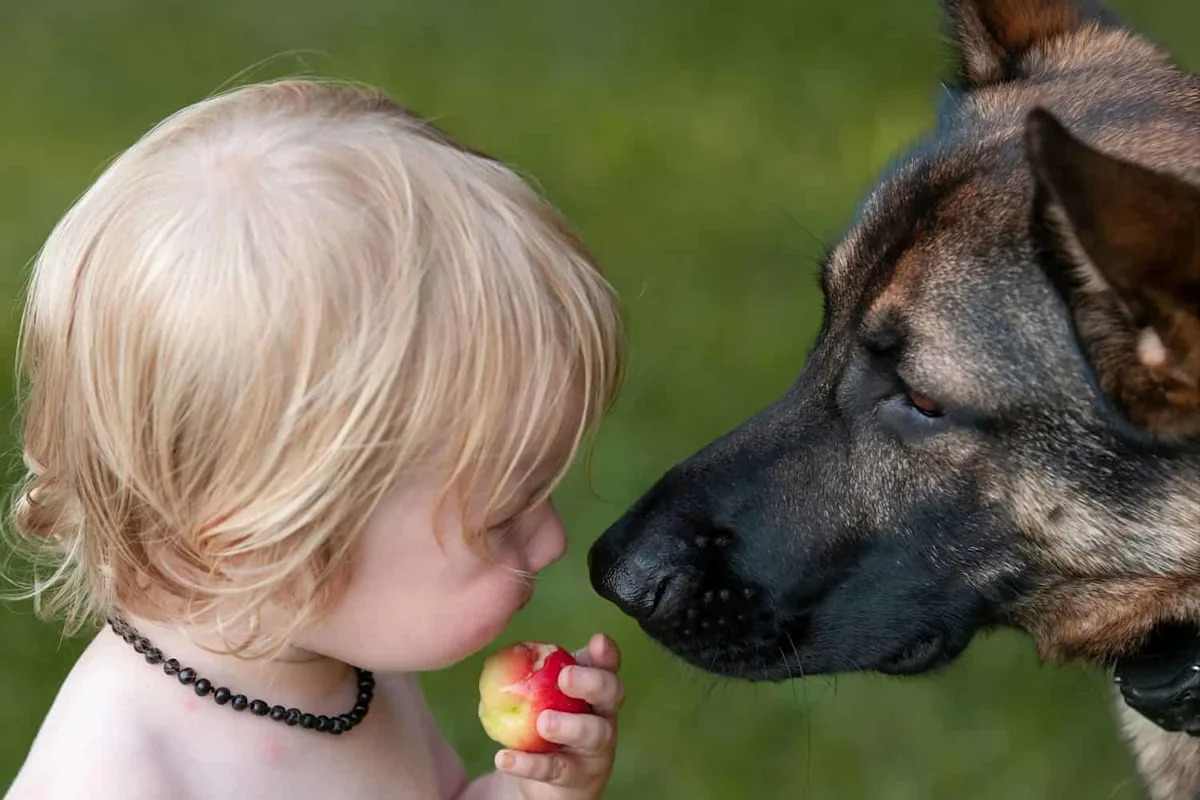
The post The 4 Biggest Mistakes Kids Make Around Dogs, According to an Expert appeared first on A-Z Animals.
Quick Take
-
Children are at higher risk for dog bites than adults, and calm, predictable movements can help reduce that risk.
-
Both the child and the pet need training in how to interact in a mutually respectful way.
-
Some breeds tend to do better with children, but training makes more of a difference than the breed tendencies.
-
Shelter dogs or dogs from breeders can be equally good choices for family pets if the owner is willing to commit to consistent positive training.
Children experience dog bites more often than adults, mainly because they move quickly and get close to the animal’s face. Their size places their hands and faces right where a startled dog may react. Many incidents do not involve aggressive animals. Instead, they involve ordinary dogs that feel overwhelmed, startled, or cornered. When children learn how to approach calmly and give space, they reduce stress for the animal and risk for themselves.
These skills matter whether a family owns a dog or simply encounters them in parks or neighborhoods. A child who understands basic canine behavior can avoid risky situations, and teaching awareness early helps children build positive lifelong habits. It also protects animals from being blamed or punished for reactions that were completely avoidable. Safety and respect work together, creating better outcomes for all parties.
Ask, Pause, and Plan Before Approaching

Children should learn to ask owners before petting a dog, and to observe the creature’s body language.
©Ekaterina Byuksel/Shutterstock.com
(Ekaterina Byuksel/Shutterstock.com)
Before reaching toward any unfamiliar animal, children should follow a simple routine that becomes second nature. First, they ask the owner for permission while staying a few feet away, and if the answer is no or hesitant, they accept it immediately and move on, which keeps the situation calm and avoids putting pressure on the dog. Next comes a pause to observe the dog’s body language, looking for signs of comfort or unease; if the dog appears stiff, withdrawn, or tense, that signals discomfort, but if it looks relaxed, the child can take a slow step closer. Approaching at a slight angle rather than head-on helps reduce tension, and this whole sequence builds patience and awareness while giving the dog a sense of control over the interaction.
Situations Where Children Should Stay Away
Certain situations are always unsafe, no matter how friendly a dog may seem, so children should avoid approaching dogs that are alone without an owner, tied up outside, or confined behind a fence or inside a car, since these animals often feel protective of their space and may react quickly if approached, making distance the safest choice. Dogs that are eating, sleeping, chewing a valued item, or caring for puppies also need to be left alone, as many will guard important resources or react defensively if startled, and something as simple as reaching for a food bowl or waking a sleeping dog can trigger a fast response. Teaching children to recognize these situations helps them avoid unnecessary risks while reinforcing that dogs have boundaries that deserve respect.
Understanding Service Animals and Their Role
Service animals are trained to perform specific tasks for people with disabilities and play an essential role in daily life, whether guiding someone with vision loss, alerting to a medical condition, or providing stability for mobility challenges. Because they are working, these dogs must stay focused on their handler at all times, and distractions can interfere with their ability to do their job safely. It is also important to understand the distinction between service animals and emotional support animals. Emotional support animals provide comfort but are not considered service animals under the ADA, although they and their owners still deserve courtesy and respect from others in public.

Children need to understand that service dogs are performing a job; they are not simply pets.
©New Africa/Shutterstock.com
(New Africa/Shutterstock.com)
Children should learn that service animals are not pets, even if they appear friendly, and they should never approach, touch, call to, or offer food to a service dog without clear permission from the handler. In many cases the answer will be no, and that response should be respected immediately. A simple rule works well for kids: if a dog is assisting a person, do not approach or distract it unless the handler clearly invites interaction. Teaching this early helps children understand respect, safety, and the important partnership between a service animal and its handler.
Safe and Respectful Petting Techniques
When a dog appears relaxed, and the owner has given permission, children can approach carefully. It’s generally best to approach the dog on a curved path rather than directly, as this is less threatening. The first step is to let the dog come forward to sniff. Holding the hand low and still allows the dog to choose the interaction. This approach respects the dog’s comfort level.
Even very tolerant dogs have limits, and this is one of the most common triggers for bites.
Alexandra Bassett, Certified Professional Dog Trainer and founder of Dog Savvy Positive Dog Training
If the dog moves closer and the owner agrees, gentle petting on the shoulder or chest is often better tolerated than reaching over the head. These spots are less sensitive than the top of the head or tail. Gentle strokes that follow the direction of the fur help keep the dog relaxed. After a few seconds, children should pause and observe. If the dog leans in, they may continue. If it pulls away or shows signs of discomfort, they should stop.
An Experienced Trainer Weighs In
For professional insight, we interviewed Alexandra Bassett, a Certified Professional Dog Trainer with over 25 years of experience. She created the Canine Separation Anxiety Cure program and works closely with families to help dogs and children safely coexist through practical, relationship-based training. She is also the Founder and Head Dog Trainer at Dog Savvy Positive Dog Training in Salt Lake City, Utah. Alexandra shared with us the four biggest mistakes kids make around dogs, along with suggested training tips for both the dog and the child.

1. Invading a Dog’s Space
“Kids often approach dogs when they’re sleeping, chewing on a bone or toy, eating, or resting in their bed,” says Alexandra. “From a dog’s perspective, this can feel threatening or startling, especially if the dog is touched suddenly or views the child as a threat, which can happen because they think the child wants to take their food or bone away: a behavior called ‘resource guarding’. Even very tolerant dogs have limits, and this is one of the most common triggers for bites.”
Training Tips
“Teach the child simple rules like ‘Let sleeping dogs lie’ and ‘No touching dogs while they eat.’ Use clear, consistent language and supervision to reinforce it. For the dog, create a designated safe space (bed or crate) where the dog is never disturbed. Reinforce this area as a calm, positive retreat.”
2. Hugging, climbing on, or restraining dogs
Alexandra also observes that “children often show affection physically — hugging, squeezing, or lying on dogs — but most dogs don’t naturally enjoy this kind of pressure. These behaviors can make a dog feel trapped, which can lead to defensive reactions like growling, snapping, or biting.”

Some dogs are more tolerant of hugs than others.
©ItCameWithTheFrame/Shutterstock.com
(ItCameWithTheFrame/Shutterstock.com)
Training Tips
“Show children how to interact appropriately, with gentle petting on the chest or side instead of hugging,” Alexandra advises. “Teach your child about ‘consent’ and dog body language. Practice ‘two-second petting,’ where the child pets briefly and then pauses to see if the dog re-engages or moves away. And if the dog moves away, leave it alone. And condition the dog to enjoy gentle handling through gradual desensitization and positive reinforcement, but also respect that not all dogs will enjoy close physical contact or will learn to like attention from children, especially senior dogs.”
3. Ignoring or misreading warning signs
“Kids usually don’t recognize subtle canine body language like lip licking, turning away, stiffening, or whale eye. They may continue interacting when a dog is already clearly uncomfortable, unintentionally escalating the situation.”
Experts also point out that fear is a leading cause of bites, so children need to recognize it quickly. A fearful dog often tries to appear smaller. It may crouch, tuck its tail tightly, or lean away from people. The ears often flatten against the head, and the dog may avoid direct eye contact. Other signs include turning the head away, trembling, or hiding behind a person or object. These behaviors show uncertainty and stress.
Dog behaviorists also note that a rigid body is one possible warning sign that a dog is about to react. The dog may freeze in place, with a high, still tail and a focused stare. This posture signals that the dog is on edge and may act if the situation does not change. Other warning signs include growling, showing teeth, or barking in a deep, repeated pattern. Raised fur along the back and a forward-leaning stance also signal readiness to defend.

A dog showing signs of fear should not be petted.
©ChocoPie/Shutterstock.com
(ChocoPie/Shutterstock.com)
Training Tips
How does Alexandra advise avoiding this mistake? “Never allow kids to approach a dog that is eating or chewing on a bone, and monitor them around a dog who is convalescing after an injury or may be in pain (like senior dogs who have health issues). Senior dogs may have less tolerance for “shenanigans” from a child, so advocate for your senior dog and don’t let a child badger them. Teach kids to recognize basic ‘stop signs’ in dogs; things like turning away, backing up, baring teeth, or growling. A simple rule like ‘If the dog moves away, you stop too’ works well. And reward the dog for choosing to walk away instead of escalating.”
4. High-energy, chaotic behavior around dogs
Finally and perhaps most importantly, Alexandra observes that common childhood behaviors like running, screaming, or flailing arms can overstimulate dogs. “Some dogs interpret this as an invitation to chase or herd, while others become anxious or reactive,” she explains. “This can quickly lead to jumping, nipping, or knocking a child over.”
Training Tips
What should you do? “Create structured rules like ‘walk, don’t run’ indoors and practice calm greetings.” Alexandra also cautions, “Don’t allow a child to poke a dog in the nose, ears, and eyes (common targets) or ‘smack’ a dog with their hands or toys. Kids can also be taught to toss or hand a dog treats instead of approaching a dog directly if the dog needs help learning to interact with the child.”
“For dogs, work on impulse control — sit, down, and place training — so the dog learns to remain calm even when excited. Gradual exposure to movement paired with rewards helps reduce reactivity. A game like ‘Act Wild & Freeze,’ where the dog is exposed to sudden and loud movements and rewarded for adopting a ‘sit’ posture when it happens, is a great way to make training fun for both kids and dogs.”
Responding When a Dog Approaches Quickly
Sometimes a dog runs toward a child unexpectedly. This situation can feel intense, but the response should remain calm. Running away may trigger chasing behavior, which increases risk. Instead, the child should become still like a tree, keeping arms close and looking downward. This posture appears non-threatening and gives the dog time to settle.
If the dog knocks the child over, curling into a “rock” position helps protect the face and neck. Knees tuck toward the chest, and arms cover the head. Practicing these responses at home prepares children to act without panic. Calm behavior often causes the dog to lose interest or allows an adult to intervene safely.

If an aggressive or over-enthusiastic dog knocks a child down, the proper response is to curl up in a “rock” position to protect the head, neck, and face until an adult can help.
©alexei_tm/Shutterstock.com
(alexei_tm/Shutterstock.com)
Dog Breeds That Are Good With Children
We asked Alexandra which breeds she thinks are best with children. She emphasized that first of all, “while breed tendencies can help guide decisions, individual temperament, early socialization, and training matter far more than breed alone.” With that caveat in mind, these are her picks of breeds that tend to do well, on the whole, with children:
-
Labrador retriever – “Labradors are known for their friendly, outgoing nature and high tolerance. They tend to be forgiving, social, and eager to engage, which makes them well-suited for active families.”
-
Golden retriever – “Goldens are gentle, patient, and highly people-oriented. They typically have a soft temperament and a strong desire to please, making them more adaptable to the unpredictability of children.”
-
Cavalier King Charles spaniel – “This smaller breed is affectionate, adaptable, and less physically overwhelming for young children. They tend to bond closely with families and have a naturally gentle demeanor.”
Expert Verdict: Shelter or Breeder?
Alexandra says, “It’s a common misconception that raising a puppy from scratch is always the safer choice. In reality, both puppies and shelter dogs can be excellent family companions when chosen thoughtfully.
-
Puppy from a breeder: “Pros include a known genetic background and the ability to shape early experiences. However, puppies require significant time, training, and supervision, and they still go through developmental phases that include biting and impulsivity.”
-
Shelter dog: “A well-matched shelter dog can actually be a better option for some families because their temperament is already more developed. You can often assess energy level, sociability, and tolerance more clearly.”
What To Look for in a Shelter Dog

A relaxed, friendly dog gives clear signs of approachability that are easy to spot.
©Irina Mikhailichenko/Shutterstock.com
(Irina Mikhailichenko/Shutterstock.com)
Finally, here’s Alexandra’s checklist of what to look for in a shelter dog if that’s the route you choose to go:
-
A known history of positive interactions with children.
-
A calm, social, and non-reactive temperament.
-
Willingness to engage but also settle (hyper dogs can be a lot of work).
-
No history of resource guarding or significant fear-based behavior.
-
A foster-based evaluation (if available), which often provides more insight than a kennel assessment.
“Ultimately, the best choice isn’t about breeder versus shelter,” Alexandra says, “it’s about selecting the right individual dog and committing to ongoing supervision, training, and management.”
Building Long-Term Respect and Awareness
Learning how to interact with dogs safely offers more than protection. It helps children see animals as individuals with feelings and boundaries. This awareness encourages empathy and thoughtful behavior. Children begin to understand that respect leads to better experiences for everyone.
Consistent teaching also builds confidence. A child who knows what to do feels less anxious in new situations. Parents who reinforce these habits help create a steady approach to animal encounters. Over time, children carry these lessons into adulthood. They become people who treat animals with care and awareness, reducing risk and improving relationships with pets.
The post The 4 Biggest Mistakes Kids Make Around Dogs, According to an Expert appeared first on A-Z Animals.