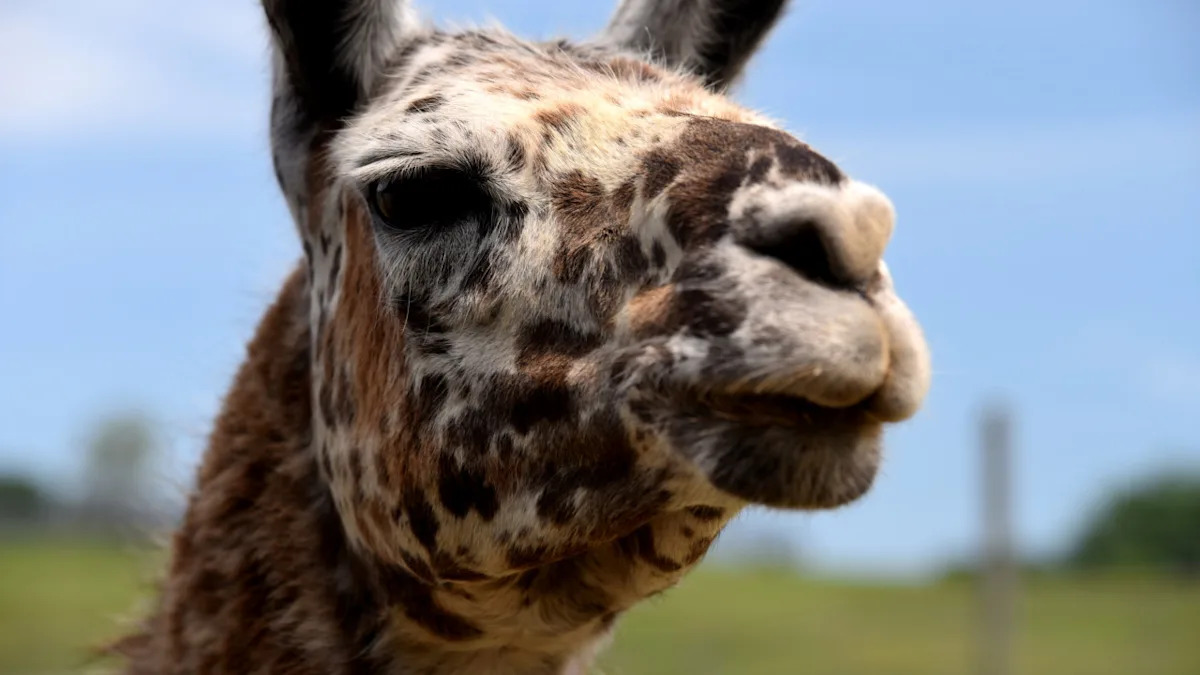
Llamas and alpacas seem to have become all the rage when it comes to must-see farm animals in recent years. While they’d prefer not to be bothered, these curious-looking creatures always garner lots of ooohs and aaaahs from visiting guests. Like their sheep counterparts, they are known for producing some of the softest wool fibers, and their unique coloring makes for a wide variety.
Speaking of coloring… one particular llama is gaining a lot of traction online for his uniquely patterned coat, as seen in an Instagram Reel shared by @prairiepatchfarm.
The on-screen text reads, “POV: You book a llama-cation in Iowa, and this is in your backyard.” In the clip, two llamas get up close and personal with the camera. The first llama sports a brown-and-white speckled pattern with serious polka-dot vibes, along with adorable fluffy tufts around its legs that resemble little booties. As the second llama approaches, a more solid-colored look comes into view, featuring a gray body and a dark brown face. This one leans in even closer, delivering a gentle nose boop to the camera and giving viewers a clear look at its soft, fluffy fur.
Viewers can’t get over the look of these two. One user wrote, “Oh, they are so precious and what lovely coats they have!! Dalmatian and Fluffy puffy fur.” Another couldn’t get over the unique spotted pattern, equating it to a horse breed, “An Appaloosa Lama?!?! I want one❤️❤️😍😍😍😍” A third viewer had a different take, remarking, “They look like Dr. Seuss characters!”
I must admit that I am also quite enamoured with the fascinating look of these two, and I may need to look into booking a trip to Iowa in the near future!
A Closer Look at Llama Coats and Colors
According to the Greater Appalachian Llama and Alpaca Association, llama fiber is naturally soft, lightweight, and lanolin-free, which sets it apart from sheep’s wool. While llamas are not typically raised for large-scale wool production, they are usually sheared at least once a year to keep their coats clean, comfortable, and free of matting. Llama fiber is often felted into unique hats, gloves, vests, and boots, while spun yarn can be knitted, crocheted, or woven into a variety of items. Natural coat colors can range from solid white, black, and red to shades of brown and gray, and multi-colored or patterned coats are known for producing a more varied fiber blend. This variety in coloring and coat patterns is the result of selective breeding, which has helped preserve the diverse looks we see in llamas today.
🐶SIGN UP to get “pawsitivity” delivered right to your inbox with inspiring & entertaining stories about our furry & feathered friends🐾🐾
Related: Baby Llamas Trying to Rest Amid the Chaos of the Zoo Is So Precious
This story was originally published by PetHelpful on Apr 9, 2026, where it first appeared in the Pet News section. Add PetHelpful as a Preferred Source by clicking here.