The post What’s the Difference Between a Marine Biologist and an Aquarist? appeared first on A-Z Animals.
Quick Take
-
The jobs of marine biologist and aquarist are two options for people considering careers related to ocean ecosystems.
-
Marine biologists are more involved in understanding ocean habitats and doing scientific research for publication.
-
Aquarists maintain the health of marine animals in public aquariums.
-
The job of aquarist is more public-facing and includes answering questions from guests curious about the animals on display.
If you’re obsessed with ocean animals, you might just be a future marine biologist or aquarist. Both careers revolve around aquatic life, but they play very different roles in understanding and caring for the underwater world. Knowing how they compare can help you choose a path that best fits your strengths, lifestyle, and idea of a marine focused “dream job”.
Marine Biologists: Ocean Scientists
Marine biologists are scientists who study aquatic animals, plants, and microscopic life. They work everywhere from tide pools to the deep sea. Some also study estuarine or freshwater organisms. They ask big questions about how species interact, how pollution or climate change affects them, and what we can do to protect entire ecosystems, not just individual animals. A marine biologist might spend part of the year on research ships collecting samples. They often spend the rest in the lab or office analyzing data and writing up results. Many specialize in topics like coral reef health, whale behavior, fish populations, or harmful algal blooms that can threaten coasts and fisheries.

Marine biologists study oceanic life in the deep sea and on shore.
©riekephotos/Shutterstock.com
Marine biologists need at least a bachelor’s degree in marine biology, biology, or a related field. Some entry-level technician roles accept an undergraduate degree without graduate study. However, many graduates pursue master’s degrees or PhDs so they can lead research projects or teach at universities. Their college work is heavy on chemistry, physics, statistics, and advanced biology. They often complete research internships or field courses on coasts and research vessels.
Aquarists: Hands‑On Animal Care Specialists
Aquarists care for the fish, sharks, corals, and other animals living in public aquariums, zoos, and marine centers. Their days revolve around feeding animals, checking water quality, cleaning exhibits, maintaining pumps and filters, and watching for any signs of stress or illness. Aquarists also help create realistic habitats with rocks, sand, and plants. They often dive into large tanks to scrub windows or rearrange structures. Aquarists may give talks, answer questions, or assist during public feeding demonstrations.
Aquarists also usually have a bachelor’s degree in marine biology, zoology, or a similar subject. However, you can get some positions with an associate degree and strong experience, as employers put huge weight on hands‑on experience. Volunteer or internship hours at aquariums, scuba certifications, and comfort working in and around water can be just as important as grades for landing that first aquarist position.
In His Own Words: A Marine Biologist
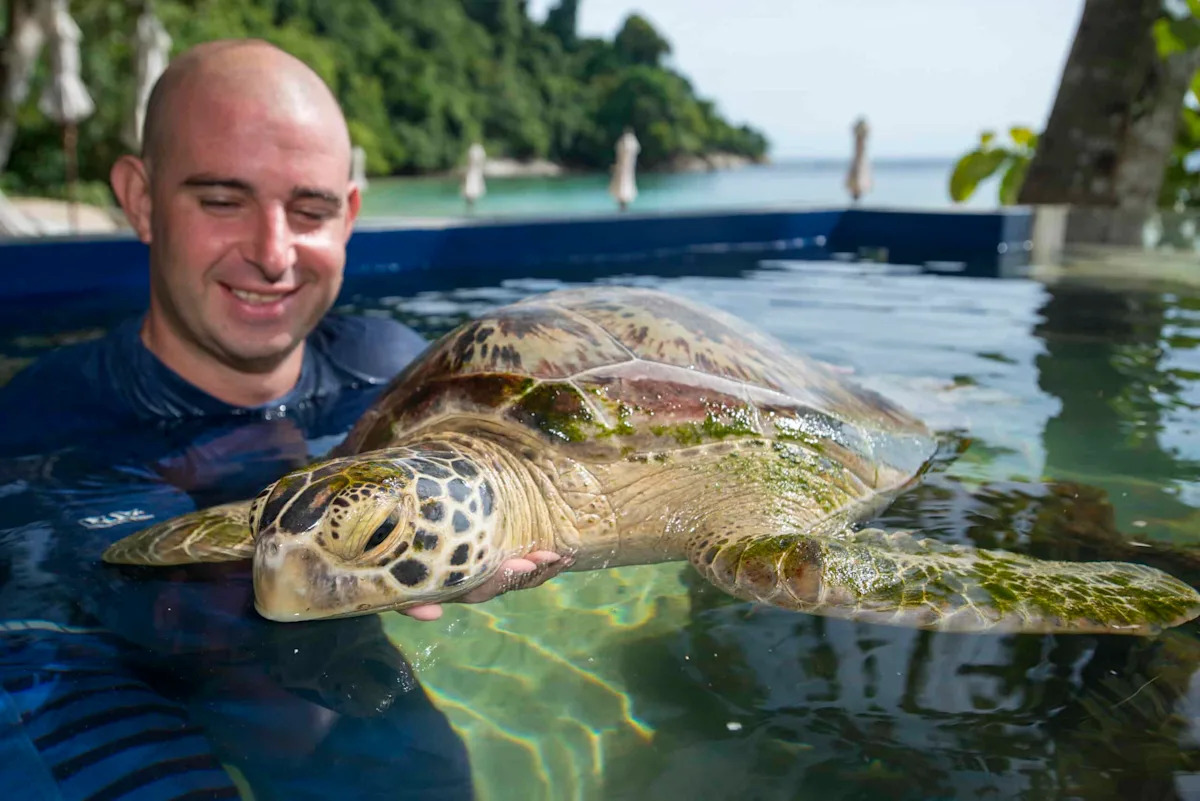
Scott Mayback is the Resident Marine Biologist at Gaya Island Resort in Sabah, Malaysia. He oversees the Gaya Island Resort Marine Centre. This is Malaysia’s first turtle rehabilitation center. Scott leads initiatives in sea turtle rescue, coral propagation, and marine habitat restoration. His work balances active conservation and community education, teaching sustainable interactions with fragile reef ecosystems.

Scott says, “My passion for this career began while working in aquariums, where preserving sea life transitioned from an interest into a vocation. The specific opportunity to move to Borneo—a globally recognized biodiversity hotspot—was a life-changing decision I made 16 years ago, driven by the chance to work hands-on with conservation rather than just observing from afar. My education and early experience in aquarium management provided the scientific foundation, but the real learning has come from over a decade of direct field work, from rescuing endangered sea turtles to propagating coral reefs.”
A Typical Day
Here’s how Scott describes a typical day on his job: “My role is a dynamic mix of veterinary care, ecological restoration, and public education. A typical day could start with a health check on sea turtles in our rehabilitation centre, followed by leading a coral planting session where guests help propagate and replant species onto our house reef. We also constantly monitor the marine park for bleaching events or injured wildlife and dedicate significant time to educating guests on how to enjoy the reef without damaging it—ensuring they understand the ‘why’ behind our conservation actions.”
How does that compare to the role of an aquarist? An aquarist’s routine rotates around the daily needs of captive animals, not free-ocean work. It might include early‑morning water tests, preparing different diets in a fish kitchen, diving into tanks to clean and inspect, and administering treatments or enrichment. Because animals still need care on weekends, holidays, and during storms, aquarists often work rotating schedules. They may have to respond quickly to equipment failures or medical emergencies.

Maintaining the health of species displayed in public aquariums is one of the main responsibilities of an aquarist.
©Andrew Angelov/Shutterstock.com
My education and early experience in aquarium management provided the scientific foundation, but the real learning has come from over a decade of direct field work, from rescuing endangered sea turtles to propagating coral reefs.
Scott Mayback, Resident Marine Biologist at Gaya Island Resort in Sabah, Malaysia
“Covid” the Turtle: A Memorable Success
Scott shared this deeply moving high point in his career: “The most fulfilling moment by far was releasing a Green Sea Turtle named Covid in 2024. Covid was found in May 2020 at the start of the worldwide pandemic, floating helplessly with a cracked shell from a boat strike, a neck tumour, and two paralysed rear flippers. We used acupuncture – something rarely tried on sea turtles – alongside weight therapy to retrain its buoyancy. After nearly four years of rehabilitation, Covid swam free with a GPS tracker attached to its shell. Watching that turtle disappear beneath the waves was not just a release; it was proof that patience and unconventional care can beat the odds.”

A Heavy Drawback
“Aspiring marine biologists must be prepared to witness the devastating impact of climate change firsthand,” cautions Scott. “We recently experienced the worst coral bleaching event in the Marine Park’s history, which is a sad reality most reefs face today. The work is physically demanding, often takes place in remote locations far from home, and the constant fight against pollution and rising sea temperatures can be emotionally taxing. You have to be resilient and accept that despite your best efforts, you are often fighting against global issues much larger than one person or team.”
How Does an Aquarist Compare?
Although an aquarist typically will not spend as much or any time out on the ocean with wild creatures, they still work at times with rescued animals like “Covid” the turtle. Some of these animals are unable to be released into the wild because of the nature of their injuries. Nevertheless, they can still live a full, healthy life in captivity with professional care.
Aquarists interact with the public more directly than marine biologists. This can include answering visitor questions, assisting educators, and helping design exhibits that inspire people to care about the ocean. Some find that seeing a child’s face light up during a close encounter with a shark or a visitor learn how climate change affects sea life are rewarding parts of the job.

A rewarding aspect of the job of aquarist is to see how the public enjoys interacting with marine life.
©PeopleImages/Shutterstock.com
What about drawbacks? Aquarists work in controlled indoor environments but still face significant physical demands. This can include hauling buckets and climbing ladders, carrying scuba tanks, and scrubbing large viewing windows while underwater. Many aquarists emphasize the need for good overall fitness and a strong comfort level in the water. Animal care and life‑support maintenance don’t stop for human fatigue.
Career Outlook and Pay
In the United States, marine biologists are usually counted within the broader category of zoologists and wildlife biologists. This group had a median annual wage of about $72,860 in 2024. Employment of zoologists and wildlife biologists is projected to grow 2 percent from 2024 to 2034, which is slower than the average for all occupations.
Aquarists are often classified under animal caretakers or zoo workers, not always zoologists. Entry‑level roles often start at modest salaries. These jobs can offer chances to advance into senior aquarist, curator, or exhibit‑manager positions. For both careers, gaining experience through internships and networking with professionals can make a big difference when applying for full‑time jobs.
Charting Your Own Course
Ultimately, there is no single “right” way to work with the ocean and its marine residents, and many people move between roles in research, aquariums, education, and conservation over the course of their careers. Whether you picture yourself tagging sharks hundreds of miles offshore or gently feeding rays in a public touch tank, both marine biologists and aquarists play vital roles in protecting the seas and the creatures that live there. By understanding how the two paths differ and listening to the experiences of people who have chosen each one, you can start mapping out a future that makes sense for your talents, values, and love of marine life.
The post What’s the Difference Between a Marine Biologist and an Aquarist? appeared first on A-Z Animals.