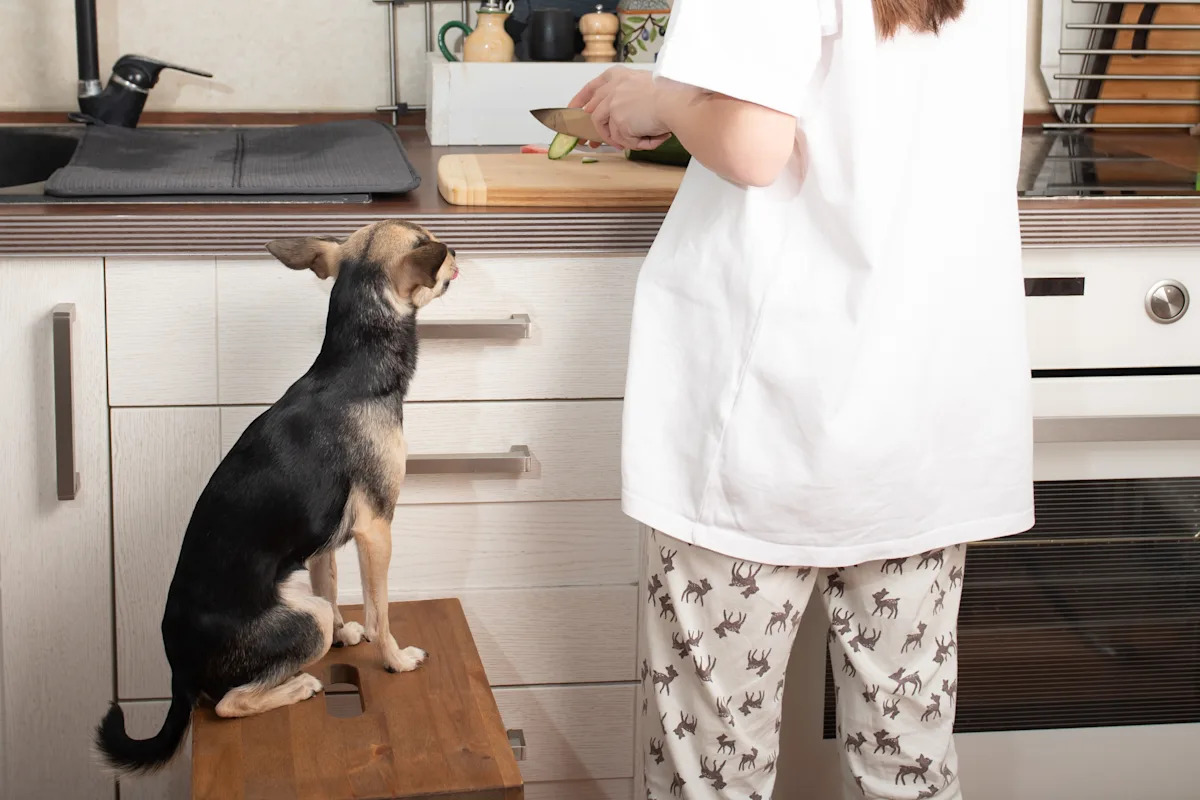
Anyone who has ever carried groceries through the front door knows what happens next. The nose lifts. The tail starts moving. Your dog is suddenly right there, following closely, sniffing every bag with a level of focus that feels far too serious to be random.
It makes you wonder. Does your dog actually think you went out and found all of this somewhere? Did you, in their mind, return from a successful hunt?
Dogs probably do not understand food shopping the way humans do, but research suggests they absolutely recognize us as the people responsible for making food appear. That distinction is simple, but it matters.
Dogs Know Humans Control Food
This is something dogs figure out fast. Faster than most owners realize. Dogs build strong, reliable associations between their owners and the entire feeding process, not just the bowl hitting the floor, but also everything leading up to it.

The time of day. The specific sound of a food bag. The way someone moves when heading toward the kitchen with purpose rather than just passing through. These details get filed away and recalled with surprising accuracy.
What develops over time is less like a trained behavior and more like a genuine understanding. Humans are the source, the provider, the reason food exists inside this house at all. Dogs do not stumble into that conclusion. They learn it deliberately, and they remember it.
They Likely Do Not Understand Hunting Literally
Dogs do not think in human concepts. That is the honest starting point for this whole conversation. Dog cognition works associatively rather than abstractly, meaning dogs connect specific actions to specific outcomes without grasping the larger process sitting behind those connections.

Your dog does not imagine you tracking prey, negotiating a checkout line, or navigating a parking lot. What your dog processes is something far more immediate: you left, a certain amount of time passed, you came back, and then food arrived. That sequence gets stored.
The gap in the middle, everything you actually did out there, does not register as a concept worth forming. Dogs understand results. The process behind the results is almost invisible to them.
Dogs May Connect Your Food Rituals With Getting Fed
Watch your dog the next time you unpack groceries or start cooking something on the stove. Dogs pay close attention to these routines, like grocery bags landing on counters, delivery boxes arriving at the door, pots being moved, and refrigerator doors opening with that particular sound.

Dogs are not thinking about what things mean. They are simply following patterns that have worked for them before. A bag itself means nothing, but what it usually leads to—food—matters. Dogs learn this quickly and act on it without being taught.
Wild Instincts May Shape How They Interpret It
This attentiveness around food did not come from nowhere. The domestication process was likely shaped by ancestral dogs that were good at reading human behavior, staying close to reliable food sources, and positioning themselves near whoever controlled access to resources. Those tendencies did not disappear when dogs moved indoors and started eating from bowls.

Resource awareness, close physical tracking of the provider, and sharp attention to any human behavior related to food are all instincts with genuine evolutionary depth. When your dog follows you into the kitchen or watches you open a bag, it’s both learned behavior and instinct.
Conclusion
Dogs almost certainly do not picture us hunting. No forest, no prey, no triumphant return from the wild. Dogs understand that humans provide food and follow a routine they have learned and remembered. Research supports the idea that this recognition of humans as resource providers is deeply embedded in how dogs relate to the people they live with.
Whether or not that understanding counts as knowing we hunt is probably determined by how loosely you define the term. In the dog’s mind, the outcome is likely close enough to what is truly important.