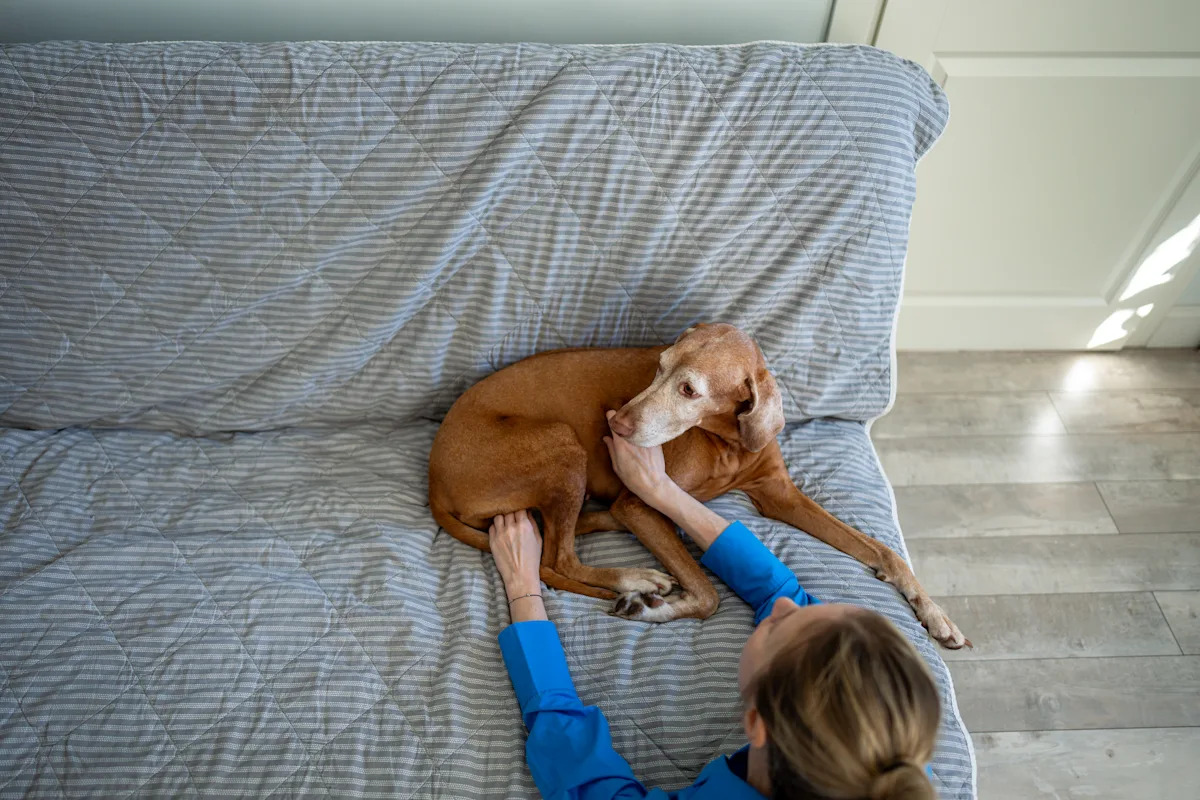
When a dog that’s been steady for months or years suddenly acts up, it throws people. One day, the dog is relaxed on the rug; the next day, it’s pacing, growling, hiding, or stuck to someone’s leg.
It feels random, but dogs don’t flip a switch for nothing. Something changed. The trick is figuring out what. Dogs use behavior to talk. They can’t say “my ear hurts” or “that new work schedule stresses me out,” so they show it.
A shift at home usually comes from one of five common categories: body, environment, feelings, boredom, or age. Spotting the right one early keeps a small issue from turning into a big one.
Health or pain issues
Pain can quickly affect a dog’s behavior, and this is where canine health becomes the first thing to check. A bad tooth, sore hip, ear infection, or upset gut won’t always look dramatic. It shows up sideways. The cuddle bug that loved belly rubs now ducks when a hand comes near. The door-dasher who heard the leash jingle from two rooms away stays on the bed.

Growling when picked up, hiding under the coffee table, snapping during a tug, or sleeping half the day can all mean something hurts. Dogs are wired to hide weakness. By the time an owner notices, the problem might be a few days old.
Stomach trouble turns into pacing, whining, or accidents in the hallway. Arthritis shows up as stiffness after naps, skipping the couch, or getting grumpy about being bumped. When the shift is sudden and the dog seems off, check the body first.
Look at the gums, check for unusual odor or discharge from the ears, and watch how it gets up from the floor. If anything feels wrong, or if the weirdness hangs on past a day, call the vet. A training fix won’t touch a medical problem.
Changes in environment or routine
Dogs lean hard on routine and familiarity. That’s why environmental stress hits them so fast. A move, a new baby, a roommate leaving, roadwork outside, or a new shift at work can throw them.

The fallout looks like clinginess, whining at night, barking at sounds that never mattered, or peeing on the rug after years of being clean. Smells, sounds, and daily steps tell a dog that things are safe. Change those, and the dog has to rebuild that feeling.
Even new furniture throws some dogs. It’s not a couch to them, but a big, weird thing that smells wrong. Keep the rest of the day predictable; let the dog check new stuff slowly, and most will settle once the new normal sets in.
Anxiety or emotional stress
Fear manifests itself in unexpected ways, and separation anxiety is one of the most obvious examples. It often shows up after holidays. Someone’s home for two weeks, then back to work. The next day, the dog chews the door frame, howls, or pees by the entryway. Noise fear is another one.

One bad thunderstorm or a screaming smoke alarm can teach a dog that home isn’t safe. After that, small sounds set it off. Hiding in closets, panting for no reason, startling at a dropped spoon. Stress looks like “bad behavior,” but it isn’t defiance.
Pacing, licking paws raw, shadowing a person room to room, or skipping meals is nerve-racking. Yelling piles more stress on top. Safe spaces, white noise, slow retraining, and sometimes vet help work better. For tough cases, a behaviorist or medication can turn things around.
Lack of mental or physical stimulation
Bored dogs invent jobs, like chewing baseboards, shredding pillows, barking at leaves, or getting mouthy with hands. A dog that was calm last month and now destroys things may not be sick, but rather not receiving enough physical or mental stimulation.

Changes in routine can also affect a dog’s behavior. Seasonal shifts, such as shorter walks in winter or busy schedules that reduce playtime, can leave dogs with unspent energy. This is often more noticeable in younger dogs and highly intelligent breeds. A brief walk may not be enough to meet their needs.
Instead, activities that engage the mind can be more effective. Allowing a dog to explore during a sniff walk, using food-based puzzle toys, or playing short scent games indoors can help. Even 10 minutes of mental stimulation can be as effective as longer periods of physical exercise in promoting calm behavior.
Aging or cognitive changes
Older dogs can show gradual behavioral changes that go beyond aging. Cognitive dysfunction syndrome, the dog version of dementia, changes how they act. A senior might stand facing a wall, get lost in the yard, forget house training, sleep all day, roam all night, or startle when touched.

It creeps in slowly, and often owners miss it until something obvious happens. The dog that slept through the night now howls at 2 a.m. The one that met everyone at the door now flinches at footsteps. This isn’t stubbornness, but their brain is changing.
Vets recommend diets, supplements, medicines, and a consistent routine that help. Simple adjustments, such as using night lights, maintaining a predictable schedule, and keeping the home layout consistent, can reduce confusion. Early recognition can help improve a dog’s quality of life.
Conclusion
Dogs communicate through behavior. Start by looking for patterns. Did the change begin after a vet visit, a storm, reduced walks, or a change at home? Rule out pain first, and if there are no medical concerns, consider routine, stress, or boredom. For older dogs, age-related cognitive changes may also play a role.
If the cause is unclear, consult a veterinarian. A basic exam can rule out medical issues and guide next steps. In many cases, the explanation is simple once identified. The behavior is not random; it is the dog’s way of signaling a need.