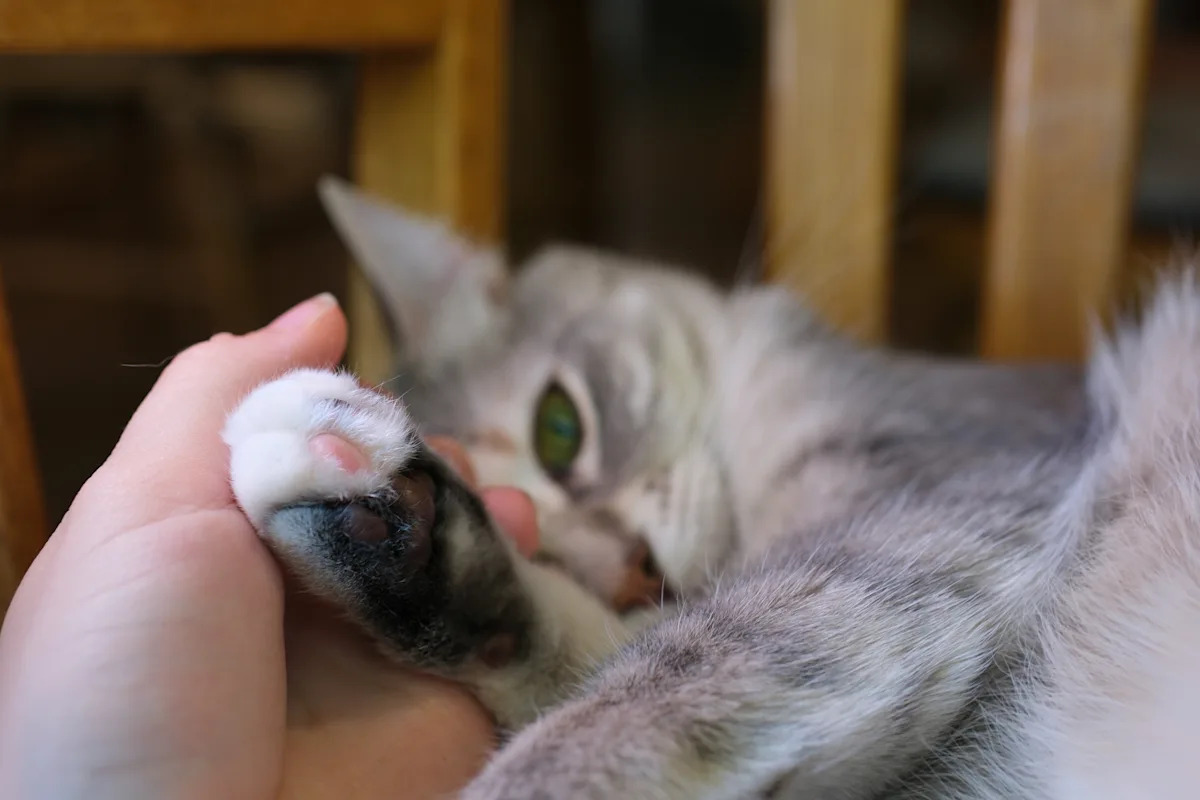
A cat jumps onto a blanket, settles in, and starts pressing its front paws in and out, one after the other. Eyes half closed, maybe purring, maybe drooling a little. It looks exactly like someone working bread. People call it “making biscuits,” and most cat owners have felt those little paws working into their lap.
The habit starts when they’re tiny and, for a lot of cats, it never really goes away. It isn’t random either. Kneading ties straight back to instinct, comfort, and the quiet way cats communicate.
Habit from kittenhood
The roots of kneading go all the way back to a cat’s first week of life. Newborn kittens press their paws against their mother’s belly while nursing because the motion helps get the milk flowing, and that action gets wired together with warmth, full bellies, and safety.

When a grown cat kneads a pillow, a sweater, or a person’s stomach, part of that old programming is firing up again. The cat isn’t looking for milk. The behavior stuck around because it got paired with feeling safe and looked after.
Cats that were weaned early or bottle-raised tend to knead more, almost like they’re chasing a comfort they missed. Others keep doing it their whole lives, and for them it really just means “this feels good.” It’s muscle memory from the most secure time they knew.
Sign of comfort and happiness
Kneading usually shows up when a cat is totally relaxed. People call it self-soothing behavior, but it looks more like a cat melting into the moment. One will climb onto a lap, turn a circle or two, and start the paw press right before sinking into a nap. The purring gets louder, the eyes go soft, and yes, sometimes the drool shows up.

Owners notice it most during cuddle time or right before bed. The cat isn’t trying to put on a show. It’s downshifting. That steady rhythm seems to settle them, the same way someone might tap a foot or twist a ring when they’re unwinding.
If the claws are out, it can hurt, but that doesn’t mean the cat is angry. It’s just zoned out in the feeling. Keeping nails trimmed or tossing a thick blanket between paws and skin keeps everyone happy. And honestly, getting chosen as the kneading spot is a compliment. It means “I feel safe enough here to check out.”
Marking their territory
Cats talk through scent more than sound. They have scent glands in their paw pads. When they press and release on a surface, they’re leaving a chemical signature. Scent marking is how cats claim things without fighting.

So when a cat kneads a favorite blanket, the couch, or an owner’s hoodie, it’s doing two jobs at once. It feels good, and it’s tagging that spot as “mine.” The smell is too faint for people, but other cats read it clearly.
It’s the same reason they rub their cheeks on table legs or scratch posts. Kneading just uses the feet instead of the face. The cat isn’t being possessive in a mean way. It’s doing paperwork. This spot, this person, is part of the home territory.
Preparing a resting spot
Wild cats don’t have memory foam. Before sleeping, they pat down grass, leaves, or loose dirt. The motion flattens the area, checks for bugs or sharp bits, and shapes a shallow nest.

Territorial behavior shows up in how animals set up safe sleep zones. House cats don’t need to tamp down tall grass, but the drive is still there. A cat will knead a blanket, a pile of laundry, or a dog bed before curling up. It’s the same prep step. Press, turn, press again, then drop.
The spot is now arranged and smells like them. That double hit of physical comfort and scent makes it the right place to rest. Even cats that sleep on hard windowsills will knead the air first. The instinct doesn’t care about the surface.
Conclusion
Kneading can look weird if you’ve never seen it, little paws pushing in and out, claws flexing, that glazed, faraway stare. But it’s standard cat code. It carries pieces of kittenhood, contentment, ownership, and old survival habits all in one motion.
When a cat kneads, it’s usually a good sign. The animal feels safe enough to run those old, happy routines. It’s marking the spot and the person as part of its world. The claws can be a pain, but the message behind them isn’t.
Trim the nails; keep a thick blanket handy, or redirect to a pillow, and you protect your lap without shutting the behavior down. So if a cat starts making biscuits on your chest at bedtime, take it as a sign of trust. The cat is comfortable, the territory is sorted, and the bed is officially prepared. That’s a cat saying it feels at home.