The post The Snake That Lays Up to 80 Eggs and Shivers to Warm Them appeared first on A-Z Animals.
Nothing is more heartwarming than watching new life come into the world. Watching animals navigate the start of their lives is both adorable and exciting. This can also be true for snakes, even though many people fear them. This Instagram post by @thereptilezoo shows a reticulated python hatching from its egg and taking a look at the new world around it. If you’re interested in learning more about how snake eggs hatch, read on!

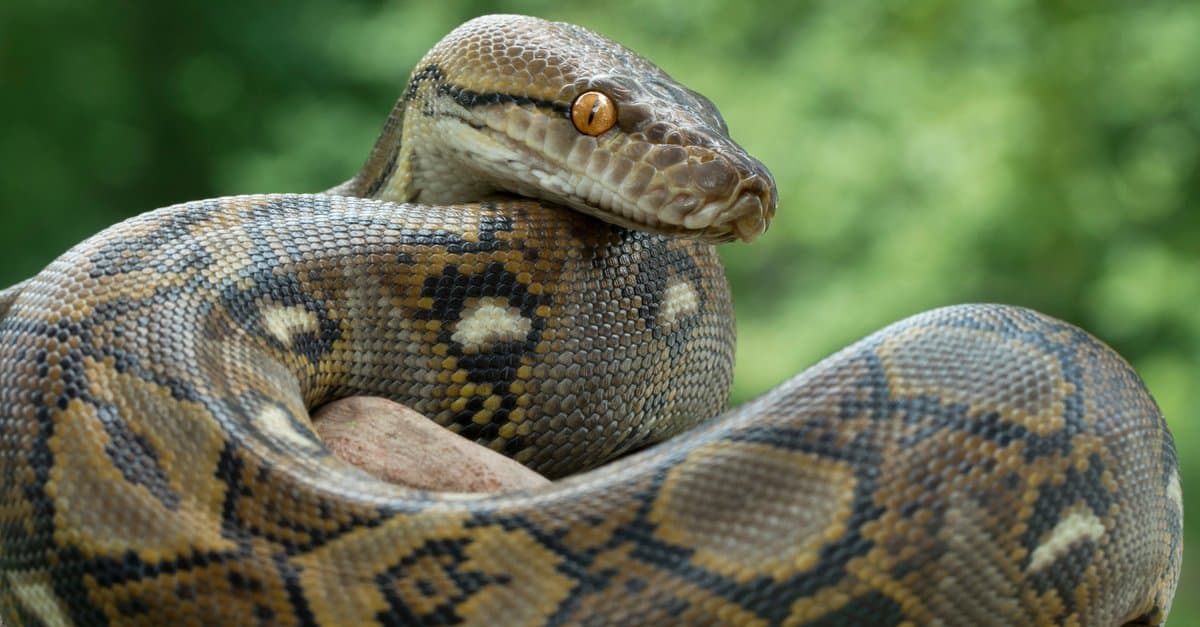
Reticulated pythons can lay between 15 and 80 eggs at a time.
©wei.hwc/Shutterstock.com
All About Reticulated Python Babies
Before they hatch as adorable babies, reticulated pythons incubate in their eggs. This snake species is oviparous, meaning that females lay clutches of eggs rather than giving live birth. They lay anywhere between 15 and 80 eggs at a time, after which the female will take care of them. Depending on the surrounding temperature, incubation periods can last roughly 60 to 90 days. This is because warmer environments speed up the development process, while colder temperatures slow it down. Mothers often support their eggs’ development by coiling around them and sometimes shivering to generate heat. When the time comes, the snakes begin to emerge from the eggs through pipping.
Because the eggshells are too tough for the babies to break out of on their own, they have a special spike on their snout called an egg tooth. The egg tooth is used to cut a slit in the eggshell, creating what is called the pipping point. In nature, babies do not emerge immediately. To absorb extra nutrients from the surrounding fluid, hatchlings often remain inside the shell for a few days, breathing through the slit they made. The fluid they are surrounded by is a mix of albumen and yolk. Albumen helps to keep everything moist while the yolk provides nutrients to the baby. These nutrients sustain the baby for the first few days, as hatchlings are completely independent after emerging.

Pythons coil around their eggs to keep them warm.
©Paul Tessier/Shutterstock.com
Why Cut Them Out?
In nature, the pipping point is the start of the baby snake’s new life. Since snake eggs are soft and leathery, unlike hard bird eggs, they can eventually push their way out on their own. While it may seem like the hatching process is straightforward, many snakes need a little extra support to hatch. Many eggs may simply not hatch, and since the babies are on their own, many do not survive to adulthood. In captive environments, however, humans can help them survive a lot longer. Caretakers may cut open the eggs to help babies that are too weak to break out on their own. This extra support leads to some pretty amazing moments, just like in the video above.
The post The Snake That Lays Up to 80 Eggs and Shivers to Warm Them appeared first on A-Z Animals.