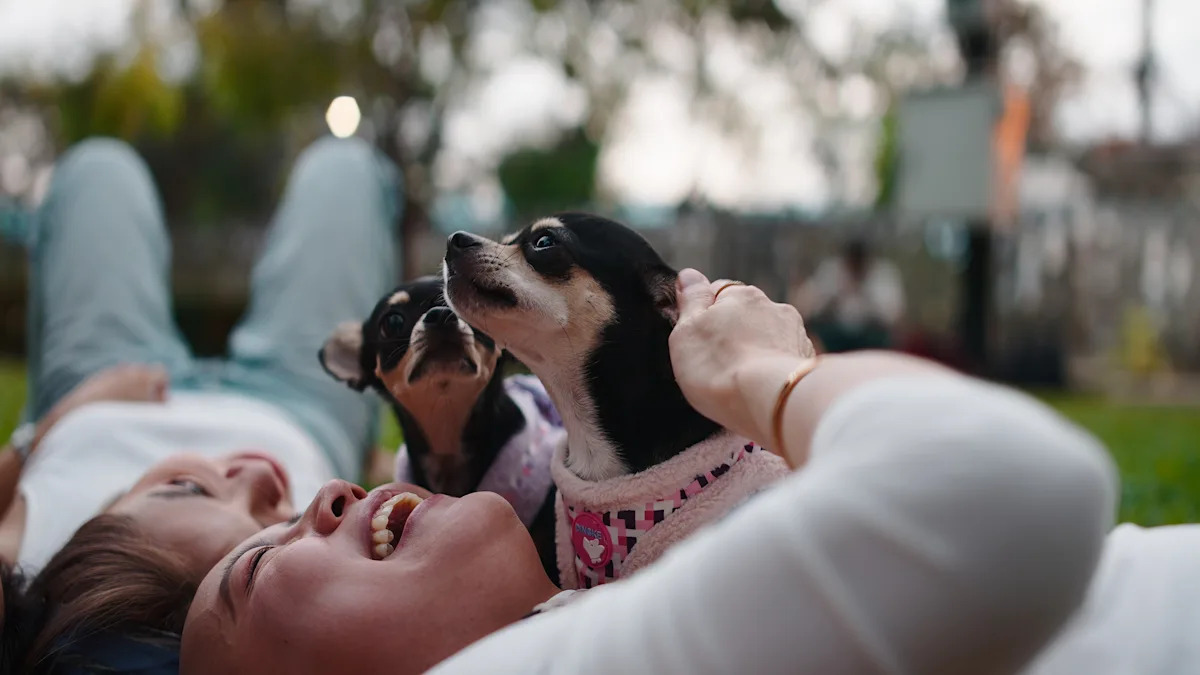
Pets often reflect aspects of their owner’s behavior and lifestyle. If you keep your day very active, your dog’s day seems active and healthy too. At the same time, if you prefer a more relaxed lifestyle and are one of the calm individuals, you will enjoy the company of relaxed and calm dogs.
Many people take this as a coincidence, whereas others might think about a deeper connection between them and the dogs.
Over the years, research has shown that a dog and their owners share similar traits. Pets can even start reflecting on their owner’s behavior. Whether it is mood swings or eating habits, the bond between humans and their pets reveals much more than we think.
1. Your pet’s energy reflects your lifestyle
If your pet is highly active, you’ll spend a lot of time training them, playing with them, taking them for a run, or making them meet new people. On the other hand, if your dog is slightly reserved with you and does not interact much with others, you might spend the majority of the time indoors just being with them.

In simpler terms, an extrovert’s dog will often have the fun-loving personality, and an introvert’s dog will always be the calmer one.
2. You may choose pets similar to your personality
Pet owners often consider several factors before choosing a pet. They may consider both emotional and practical factors. Your pet has to “feel like you” and slightly resemble your personality, so if you are a friendly person, you’ll opt for a golden retriever or a Shih Tzu that stays active throughout the day and plays a lot.

On the other hand, if you are a person who loves lazy mornings, does not have any specific routine, and prefers being in your own space, then choosing a cat can be more favorable for you. A majority of the time, pet owners share similar traits like friendliness, anxiety, and calmness, and this is what makes their bond even stronger.
3. Your stress levels can affect your pet
Your stress levels can influence your pet’s behavior. They easily detect if you are stressed and are aware of your emotions. Your pet, especially if it is a dog, will come to know when you are stressed, feeling bad, anxious, or just not in the right mood.

This happens because you and your pet share a similar emotional connection, which is very strong. As they share the same environment and space, your pet can quickly learn about your behavior. They see changes in tone, body language, and routine.
4. Your routine shows in your pet’s behavior
Your daily routine will highly influence your pet’s behavior. Studies have proven that organized owners raise really disciplined pets. If you own a dog, they will follow a routine and know what to expect each day.

If your routine is unpredictable, your pet might have lethargic habits too. At the same time, if you are active enough to take them on a walk daily, this shapes their behavior besides keeping them physically fit.
5. Your social nature is reflected in your pet
Just imagine an extrovert going for a walk with a dog and meeting many people. It is not just you, but your dog meets them too. With time, your pet becomes people-friendly and somehow reflects your extroverted personality.

But if you are an introvert with limited social skills, who interacts very little with others, your pet might face trouble in bonding with new people. This makes your pet even more reserved than others.
Pets may resemble their owner’s social nature. For example, some dogs run up to everyone and greet them, while others will stay close to their owner.
6. Your bond with your pet reflects your emotional needs
Your emotional state can influence how strongly you bond with your dog. If you have a strong attachment, you’ll probably have a very strong emotional connection. Often pets are considered a part of the family and are treated with utmost care and love by the members.

Many times, we hug our pets and feel peace. This is how we consider them a part of our routine and find comfort in them. Even pets become used to certain patterns of ours, like certain gestures of affection, eating with them, walking them, and playing with them. This strengthens your overall emotional bond with them.
7. You and your pet may grow more alike over time
Simply choosing a pet may not make much of a difference, but living together actually makes both the pet and the owner more alike over time. Living together shapes behavior: for example, your shared habits and the same environment make a pet and their owner emotionally sync.

And this is where reactions, energy levels, and even moods start to align.
Conclusion
Your pet is not just your companion but someone who reflects you in the best possible way. They learn a lot about your personality traits once you start living with them. With time, they adapt those traits too.
Although as pet owners, we always feel that we are shaping our pets, that is not the case. Your pet may reflect your personality, but living together creates a two-way bond where both owner and pet influence each other.